The Hill reported on March 3 that, several days after the U.S. and Israel launched a joint strike on Iran, U.S. President Donald Trump stated Monday evening (March 2) that the United States possesses an “almost unlimited” stockpile of mid- and upper-tier weapons, sufficient to support a prolonged military campaign.
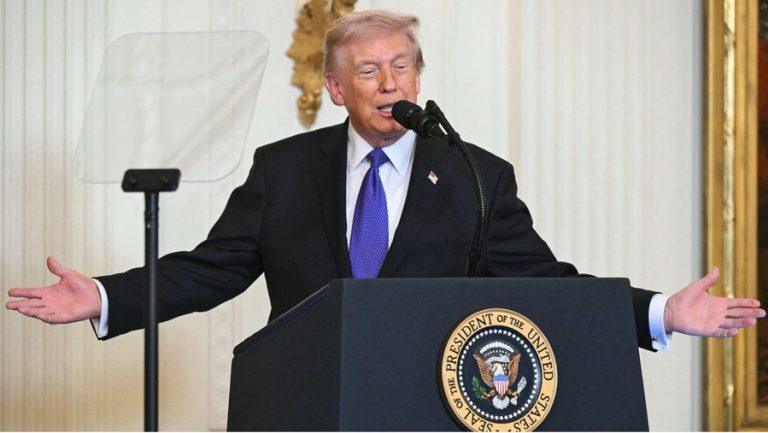
Trump posted on Truth Social that the U.S. currently has a mid-level arms reserve “never before so abundant,” and said briefings received that day indicated the U.S. has an “almost endless supply.” He wrote that with this stockpile alone, “the war could go on forever, and it would be extremely successful,” emphasizing that their performance surpasses “the most sophisticated weapons of other countries.”
However, he also acknowledged that in the highest-end weapons category, the U.S. is “well-supplied but not yet at the ideal level,” revealing that some high-tier weapons are stored overseas with allied nations.
Timeline: at least four to five weeks
The Iran military operation is codenamed Operation Epic Fury. It began in the early hours of last Saturday, following weeks of warnings from Trump demanding that Tehran halt its nuclear program, and public references to regime change.
At a White House Medal of Honor ceremony on Monday, Trump stated that the military operation is expected to last “at least four to five weeks,” but that the U.S. military has the capacity “to fight longer.” He emphasized that the U.S. military is “the most powerful and overwhelmingly superior force in the world,” and said that current operations are “well ahead of schedule.”
Success
You are now signed up for our newsletter
Success
Check your email to complete sign up
The strike resulted in the death of Iran’s Supreme Leader Ali Khamenei, and also caused multiple U.S. military casualties. Trump admitted that “more Americans may still die” during the conflict.

Public concern rises, White House downplays impact
A CNN poll showed that 56 percent of respondents believe a long-term U.S.-Iran military conflict is “very likely” or “somewhat likely.” In response, Trump said, “I think the polls are fine, but I don’t care about polls. I have to do what’s right.” In an interview with The New York Post, he called the operation “long overdue.”
U.S. Secretary of State Marco Rubio told Congress that Iran poses an “imminent threat,” stressing that the operation is preemptive and defensive in nature. Vice President J.D. Vance also stated that the president will not allow the action to evolve into an endless regional war.
Multiple key Iranian military assets destroyed
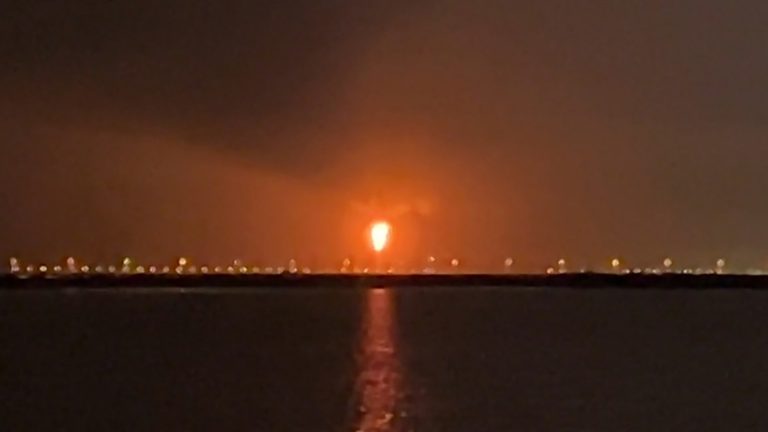
Daily Mail reported on March 3 that the U.S. Central Command stated it has destroyed multiple key Iranian military assets, including Revolutionary Guard command and control facilities, air defense systems, missile and drone launch sites, and military airfields.
In a statement, Central Command said the U.S. is conducting “precise, overwhelming, and unapologetic strikes against Iran” and will continue to act against “imminent threats.”

Embassies under attack, US issues evacuation orders
The report noted that after Iranian drone strikes on the U.S. embassy in Riyadh, Saudi Arabia, the State Department ordered U.S. citizens in the Middle East to evacuate immediately. The embassy roof was reportedly struck by two drones, while several others were intercepted near Riyadh and Hajjar.
The U.S. has closed its embassy in Kuwait and evacuated some personnel from Bahrain and Jordan. Iran declared it is blocking the Strait of Hormuz and warned it would take action against vessels attempting to pass. The strait is a critical global energy route, and tensions have raised concerns over oil price volatility.
Congress moves to draft War Powers resolution
Rubio briefed Congress that U.S. intelligence indicates that, if Iran were attacked, its missile forces would quickly retaliate against U.S. targets, necessitating preemptive strikes to reduce casualties. He said, “We are taking proactive defensive action to prevent greater losses.”
This claim sparked debate in Congress. Both the House and Senate have drafted a War Powers resolution to limit the president’s unilateral authority to conduct military action. Rubio emphasized that the administration is “fully compliant with the law,” noting that past administrations have expressed reservations about the resolution’s constitutionality.
Trump described the operation as “a necessary detour to ensure the safety of the nation and our allies,” and stated that he is close to achieving set military objectives, which he will clearly know once accomplished.