On Aug. 20, 1989, I left Beijing—still reeling from the bloody crackdown and the lingering grief—and traveled via Vancouver to Toronto, Canada. In an article commemorating my father, I once wrote that I departed in haste, overwhelmed by sorrow, anger, and heartbreak, without even the space to properly say goodbye to relatives and friends. I arrived in Canada alone, without knowing a single person. Shortly after landing, I fell ill for a week.
More than twenty days later, while standing in front of the Chinese Consulate General in Toronto for an event, I made a life-changing decision: I would take advantage of the global wave of condemnation and sanctions following the Chinese Communist Party’s June Fourth crackdown, devote myself first to opposing the regime, and only then return to my studies. I ultimately never went on to register at Carleton University in Ottawa. From that moment on, I committed myself fully to the overseas democracy movement, continuing without pause to this day.
Thirty-seven years have passed. The regime has not fallen, and I have grown old. This is not only my personal journey, but also a reflection of the broader experience of the overseas democracy movement and exile communities over the past three decades. It also bears witness to a harsh international reality: far from collapsing under the weight of its authoritarian rule, the Chinese Communist Party has instead risen and expanded its global reach under the indulgence of the democratic world. It has become the world’s second-largest economy, binding the West through global supply chains and constructing an intricate web of economic dependencies. As a result, democratic countries have seen their relative power erode, and today find themselves increasingly constrained and often unable to effectively respond to an increasingly assertive China.
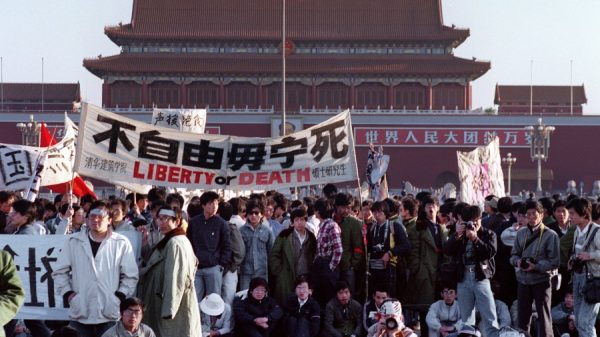
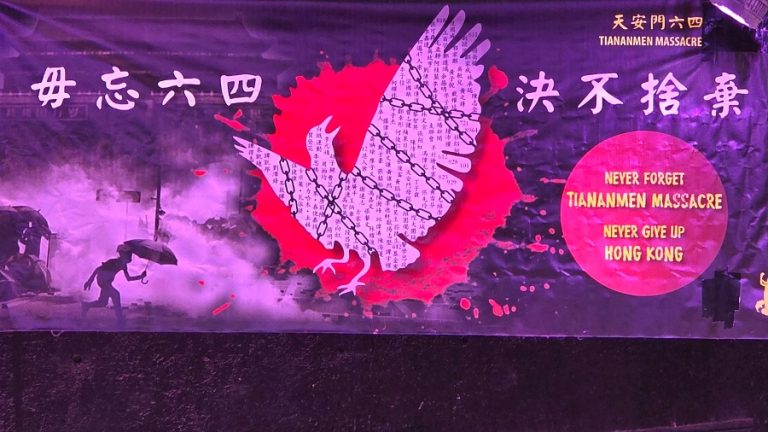
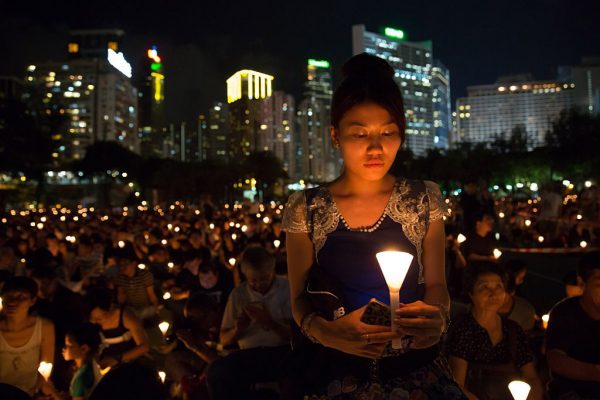
Starting from the first anniversary of June Fourth in 1990, I began co-organizing commemorative events in Toronto. Over the past three decades, particularly in the first twenty to thirty years, overseas commemorations were long enveloped in an ambiguous, reform-oriented atmosphere. Some organizations that co-hosted the memorial events even explicitly stated that they opposed “the gunfire of June Fourth,” but not the Chinese Communist Party itself. Because for a long time those who firmly opposed the Communist system and advocated its overthrow were few in number—at times even extremely marginal—the themes, demands, and slogans of most commemorations inevitably centered on a single phrase: “rehabilitation of June Fourth.”
I raise this issue today in the hope of prompting deeper examination and reflection. If this fundamental logic is not clarified, and if the true nature of the Communist regime is not fully understood, then the prospect of freedom and democracy in China will remain out of reach.
Success
You are now signed up for our newsletter
Success
Check your email to complete sign up
‘Rehabilitation of June Fourth’
What is notable today is that in this year’s commemorations in Toronto and even globally, calls for “rehabilitation of June Fourth” are largely absent. The disappearance of this collective slogan reflects a significant shift—one that, after 37 years of blood and reflection, signals a break from the past and a growing political awakening.
Historically, the call for “rehabilitation” carried an implicit acceptance of the legitimacy of the Communist regime. Within that framework, “rehabilitation” became a form of supplication to authority—an appeal from subjects to the throne, in the hope that a more enlightened leader or faction within the system would one day clear the name of the movement and posthumously recognize its victims as “patriotic students” or “patriotic citizens.” In essence, this logic remained confined within the ideological boundaries of the regime and a broader nationalist narrative. It implied that the same system responsible for the killings retained the authority to judge and bestow justice, reducing moral accountability to a request for mercy from the perpetrator.
It was under the influence of this reformist approach—one that opposed only the act of firing on civilians but not the authoritarian system itself, often coupled with a broader nationalist sentiment—that not only domestic resistance in China but also international responses became trapped for more than three decades in a fundamental misdirection, quickly yielding in the face of practical interests.
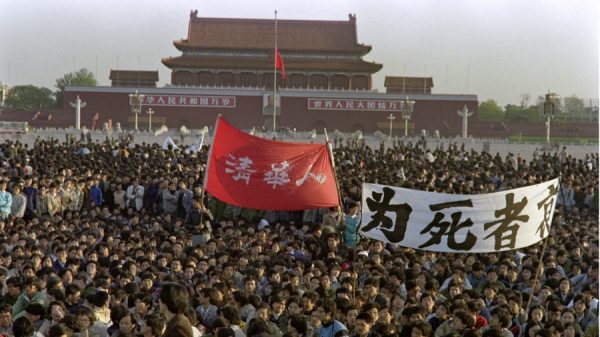
Looking back at the early post–June Fourth period, the Western democratic world displayed a deeply troubling level of short-sightedness and appeasement. Barely had the gunfire stopped when then–U.S. President George H. W. Bush moved quickly to establish contact with Deng Xiaoping. Within six months, he dispatched emissaries to Beijing on two separate occasions, helping to break China’s diplomatic isolation and further advance economic engagement with the Chinese Communist Party.
Within just a few years of the 1989 crackdown, multinational capital and Western political leaders were already moving in concert to lift arms embargoes and ease economic sanctions on Beijing. Under the illusion of “change through trade” and the substitution of human rights confrontation with human rights dialogue, the international community not only abandoned sustained accountability for the Tiananmen massacre, but also opened its doors to the World Trade Organization (WTO) for a regime whose hands were still stained with blood.
Through globalization, continuous capital inflows, and the transfer of advanced technologies, the West effectively helped nurture what has become one of the largest and most intrusive digital authoritarian systems in human history. This permissive environment enabled the Chinese state not only to consolidate its economic rise without political liberalization, but also to strengthen its capacity to erase historical memory, construct a vast digital firewall, and export censorship, surveillance, and transnational repression worldwide.
History’s judgment
Yet history’s judgment, though delayed, never fails to arrive. Thirty-seven years later, the global order appears to be reaching a critical inflection point.
On the very day of this commemoration, U.S. Secretary of State Marco Rubio publicly posted that June 4 marks the 37th anniversary of the Chinese Communist Party’s military assault on peaceful demonstrators in and around Tiananmen Square. He added that those who sacrificed their lives in defense of the inalienable rights to free speech and peaceful assembly will one day receive vindication.
It is important to emphasize that Rubio’s use of the term “vindication” carries a fundamentally different meaning from the traditional Chinese appeal for “rehabilitation” under the Communist system. In the Chinese context, “rehabilitation” implies seeking recognition and moral approval from within the very framework of Party authority—an appeal upward to the state to reverse its own judgment.
By contrast, Rubio’s reference points to a broader historical and international conception of justice. It is not contingent on the ruling regime’s approval. Rather, it reflects a universalist understanding of truth, grounded in human rights and moral conscience, whereby the authority to define justice lies not with perpetrators of violence, but with history, victims, and the collective conscience of humanity.
After three decades of appeasement, accommodation, and economic entanglement—at considerable cost to their own freedoms—Western governments have, in recent years, begun to shift course. Statements such as those by Rubio, and earlier by figures in the Trump administration, have reframed the legacy of June Fourth not merely as a geopolitical issue, but as one of ideological confrontation and historical justice. His remarks, disseminated through official diplomatic channels, also serve as a direct message to Chinese audiences, confronting the narrative control that has long obscured the events of 37 years ago.
Today, the disappearance of the slogan “rehabilitate June Fourth” from commemorations reflects a broader evolution among both overseas and domestic dissidents. After decades of blood and disillusionment, many have abandoned reformist illusions and moved toward a more fundamental break with the system itself, aligning instead with a civic vision of constitutional democracy and historical accountability.
There is no need for the Communist Party to “rehabilitate” June Fourth. A regime sustained by falsehood and violence has no moral authority to confer legitimacy upon its victims. What awaits such a system is not rehabilitation, but the judgment of history and, ultimately, accountability.
(This article reflects the author’s personal views and stance only and does not necessarily reflect the views of Vision Times.)