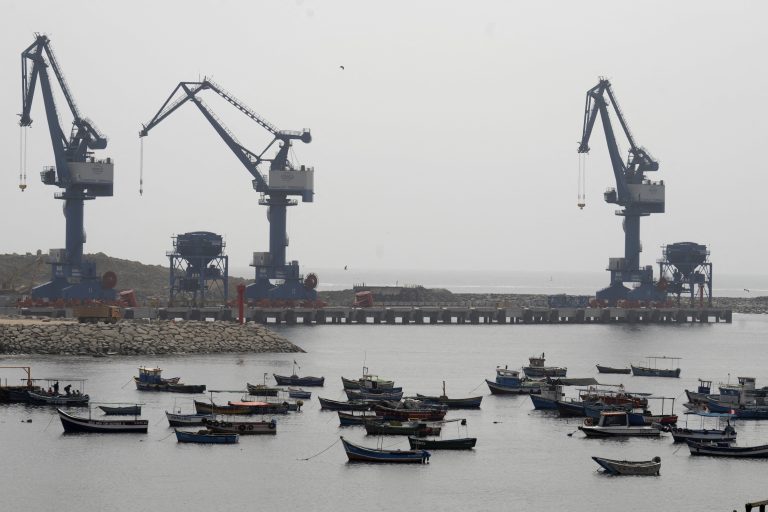
A newly built, Chinese-owned 15-berth megaport in Peru was opened on Nov. 14. Chinese and Peruvian authorities celebrated the occasion, while locals protested the coercive methods with which the project had been completed and U.S. officials voiced concerns about Beijing’s reach in Latin America.
Located in the city of Chancey about 48 miles from the Peruvian capital Lima, the port was lauded by Chinese leader Xi Jinping as a boost for Peru-China ties, as it will cut logistics costs by 20 percent and bring shipping times down to 23 days.
The Chancey port is expected to earn US$4.5 billion worth in annual revenue and directly employ more than 8,000 people, Xi added. It is owned by Cosco Shipping Ports, a Chinese state-owned enterprise.
Xi was in Peru for a state visit and the Asia-Pacific Economic Cooperation (APEC) summit, where he spoke with U.S. President Joe Biden.
However, Xi’s planned in-person attendance of the Chancay port’s opening ceremony, along with that of Peruvian President Dina Boluarte, had to be moved online due to protests that were expected to take place.
Success
You are now signed up for our newsletter
Success
Check your email to complete sign up
The liberal use of explosives to build the port disrupted local life in the city of Chancay, which had traditionally been a fishing community.
Homes were damaged by the construction, and marine life in the area has been disturbed, impacting the ability of residents to continue their fishing business.
Such side-effects were covered up by the Chinese construction teams through intimidation and “collusion with officials,” according to Taiwan’s national security bureau.
Angry locals had planned to take their grievances directly to Boluarte and Xi when they arrived, as reported by The Epoch Times.
Brian Nichols, the top U.S. diplomat for Latin America, said at a press conference on Nov. 14 that it is essential that countries across the hemisphere ensure that PRC [People’s Republic of China] economic activities respect local laws as well as safeguard human rights and environmental protections.”
A July report by Leland Lazarus, serving as Associate Director of National Security at Florida International University’s Jack D. Gordon Institute of Public Policy, called out the potential for the Chancay port to help Beijing undermine American economic interests in Latin America and even spy on U.S. naval activities.