China’s state broadcaster CCTV and FIFA remain deadlocked over broadcast rights for the 2026 FIFA World Cup with roughly five weeks left before the tournament’s June 11 kickoff in the United States, Canada, and Mexico, raising the prospect of a mainland Chinese blackout for one of the world’s most-watched sporting events. As of early May 2026, FIFA has finalized broadcast deals in more than 175 territories worldwide. China and India remain the two major outliers.
According to multiple Chinese media reports, FIFA initially asked CCTV, the unit of state-media conglomerate China Media Group (CMG) that holds the exclusive right under Chinese law to negotiate World Cup broadcast deals for the mainland, for between $250 million and $300 million for the 2026 rights. That figure is roughly double what CCTV paid per tournament for the Russia 2018 and Qatar 2022 editions. CCTV has reportedly come back with a counter in the $60 million to $80 million range and refused to budge. Even after FIFA reportedly lowered its asking price to $120 million to $150 million, the gap has not closed. FIFA’s only public comment is that “discussions in China regarding the sale of media rights for the FIFA World Cup 2026 are ongoing and must remain confidential at this stage.”
What looks like a routine commercial negotiation says something the Chinese Communist Party would rather not have said out loud about the state of the Chinese economy. CCTV cannot, or will not, find even a few hundred million dollars for one of the most valuable commercial properties in global sport.
Why the Chinese Advertising Market Has Collapsed
The football commentator Wang Tao, who spent eleven years at CCTV working on FIFA broadcast rights and is now an independent media figure, has laid out the underlying math. If CCTV agreed to FIFA’s price under current advertising conditions, Wang said in a widely circulated video, the most optimistic outcome would be breaking even, and a small misstep in execution could turn the World Cup into a multi-hundred-million-dollar loss for the network.
For the past decade and a half, every World Cup was a gold rush for CCTV’s ad inventory. China’s real estate giants such as Evergrande, the country’s internet majors, and the consumer brands that lived off rising household income would bid against each other for premium ad slots. Broadcast rights at the prices FIFA was charging were trivial against the revenue that came back through the ad market. CCTV covered the cost easily and made substantial money on top.
Success
You are now signed up for our newsletter
Success
Check your email to complete sign up
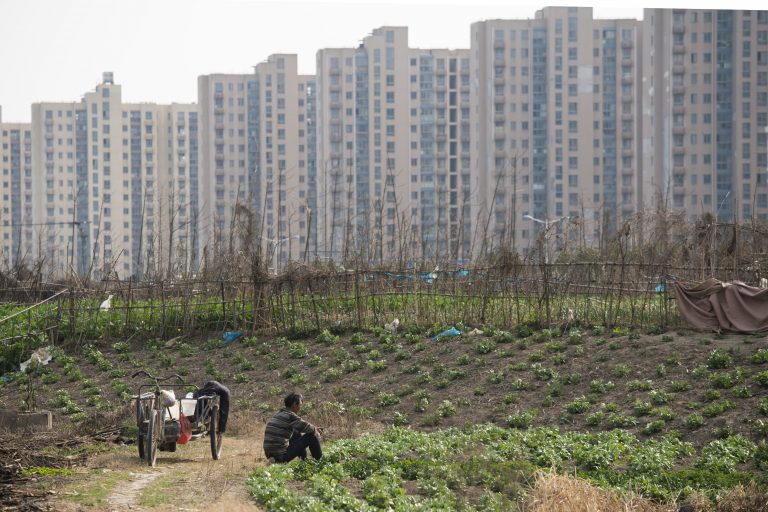
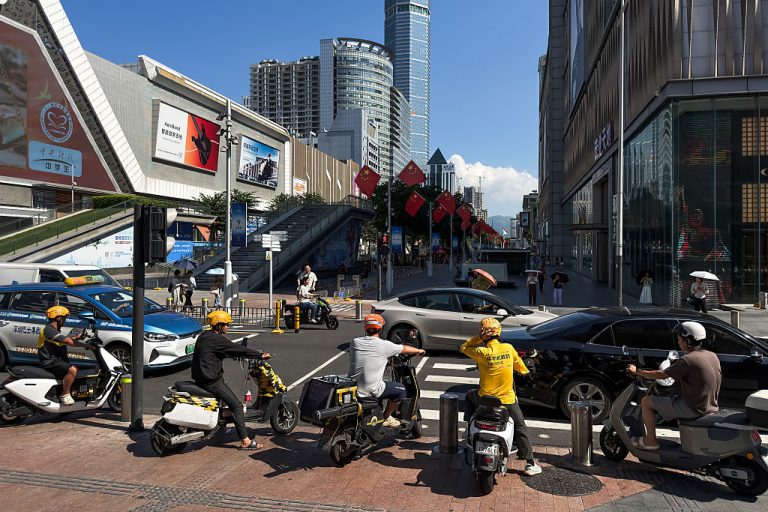
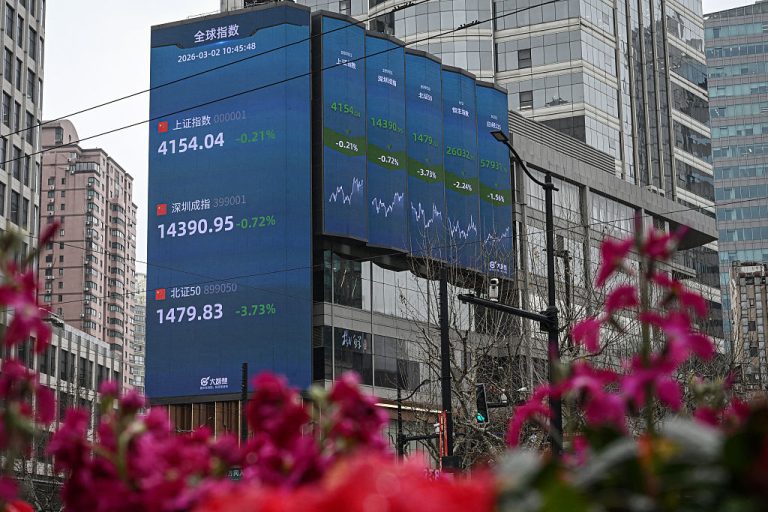
Today the picture has reversed. Evergrande was ordered into liquidation by a Hong Kong court in early 2024 and has effectively ceased to function as a going concern. Other major property developers are in distress. China’s internet sector, after years of regulatory crackdowns under the CCP’s “supervisory iron fist,” has shed jobs and pulled back on discretionary spending. Foreign capital has withdrawn at scale, private firms are operating in survival mode, ordinary salaried workers face wage cuts and layoffs, and household consumption has shifted into what Chinese commentators now openly call “downgrade” mode. When companies are struggling to stay alive, almost no one has the spare cash to spend tens of millions of yuan on World Cup ad placements. CCTV’s pessimism about ad revenues reflects what Chinese commercial actors across nearly every sector are now experiencing.
Why Chinese Football Itself Has Become a Hard Sell
A more specific football problem makes the 2026 World Cup a particularly hard sell in China this year. The Chinese men’s national team has not qualified for the World Cup in six consecutive tournaments, a span of more than twenty years. They were eliminated again in the Asian qualifiers in mid-2025. Chinese football itself has been engulfed in a corruption scandal that ran from the head of the national football association down through the national team coaching staff, with senior figures arrested and the team’s on-field performance dropping to the point that China now struggles to beat third-tier Asian opponents. Fan enthusiasm that survived the qualifying failures has not survived the corruption story.
The 2026 tournament’s North American venues add another layer. Roughly seventy percent of the matches will fall between the early hours and early morning Beijing time. In a labor environment where many young Chinese workers are pushing through “996” schedules just to keep their jobs, the audience willing to lose a night’s sleep for a tournament their own country isn’t playing in is small. Lower viewership produces weaker ad rates, which makes broadcasters less willing to absorb FIFA’s asking price.
How CCTV’s Monopoly on World Cup Rights Punishes Everyone Else in China
Another absurdity built into the Chinese system runs underneath the standoff. Under a 2015 directive from the State Administration of Press, Publication, Radio, Film and Television, CCTV holds the exclusive right to negotiate and purchase the rights to major international sporting events on the mainland, including the Olympics and the World Cup. In a normal market economy, when one broadcaster decides the price is too high, a competing television network or a streaming platform steps in. In China, that path is closed by design. If CCTV walks away, Tencent, iQiyi, Migu, Douyin, Kuaishou, and every other Chinese platform with the appetite to broadcast the tournament has no legal standing to negotiate directly with FIFA.
CCTV’s commercial calculation can therefore deny 1.4 billion people access to the most-watched sporting event in the world. In past tournaments, the larger private platforms could at least buy sub-licensing rights from CCTV at high prices, helping the network recoup its costs. Under the CCP’s current “state advances, private sector retreats” pressure, those private players no longer have the cash to bail CCTV out.
What the CCTV-FIFA Deadlock Reveals About China’s Economy
Reuters reported that Chinese viewers accounted for roughly 17.7 percent of global television viewership during the Qatar 2022 World Cup. FIFA has now finalized broadcast deals in more than 175 territories worldwide. China, the world’s second-largest economy, may end up alongside India, also stuck in its own pricing standoff with FIFA, among the major markets locked out of the 2026 tournament.
The rulers of imperial Rome understood that keeping a restive population calm required two things: bread, and circuses. In CCP-ruled China today, the World Cup has functioned as a low-cost circus, one of the few cheap pressure valves available to ordinary people grinding through wage stagnation, layoffs, and an ever-thinner social safety net.
The bread is being rationed and the ticket to the circus is now beyond the state’s reach. CCTV refusing FIFA’s price says something specific about an economy where the major sponsors have gone bankrupt, been broken up, or run too short of cash to spend. The propaganda picture of “the great rise of China” gets harder to maintain in a year when Chinese fans cannot watch the World Cup because their own state monopoly cannot make the math work. A deal may yet close. FIFA needs the China market badly enough that some compromise number is likely. But the fact that this negotiation has come this close to the wire, with this much daylight between the two sides, says how much has changed in the Chinese commercial environment.