By Yitian, Vision Times
Beijing, 1966 — red flags filled the skies, and revolutionary slogans thundered through the streets. The Cultural Revolution swept across China like a violent storm. Former comrades were dragged onto struggle stages, families were torn apart, and loyalty was trampled into dust. Heroes were branded as traitors, honor turned into shame, and yesterday’s brothers-in-arms became today’s enemies.
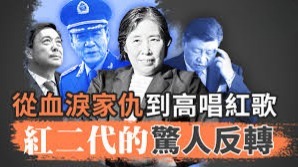
Yet, half a century later, the children of those whose lives were shattered under Mao Zedong’s iron fist — the so-called Red Second Generation — now raise their voices in praise of him. But why is that? Have they collectively forgotten the past, or is there a hidden truth beyond our sight?
Today, we tell the stories of several of these Red Second Generation figures — stories of betrayal, suffering, and baffling choices. Behind their silence and songs of praise, what truth is being concealed?

The Liu family’s entangled grievances
At first glance, a photograph of an elderly woman smiling alongside two caring daughters looks like a warm family portrait. But appearances can be deceiving. The woman in the center is Wang Guangmei, widow of former Chinese leader Liu Shaoqi. The two women beside her are Li Min and Li Ne — daughters of Mao Zedong, the man responsible for Liu Shaoqi’s tragic death.
Success
You are now signed up for our newsletter
Success
Check your email to complete sign up
Why would Wang Guangmei beam with joy in the company of her husband’s enemy’s children? To understand, one must return to the blood-soaked years of the Cultural Revolution.
Liu Shaoqi, once the No. 2 man in the Communist Party and Mao’s comrade-in-arms, was widely regarded as Mao’s heir apparent. But in 1966, the tide turned. Branded the “biggest capitalist roader in the Party,” Liu was denounced and humiliated at mass rallies. His wife, Wang Guangmei, also became a target.
A Tsinghua-educated intellectual and once the glamorous “First Lady,” Wang was dragged from her home by Red Guards in 1967. She was imprisoned in Qincheng Prison and paraded in public wearing a tattered cheongsam and a necklace of ping-pong balls, while mobs spat on her and pulled her hair. After 12 years behind bars, she was finally rehabilitated in 1978, emerging frail and emaciated.
Yet astonishingly, Wang appeared to bury the past. She seemed to have forgotten that her imprisonment was the result of Mao’s Cultural Revolution, and that her husband’s death had been directly caused by Mao. Learning that Mao and Jiang Qing’s daughter, Li Ne, was ill and left without help, Wang personally brought her own nanny to Li’s home to cook, clean, and care for her child.
Even more startling, Wang displayed in her living room a 1962 photograph of Mao visiting the Liu household. She often told visitors that Mao had shown her “mercy,” downplaying her husband’s death and her own suffering as nothing more than “a mistake of the times.”

In 2004, Wang hosted a banquet for Mao’s daughters Li Min and Li Ne at a Beijing hotel. The now-famous group photo from that gathering shows her smiling warmly, as though past enmities had dissolved into thin air.
When a state media reporter once asked her opinion of Mao’s infamous “Bombard the Headquarters” big-character poster, which marked Mao’s public break with Liu, her reply stunned many: “Just look at today’s society. Chairman Mao was right.”
She even told Ping Opera star Xin Fengxia, another victim of the Cultural Revolution: “Fengxia, we are all good students of Chairman Mao.” Xin, who had endured brutal persecution herself, was left speechless: “Her husband was destroyed by Mao, and she can still say something like that?” This extraordinary willingness to forgive was not limited to Wang. Her son, Liu Yuan, also seemed to have let go of his father’s fate.
Brutalized by Red Guards
In 1969, Liu Shaoqi died in Kaifeng, Henan, abandoned and without even a bed to lie on. Liu Yuan had seen with his own eyes how his mother was brutalized by Red Guards, and he himself was labeled the “child of a black gang,” banished to the countryside to haul manure and toil in the fields.
But decades later, Liu Yuan rose to become a general in the People’s Liberation Army. Far from harboring resentment, he forged close ties with Mao’s grandson, Mao Xinyu. In 2010, when Mao Xinyu was promoted to major general, it was Liu Yuan who personally placed the epaulettes on his shoulders, praising him as a “pillar of the nation.” The two often appeared together at events commemorating Mao, smiling side by side as if the tragedies of the past had never existed.
The echo of ‘Red Songs’ in Bo Yibo’s family
The story of Bo Yibo is heavy enough to take one’s breath away. Bo, a veteran of the Chinese Communist Party, was publicly denounced by Mao Zedong in 1966 as the ringleader of the so-called “61-person traitor clique.”
He spent more than a decade behind bars, enduring countless public humiliations. His wife, Hu Ming, collapsed under the relentless torment of struggle sessions and, on the way back to Beijing, took her own life at just 47.
Bo’s second son, Bo Xilai, lost his mother at 17, while his father was imprisoned. During the Cultural Revolution, Red Guards broke his ribs and left him covered in scars. Later, he recalled how frostbite and malnutrition in prison caused his feet to rot down to the bone. To his classmates at Peking University, he once gritted his teeth and said: “Mao Zedong’s Cultural Revolution destroyed our family!”

Yet few could have predicted that this scarred “red second generation” would later become one of Mao’s most ardent admirers. In 2007, as the party chief of Chongqing, Bo Xilai launched the “Sing Red, Strike Black” campaign. Red songs echoed through the streets, and Mao’s portraits were once again hung high.
Electrified by the movement, Bo shouted in speeches: “In Chairman Mao’s era, the people are the masters of the country!” He even wrote to Mao’s daughter, Li Ne, expressing his “boundless admiration” for the former leader. It wasn’t until 2013, when Bo Xilai fell from power due to corruption charges, that this “red song dream” came to an abrupt end.
A senior journalist revealed that before Bo’s downfall, he personally heard Bo praise Mao. “Logically, I should dislike Mao Zedong,” said Bo. “My father was persecuted for twelve years during the Cultural Revolution, and I myself spent time in prison. Yet the more I think about it, the more I realize that China can only move forward by following Mao Zedong’s path.”
The gratitude of Xi Zhongxun’s family
Then there is Xi Zhongxun, father of today’s “paramount leader” and a pioneering figure in the Shaanxi-Gansu-Ningxia border region, once a close comrade of Mao Zedong. In 1963, he fell from power after being accused of “anti-party” activities over a novel, plunging from high office into a political abyss.
For the next 16 years, he endured investigation, public struggle sessions, and confinement in a tiny seven- to eight-square-meter room in Beijing’s garrison area — seven years at a stretch.
His son, Xi Jinping, was also a victim of the Cultural Revolution. When Xi Zhongxun was purged, his son was not yet ten years old. The child of a high-ranking official, he suddenly became labeled a “dog pup” and part of the “black categories,” constantly facing discrimination.
At 13, after making a few remarks critical of the Cultural Revolution, Xi was branded an “active counter-revolutionary” and classified as an “enemy of the people.” He was detained at the Central Party School. During a session criticizing six so-called “capitalist roaders,” Xi was the only child among five adults. All six were forced to wear heavy iron hats. Unable to bear the weight, Xi had to support it with both hands. Eventually, he was sent to a juvenile detention “gang offspring” class. It is almost unimaginable that a boy of just over ten endured such treatment.
By 1969, Xi Jinping was sent to Liangjiahe village in Yan’an County, Shaanxi, to work in the countryside. Conditions were harsh, and he often faced hunger and cold. He later recalled periods when he had to gnaw on tree bark to survive, frequently waking at night from lice bites. Perhaps these hardships were meant to imprint the lessons of the Cultural Revolution on him — a warning never to repeat its mistakes.
Yet fate can be unpredictable. In 2012, Xi Jinping rose to China’s top position. Rather than seeking revenge, he elevated Mao’s portraits higher than ever, as if forgetting entirely that the same man had caused his father’s suffering and stolen his own childhood.
In March 2011, as a Politburo Standing Committee member and Vice President, Xi visited Hunan, with his first stop at Shaoshan. There, he reportedly declared a line still echoed by local officials: “Without Chairman Mao, my father would have been killed long ago! There would be no me today! Our family is full of gratitude to Chairman Mao!”

On the 120th anniversary of Mao’s birth in 2013, Xi called him “a great revolutionary.” Then on Dec. 26, 2023, on Mao’s 130th birthday, Xi led six Standing Committee members and numerous officials in a visit to Mao’s memorial hall. That same year, he also went to Shaoshan, standing solemnly before Mao’s former residence. In the footage, his demeanor is reverent, commemorating not a tormentor, but a benefactor in his eyes — despite the suffering Mao had caused his father and himself.
The trade between hatred and power
From Wang Guangmei and Liu Yuan to Bo Xilai and Xi Jinping, their families became victims of Mao Zedong’s wrath during the Cultural Revolution. They themselves also suffered. Yet why did they all sing praises of Mao? But did they truly respect or worship him? It appears not.
Liu Yuan promoted Mao Xinyu to consolidate his military standing; Bo Xilai revived red songs to rally public support; Xi Jinping paid homage to Mao to secure backing from the party’s conservative faction. In the world of the “red second generation,” Mao Zedong is not a man but a symbol — a flag that upholds the CCP’s legitimacy and preserves the power and privileges of the red heirs themselves.
Their bows are not acts of forgetting family grievances; they are a recognition that power outweighs personal vendettas. Their stories read like absurd dramas, full of contradictions and reversals. They lost relatives, dignity, and even freedom during the Cultural Revolution, yet through praise and silence, they gained high office and prestige.
Their choices may bewilder outsiders, but they reveal an immutable truth of politics: There are no permanent enemies, only enduring interests. This is the story of the red generation repaying hatred with virtue — or turning grievances into calculated homage.