On June 25, a magnitude 6.5 earthquake struck waters off the southern Philippines, followed the next day by a strong earthquake in Japan’s Yamanashi Prefecture that was felt across Tokyo and the surrounding metropolitan region.
Both areas sit along the Pacific Ring of Fire, one of the world’s most seismically-active zones, raising fresh concern over earthquake preparedness and tsunami risks in the region. The back-to-back tremors came just a day after two devastating earthquakes in Venezuela killed more than 160 people and left hundreds more injured. The quakes caused multiple buildings to collapse, leaving residents and pets trapped beneath the rubble. Rescue efforts are still underway, says acting President Delcy Rodriguez.
RELATED: Twin Earthquakes Devastate Northern Venezuela, Killing at Least 164 and Injuring Nearly 1,000
Quake strikes off southern Philippines
According to the U.S. Geological Survey, the quake hit off the coast of Mindanao in the southern Philippines at around 7:30 p.m. local time on June 25. The epicenter was reported near waters south of Balangonan, with the depth estimated between roughly 33 and 52 kilometers, depending on initial readings from different agencies.
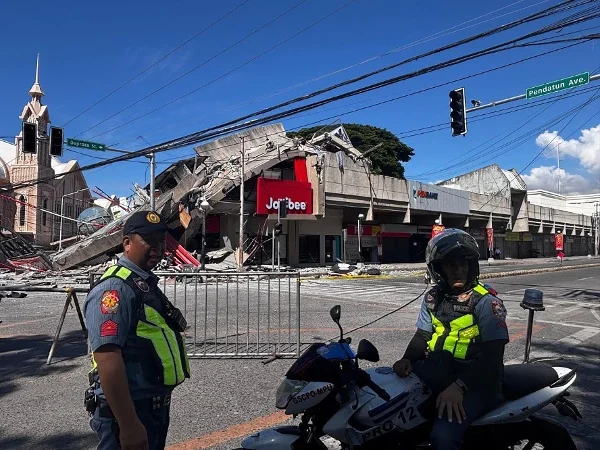
Reuters, citing the USGS and local rescue officials, reported that the earthquake struck waters south of Mindanao, about 35 kilometers southwest of Jose Abad Santos. No tsunami warning was immediately issued, and there were no immediate reports of casualties or major damage.
Success
You are now signed up for our newsletter
Success
Check your email to complete sign up
The Philippine Institute of Volcanology and Seismology said aftershocks were possible and that authorities were assessing potential impacts.
The quake came after a series of recent tremors in the region. Earlier this month, the area was hit by a stronger magnitude 7.8 earthquake that triggered a tsunami warning and caused significant damage and casualties. Another magnitude 6.6 quake followed on June 15, underscoring the heightened seismic activity in the southern Philippines.
Japan under tsunami watch
In Japan, a magnitude 5.6 earthquake struck the eastern part of Yamanashi Prefecture near the Fuji Five Lakes area at around 10:29 p.m. on June 26, according to Japanese reports.
The quake had an estimated depth of about 20 kilometers and registered a maximum intensity of lower 6 on Japan’s seismic scale, with Fuji-Kawaguchiko among the most affected areas. Shaking was also felt across Tokyo, Kanagawa, Shizuoka, and Chiba prefectures. Parts of western Tokyo, including Hachioji and Machida, recorded an intensity of 4.
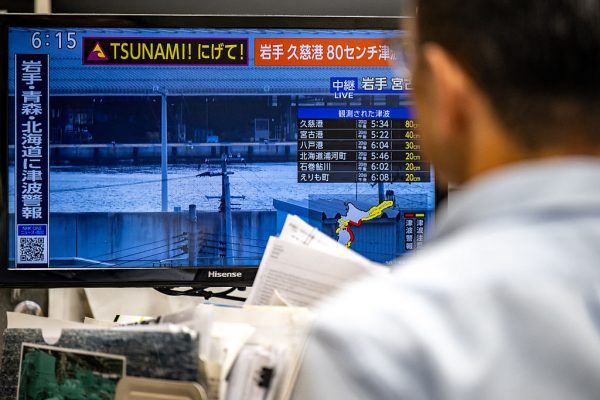
The Japan Meteorological Agency said there was no tsunami threat and officials reported no abnormal volcanic activity at Mount Fuji following the quake. However, authorities urged residents to remain alert for possible aftershocks and to stay updated on official emergency advisories.
Japanese seismologist Toshitsugu Fujii said the epicenter was located between Otsuki and Doshi in Yamanashi Prefecture, an area near the subduction zone of the Philippine Sea Plate. He said the quake occurred in a seismically active region and was likely unrelated to volcanic activity because it was located far from Mount Fuji’s magma chamber.
JR East temporarily suspended portions of the Tohoku, Joetsu, and Hokuriku Shinkansen lines after the quake for safety inspections before services resumed.
Ring of Fire keeps region on alert
The Philippines and Japan are both located along the Pacific Ring of Fire, where tectonic plate movement produces frequent earthquakes and volcanic activity. The zone stretches through Japan, the Philippines, Indonesia, and the western coasts of the Americas, making it one of the world’s most earthquake-prone regions.
The back-to-back quakes in the Philippines and Japan do not necessarily indicate a direct connection, but they highlight the persistent seismic risk facing countries in the region.
Japan has long maintained a high level of earthquake and tsunami preparedness, often halting trains, inspecting infrastructure, closing roads, and checking nuclear facilities after major tremors. The country also rapidly activates government information-gathering and disaster-response mechanisms following strong earthquakes.
As of the latest reports, the Philippine earthquake had not caused major casualties or damage, while the Yamanashi quake produced no tsunami threat or widespread serious damage. Authorities in both countries are continuing to monitor for aftershocks and delayed impacts, particularly in southern Mindanao and areas near Japan’s densely populated capital region.