There is a Chinese saying: “Shandong produces statesmen, Shanxi produces generals.” Shanxi (literally meaning “west of Mt. Taihang), a mountainous province in northern China, spreading along the upper bank of Yellow River, is home to many martial arts enthusiasts.
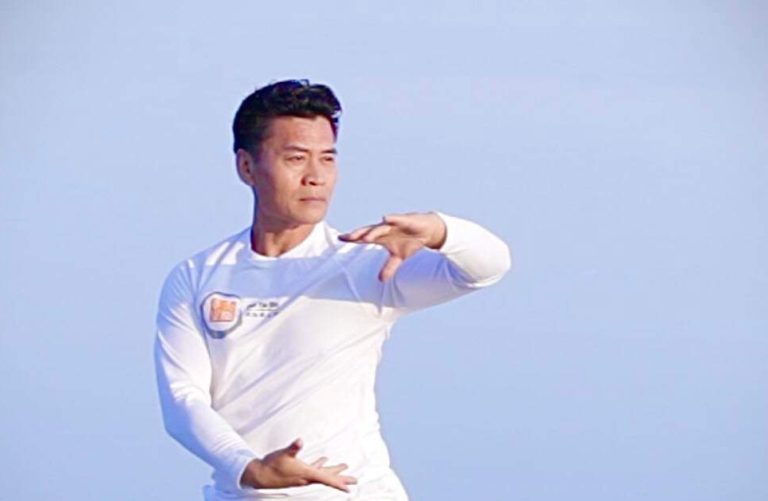
Founder of the International Xin Wu Men Martial Arts Association, Mr. Longfei Yang, whose family was originally from Shanxi province, began his martial arts training at the age of six. His grandfather, Jianjiu Yang was his first teacher. Been a major general under Fu Zuoyi, one of the key military leader of China during WWII, Mr. Jianjiu Yang was well versed in I-Ching astrology, and of course, martial arts.
Based on Mr. Longfei Yang, his grandfather would get up at 4am to meditate, exercise both in the morning and evening, and often practice Yang-style Tai Chi. He owned a secret Shaolin manual focused on health preservation, with focus on practicing the martial arts of Long Fist and Drunken Fist. “He lived a disciplined life, and even in his eighties and nineties”, said Longfei, “at ninety-five, he was still in excellent health, free from pain or illness, and his calligraphy was outstanding.”
Mr. Longfei Yang has practiced multiple martial arts disciplines, many of which are combat-oriented. But when teaching students, he places more emphasis on the health benefits of martial arts.
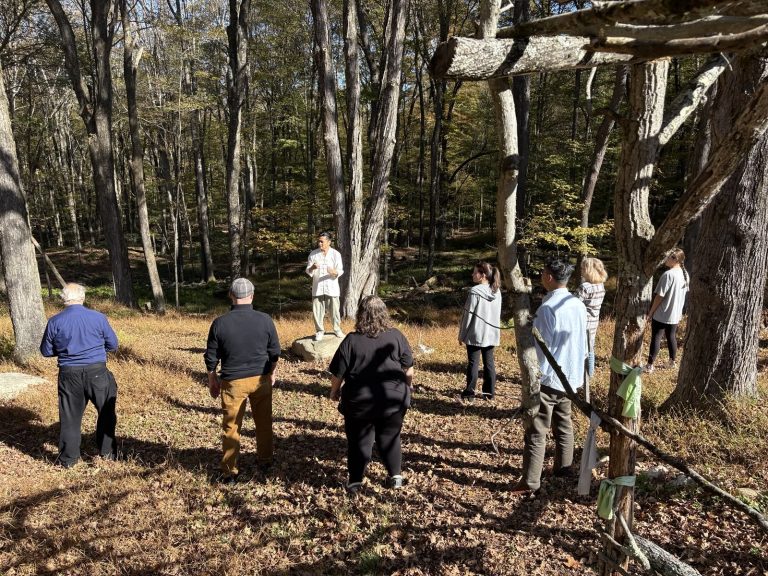
In early October, Mr. Yang co-hosted an martial arts seminar at the Mamakating Environmental Education Center, located in Sullivan County, New York. Afterwards, Vision Times interviewed Mr. Yang to discuss his views on contemporary martial arts, especially its development in the United States, and his advice for martial arts practitioners.
Success
You are now signed up for our newsletter
Success
Check your email to complete sign up
Q: Why did you establish Xin Wu Men? What is your goal?
A: We established Xin Wu Men in the United States to get more publicity of traditional culture. We aim to fully inherit and pass down the true essence of martial arts and martial virtue—not just for Chinese people, but also for Westerners to understand the essence of traditional culture.
Q: As a Flushing based instructor, what are your thoughts and expectations for future activities here (Upper New York State)?
A: I am teaching “interflow Tai Chi,” to get people healthy. I feel that people today really need this, so I have done more in Manhattan and New York. Coming to upper state, I feel the natural environment here is perfect. Especially at the Nature Education Center, I feel I can use this opportunity to promote this discipline. Tai Chi is a microcosm of the universe, allowing us to better experience Chinese culture and Eastern philosophy in nature.
Q: Will you hold classes here in the future?
A: I am considering it. It mainly depends on future promotion and the number of people interested in learning.
Q: Do you have any expectations for the students under your instruction?
A: Yes, there are requirements. At the very least, they must learn martial arts in the traditional way, understand martial virtue, and grasp some basic martial arts theory to truly enter the right state for learning.
Q: Your class is named “Inner Flow Tai Chi, Returning to Nature,” what specific benefits does the practice bring to learners?
A: Tai Chi for health is easier for the public to understand. After so many years of practicing various schools of Tai Chi and martial arts, whether internal or external styles, the most basic benefit is gaining a healthy and strong body, and making your mind more determined and strong. It improves personal character and quality in all aspects, but the most crutial part is to achieve a state of balance or peace through martial arts practice. This is the main goal. However, Tai Chi that is popular today lacks the authentic mental methods—it’s just routines and forms. We can bring the most basic health theories to the general public, allowing them to get the best out of it. To achieve this, it is helpful to get some understanding of eastern philosophy and outlook on life. This is a great opportunity. By using this method, more people can become healthy, and more people will gradually understand what we teach.
Q: After teaching martial arts in the U.S. for so many years, how well do Westerners accept it? What is the current state of martial arts development in the U.S.?
A: That’s a good question. After decades of promoting martial arts abroad, I’ve found that Chinese people see martial arts as their own culture, but most learn it for fitness or self-defense. Westerners, if they like it, want to understand Chinese culture. They believe the true value of martial arts lies in China’s mysterious culture: what is health preservation, what is “qi,” and the cultural features like the Six Harmonies, Five Elements, and Seven Stars. They are especially interested in these. I’ve found that when Westerners are interested in Chinese culture. People are eager to learn, and that is so valuable.
Q: In your classes, I often hear you talk about the Five Elements. Do you think people can understand these concepts?
A: Actually, the Dao is the ultimate simplicity: it’s about life. For example, when I talk about heaven, earth, and people as the “Three Powers” in Chinese traditional culture, with people at the center; or the Six Harmonies referring to the body’s structure and harmonious coordination. People feel these concepts are easy to understand.
Q: You have taught many martial arts styles. Which ones are your favorites?
A: Tai Chi is my favorite, and also the soft school of Mantis Fist. My teacher was the only one to promote this style internationally. He taught both internal and external training methods, which greatly benefit health. My teachers and some other martial arts seniors all lived long lives and had their own beliefs. Many of them also studied Chinese medicine. They had a lot of experience in health preservation. My (Mantis Fist) teacher is 83 years old now and still moves very quickly, like a young person.
Q: You are a Mantis Fist heir, which is practical for combat. But you teach your students to be calm and peaceful rather than to fight; How do you balance these two aspects in your own practice?
A: Yes, Mantis Fist is highly practical for combat. I believe that no matter what style you practice, you must first understand your own body and how to make it stronger and healthier. That’s the first step. Then, during practice, the main thing is to understand the philosophy of the universe through martial arts. In learning, you not only practice techniques externally, but also cultivate yourself internally, improving your understanding and insight, achieving internal and external balance. The principle of Tai Chi believes that when water and fire meet, it forms a balance.
Q: What are your views on Chinese martial arts both internationally and in China?
A: Now, various martial arts schools are being promoted. However, much of the essence of traditional martial arts has been lost, and people only preserve the routines for practice. In the old days, people had to practice for real combat, to survive a turbulent time. Nowadays, martial arts have become more flashy, with routines and weapons that are no longer real. The environment is relatively peaceful, and people don’t intend to put in real effort. Many real methods and traditional mental techniques have been lost.
Q: Are there still organizations or individuals preserving these traditional elements?
A: There are still some among the people, but they are very rare. Chinese martial arts have two lines [of] inheritance: one is through military tradition, and the other is through folk practice.