

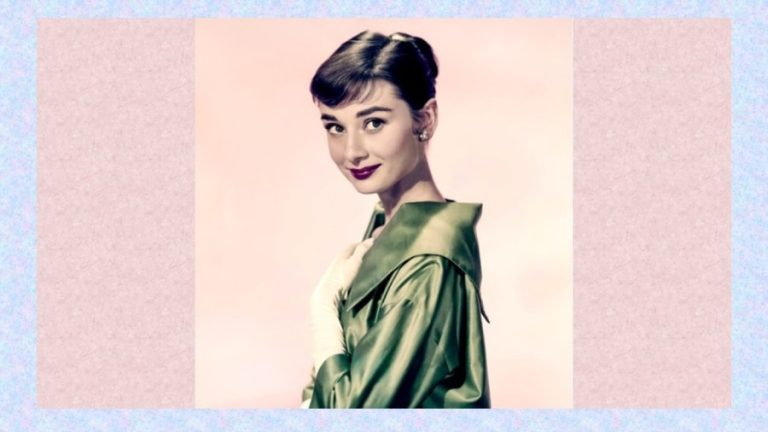
Her breakthrough in Roman Holiday (1953) made her an international star, and her performance in My Fair Lady (1964) cemented her legacy. The film won eight Academy Awards, including Best Picture, Best Director, and Best Actor, securing its place in cinematic history.
Adapted from George Bernard Shaw’s Pygmalion and directed by George Cukor, My Fair Lady tells the story of a poor flower girl transformed into a refined society lady — a timeless fable of aspiration and identity that continues to captivate audiences six decades later.
A bold experiment: The professor and his flower girl
In Edwardian London’s bustling Covent Garden, linguistics professor Henry Higgins meets Eliza Doolittle, a spirited flower seller with a thick Cockney accent.
Amused by her rough speech, Higgins bets that within six months he can train her to speak like a duchess and pass unrecognized among the upper class.
The lessons are grueling. Impatient and perfectionist, Higgins subjects Eliza to endless drills in pronunciation. Eliza, proud but desperate to change her fate, endures the torment and pushes through sheer willpower.
Success
You are now signed up for our newsletter
Success
Check your email to complete sign up
Her persistence finally pays off. Eliza triumphs at her first test — dancing with Higgins in a moment that symbolizes both her transformation and her emotional awakening.
Trials and triumphs: The lady in the making
The first true test comes at the Royal Ascot.
Dressed in a stunning white gown and a lavish hat, Eliza blends among high society — until, overcome by excitement, she shouts encouragement in her Cockney slang. The crowd is stunned, and laughter ripples through the stands.
The setback humbles her, but Higgins refuses to give up. He doubles down on her training, determined to showcase her at the royal ball — where Eliza’s transformation will be complete.
At the ball, Eliza dazzles the guests with her poise and accent. Even the queen and prince are enchanted.
When linguist Zoltan Karpathy investigates her background, he proudly declares her “Hungarian royalty.” Higgins laughs, knowing the wager has been won.
The price of transformation
The triumph, however, comes at a cost.
After the celebration, Higgins takes all the credit, forgetting Eliza’s pain and perseverance. Heartbroken, she realizes she has lost her identity — no longer a flower girl, yet not fully accepted as a lady.
“I sell flowers, not myself,” Eliza declares, her voice filled with dignity and sorrow.
Unable to endure his indifference, she leaves Higgins and returns to Covent Garden. But the place feels foreign — her transformation has made her a stranger to her old world.
Only then does Higgins realize how deeply he has grown accustomed to her presence. His pride crumbles, and love, long unacknowledged, begins to surface.
When Eliza returns in the film’s final scene, he quietly asks, “Eliza, where are my slippers?” — a line that captures an unspoken tenderness audiences have cherished for decades.
Behind the scenes: Casting controversy and creative brilliance
Before its film adaptation, My Fair Lady was already a Broadway triumph, starring Rex Harrison and Julie Andrews.
When Warner Bros. chose Hepburn — a star without formal singing training — over Andrews, it sparked controversy.
Rex Harrison performed his songs live, but Hepburn’s vocals were largely dubbed by soprano Marni Nixon.
Critics doubted the casting, yet Hepburn silenced them with her emotional depth, refined acting, and magnetic screen presence.
Time magazine wrote, “Replacing Julie Andrews seemed unthinkable — until Audrey Hepburn made Eliza Doolittle her own.”
Though Hepburn was not nominated for an Oscar due to the dubbing debate, her portrayal remains definitive — the image of Hepburn in a white gown and black hat became one of Hollywood’s most enduring symbols of elegance.
Grace beyond the screen
Off-screen, Hepburn’s life mirrored her characters’ quiet strength.
Her early years were marked by hardship during World War II, yet she faced adversity with optimism and dignity.
Later in life, she became a UNICEF Goodwill Ambassador, dedicating herself to humanitarian causes and improving the lives of children worldwide.
“Nothing is impossible,” she famously said. “The word itself says, ‘I’m possible.’”
Audrey Hepburn’s blend of beauty, intelligence, and compassion made her more than a movie star — she became a symbol of hope and timeless grace.
By Cynthia Yang, Janet Huang







