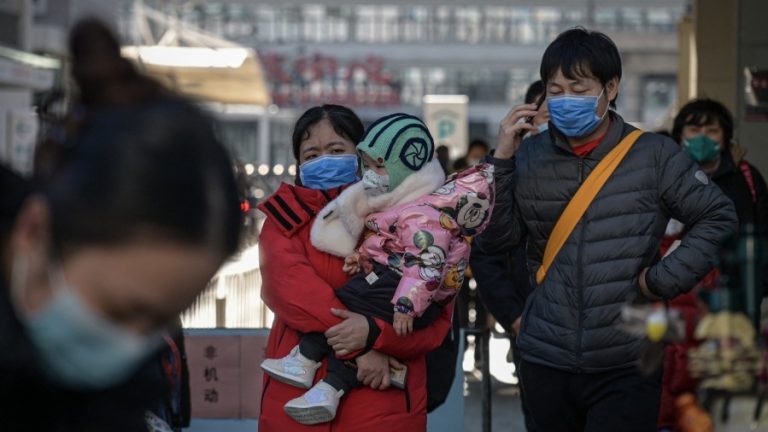
Public health officials across China and Hong Kong are warning of a sharp rise in influenza infections as three strains of the virus — A/H3N2, A/H1N1, and B/Victoria — spread simultaneously. Hospitals in multiple provinces are reportedly near capacity, with children among the hardest hit. Hong Kong has confirmed several severe pediatric cases, including one death, while mainland doctors say this year’s strains differ from those circulating in 2024 and may encounter lower population immunity.
According to the Chinese Center for Disease Control and Prevention (China CDC), influenza activity increased sharply across southern China between Oct. 6 and 12. Both type-A and type-B viruses were detected, with A/H3N2 and A/H1N1 identified among type-A infections.
Authorities recorded four nationwide outbreaks of influenza-like illness.
Type-A influenza accounted for over 90 percent of all cases in both northern and southern China, and among those, more than 90 percent were H3N2.
Hong Kong health authorities have also detected all three influenza strains. Since the start of the new school year in September, the city has reported 556 outbreaks linked to schools and childcare centers. Eleven severe pediatric cases have been confirmed, including one fatality.
Success
You are now signed up for our newsletter
Success
Check your email to complete sign up
The patients ranged from 2 to 17 years old; nine had previously been in good health.
On Oct. 12, a 13-year-old girl infected with influenza-B died from myocarditis, shock, and encephalopathy — Hong Kong’s first pediatric flu death of the year.
On Oct. 20, a healthy 2-year-old girl was hospitalized in critical condition with influenza-A complicated by encephalopathy. Officials said she had spent part of her incubation period in Guangdong Province before arriving in Hong Kong.
Experts warn of lower immunity to H3N2
“This year’s dominant strain is A/H3N2, while last year’s was A/H1N1,” said Dr. Li Tongzeng, chief physician of infectious diseases at Beijing You’an Hospital, Capital Medical University.
“That means the public’s immunity to H3N2 is lower and deserves close attention,” he said.
Dr. Li added that the symptoms of A/H1N1, A/H3N2, and B-type influenza are similar — fever, cough, sore throat, muscle aches, fatigue, and headache — but children are more likely to experience severe and rapidly progressing illness.
In Shanghai, pediatric hospitals are reporting record numbers of fever cases.
According to National Business Daily, since the start of the school term, outpatient visits at children’s hospitals have surged 30 percent compared with early September. On weekends, some hospitals report up to 900 intravenous treatments per day.
At one facility, more than 90 children registered within the first two hours of opening, nearly all with high fevers.
A deputy director at Fudan University Children’s Hospital confirmed that flu activity has rebounded sharply.
“In the spring, we saw a wave of H1N1,” he said. “Now H3N2 dominates, especially among primary-school and kindergarten students.”
A video circulating on Oct. 22 showed a kindergarten child in Shaanxi Province saying that 17 of 31 classmates had caught the flu.
The same day, hospitals in Jiangsu Province were described as “packed with patients,” while Ningbo Women and Children’s Hospital in Zhejiang reported its inpatient wards were “completely full.”
These accounts could not be independently verified, but they mirror widespread reports of rising pediatric cases across eastern and southern China.
Public reactions: Fatigue and frustration
On Chinese social media, many users described lingering symptoms and growing frustration with overcrowded hospitals.
“Even breathing hurts my throat,” one wrote.
“I’ve been sick for 20 days and still not better,” another said.
Others questioned whether authorities were downplaying a new COVID-19 variant.
“They just changed the name of COVID and now call it flu,” a user from Henan Province posted. “Everyone knows what’s happening.”
The influenza surge coincides with several other respiratory outbreaks across the mainland.
In Henan, cases of hand, foot, and mouth disease (HFMD) are rising as viral subtypes shift.
In Jiangsu, pediatric outpatient visits have spiked in Danyang, while hospitals in Shanghai and other cities report new clusters of respiratory syncytial virus (RSV) infections.
Doctors say some families have been entirely infected, with multiple children admitted to intensive care. Parents in several cities have reportedly been asked to sign critical-condition notices.
Public-health experts say the current situation reflects a combination of reduced immunity, viral co-circulation, and healthcare fatigue in the post-COVID era.
After years of strict containment and masking, exposure to seasonal viruses declined, leaving many — particularly children — with weaker immune defenses.As one Shanghai pediatrician told Vision Times: “These viruses are not new. What’s new is how fragile our collective immunity has been.”