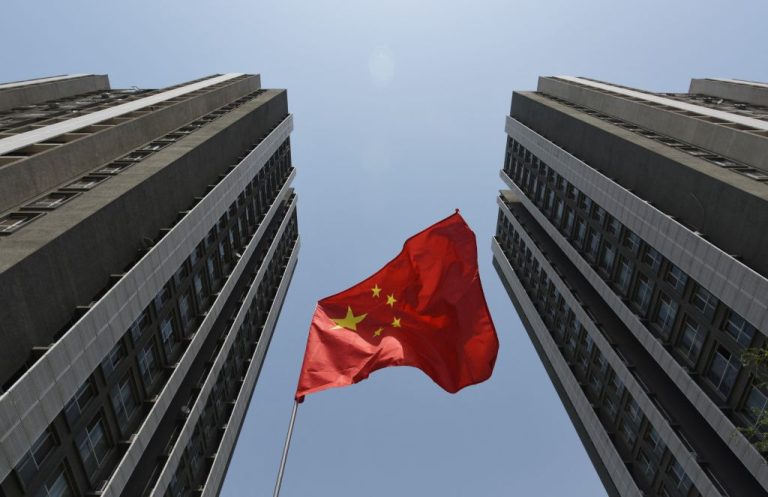
For years, the Chinese Communist Party (CCP) has wielded its dominance over rare-earth minerals as both a political and economic weapon. Even U.S. President Donald Trump, during his first term, struggled to counter Beijing’s control of this strategically vital industry.
This week, Trump and Australian Prime Minister Anthony Albanese reached a major agreement to expand joint mining and production cooperation—a critical step toward reducing the world’s dependence on Chinese rare earths.
China’s current dominance was built not through innovation, but through a vacuum left by the West.
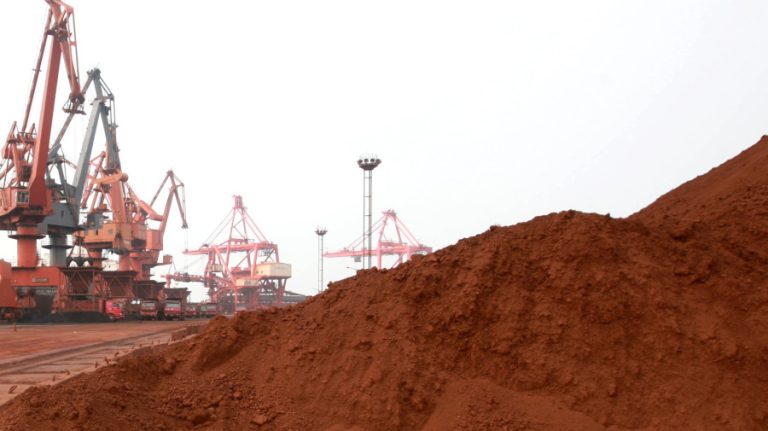
In the late 20th century, environmental concerns drove the United States and other industrialized nations to abandon rare-earth mining and refining. Beijing, willing to bear the ecological costs, stepped in to fill the gap—quickly taking control of the global supply chain.
In 2010, amid rising tensions with Japan over the Senkaku (Diaoyu) Islands, China restricted rare-earth exports, weaponizing its dominance.
Success
You are now signed up for our newsletter
Success
Check your email to complete sign up
This month, Beijing went even further, requiring foreign manufacturers to obtain official approval before exporting any product containing trace amounts of Chinese rare earths.
The restriction touches nearly every modern industry—from electronics and defense to automotive and medical devices.
Today, China controls roughly 70 percent of global rare-earth mining, 90 percent of refining, and an overwhelming 98 percent of magnet manufacturing.
The CCP recognized the strategic value of these minerals decades ago, building a near-monopoly through state subsidies, strategic acquisitions, and Belt and Road Initiative investments.
In 2024 alone, Chinese firms spent more than $22 billion acquiring overseas mines, often outbidding Western competitors.
Loose environmental regulations and low-cost labor allowed Beijing to refine rare earths at prices far below Western levels, forcing rivals out of business.
Refining is resource-intensive—consuming up to 22 times more water and energy than mining itself. By keeping global prices artificially low, Beijing effectively turned much of the West into an importer.
Western environmentalism’s strategic blind spot
Environmental protection in the West, though well-intentioned, created a strategic vulnerability.
During Trump’s first term, Washington pushed for trade pressure on Beijing, while European leaders hesitated to confront China directly.
Only after sustained U.S. lobbying did European Commission President Ursula von der Leyen introduce the concept of “de-risking”—reducing economic reliance on China.
Now, as Beijing again turns rare earths into a political bargaining chip, the West has begun actively rebuilding its own supply chains.
The “de-risking” initiative is no longer theoretical—it’s moving into execution.
As the world’s fourth-largest rare-earth producer, Australia is emerging as Washington’s most natural ally.
In 2024, it attracted nearly 45 percent of all global rare-earth exploration investment, hosting 89 active projects, compared with only 12 in the United States.
On Monday, the two governments unveiled a series of joint investments:
- Alcoa and First Quantum will develop a new rare-earth refinery in Western Australia, backed by funding from Japan, Australia, and the United States.
- The U.S. Export-Import Bank will provide $2.2 billion in financing to strengthen Australia’s mineral supply chain.
- Both sides agreed to establish a price-stabilization mechanism ensuring a minimum cost-recovery rate for producers, given that rare-earth projects typically take 30–40 years to recoup investments.
- Washington and Canberra also vowed to use diplomatic channels to block further mine acquisitions by Chinese state-linked firms.
The end of a monopoly
The CCP spent more than three decades building its dominance in the rare-earth sector.
But with the United States, Australia, Japan, and Europe now coordinating policy and investment, the balance of power is beginning to shift.
Analysts predict that within three to four years, new global partnerships could redraw the supply map, ending China’s near-total monopoly.
“Beijing’s rare-earth advantage is eroding,” one industry expert told Vision Times. “Environmental costs, global scrutiny, and new alliances are changing the game. The monopoly won’t last.”
This article reflects the author’s own analysis and opinions. And does not necessarily reflect the views of Vision Times.
By Dongfang