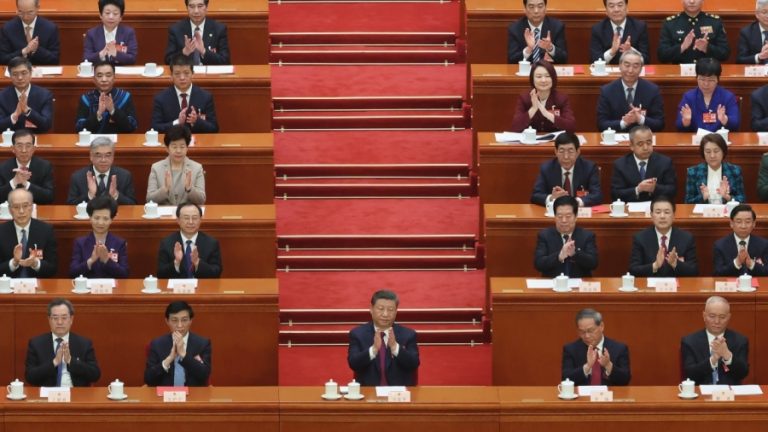
According to an opinion piece by the independent Chinese outlet, The Third Eye, China under Communist Party rule is described as a vast “KK Park”—a metaphor for a system where every citizen lives under surveillance, fear, and the threat of “disappearance.”
The Third Eye claims that tragedies similar to the death of actor Yu Menglong occur daily in China, with citizens allegedly falling victim to illegal detention or even organ removal.
One example cited is that of Zhang Qi, a 23-year-old woman who sought routine treatment for a cold at the First Affiliated Hospital of Zhengzhou University in 2018.
Her mother, Du Tingxiang, alleged that during what was supposed to be a minor procedure, doctors abruptly decided to remove Zhang’s entire left lung “to prevent future infection.”
Post-surgery reports, she claimed, showed no sign of infection, and the family was never shown the removed organ.
Success
You are now signed up for our newsletter
Success
Check your email to complete sign up
In September 2025, Zhang and her mother publicly protested at the Chinese Culture Festival in Duisburg, Germany, accusing hospital staff of deception. They further alleged that the hospital had conducted more than 1,200 transplant surgeries in the first half of 2023.
Zhang now survives on constant medical care. German doctors reportedly told her family it was “a miracle” she made it to Europe alive.
Organ harvesting, ‘an open secret’
A nurse identified as Zhang Yu, who said she worked for a decade at a top-tier hospital in Wuhan, told overseas Chinese media that live organ harvesting has become “an open secret.”
She described a chain of involvement—from hospital directors to surgeons and nurses—where patient blood samples are matched for potential buyers. Once a match is found, doctors allegedly mislead patients into “treatments” that involve removing healthy organs.
According to the account, some hospitals in Hunan and Wuhan even maintain helicopter transport to ensure rapid transfer of organs.
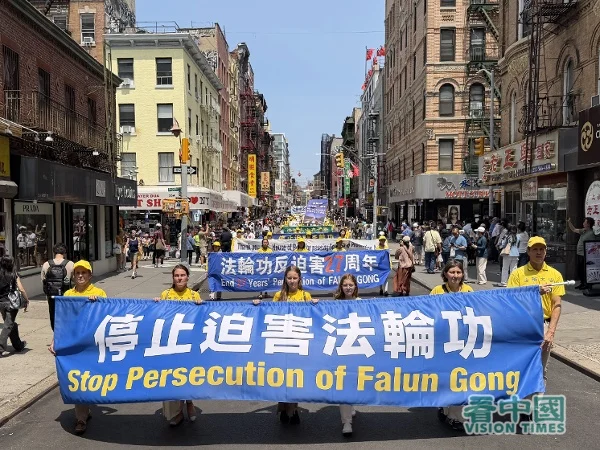
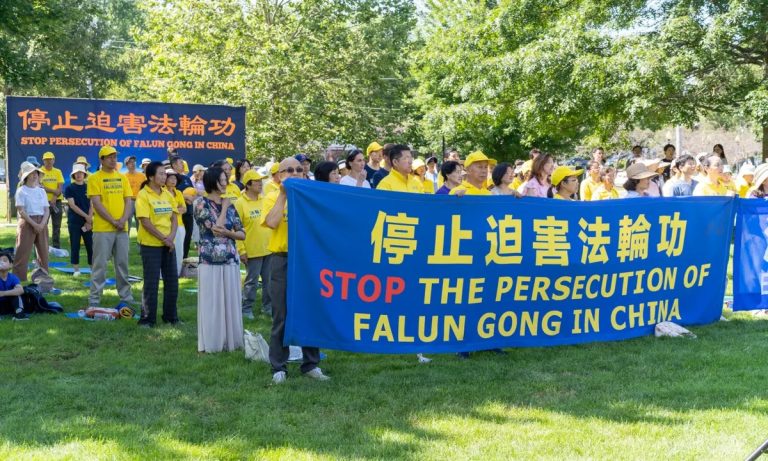
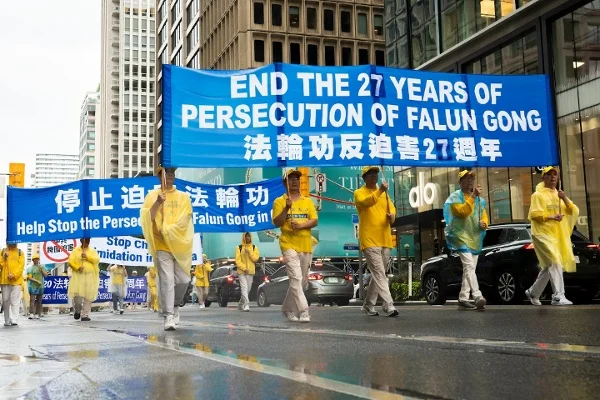
Zhang Yu claimed the practice began with persecuted Falun Gong adherents but has since expanded to ordinary citizens. She also referred to missing-person cases near Optics Valley Square, suggesting possible connections to organ trade networks.
Official data on disappearances remain opaque, but The Third Eye cites figures of 3.9 million missing persons in 2016 and about 3 million annually in 2023–24. These numbers cannot be independently verified.
On Oct. 22, multiple Douyin (TikTok China) users reportedly posted videos showing unlicensed ambulances operating across different provinces.Commenters expressed fear that such vehicles might be linked to disappearances or organ trafficking, with one remarking: “What kind of society is this? Teenagers just vanish, and no one is held accountable.”
Local authorities have not confirmed any link between these vehicles and criminal activity, but online speculation has fueled growing public distrust toward China’s health and security systems.
The ‘slaughterhouse’ and the Xiangya connection
The report goes on to allege that Xiangya Hospital in Hunan plays a central role in what it calls a “dark organ trade network.”
It claims that in 2024, an intern doctor named Luo Shuaiyu, who had reportedly gathered over 11,000 pages of evidence about illegal transplants, died in a suspicious fall.
According to the article, Luo’s materials detailed:
- Links between missing youth and transplantation;
- False “brain death” diagnoses;
- A complete organ-trading chain from donor screening to transport;
- Widespread medical corruption;
- The moral collapse of hospitals that “turned into slaughterhouses.”
The article further asserts—without verifiable evidence—that the hospital’s “largest backer” is a man known online as “Aurora” (Jiguangguang), allegedly Li Ming, the grandson of former Premier Li Peng.
It cites anonymous sources claiming Li owns properties in Beijing’s Sunshine Upper East complex, including the apartment where actor Yu Menglong allegedly died, and controls hundreds of companies in Hunan.
A user on X (formerly Twitter) posting under the handle “News Investigation” also alleged that “Aurora” is a shareholder of Xiangya Hospital and profited from organ extraction schemes tied to the entertainment industry.
Vision Times has found no independent evidence to support these claims.
‘Xi’s money pouch’: The Chen Zhi connection
The article also turns to financial corruption, citing Chinese-Canadian commentator Sheng Xue, who alleges that Chen Zhi, chairman of Cambodia’s Prince Holding Group, serves as a money-laundering proxy for Qi Qiaoqiao—Xi Jinping’s elder sister—and the Fujian faction within the CCP.
Sheng claims Chen is a nephew of Huang Kunming, the current CCP secretary of Guangdong province, and that he used his conglomerate to hide and transfer Party elites’ assets abroad.
According to Sheng’s posts, U.S. authorities have seized 127,000 bitcoins (valued at around US$15 billion) from Chen and frozen his 19 London properties, while 146 individuals and entities linked to Prince Group were placed under U.S. Treasury sanctions.
Official U.S. documents confirm that Chen Zhi was indicted on Oct. 14, 2025, by the Eastern District of New York for money laundering and telecom fraud.
The indictment describes Chen as the head of a multinational criminal network operating across more than 30 countries, though it does not mention any Xi family connections.
Sheng and other commentators argue that the case highlights how CCP power families allegedly use intermediaries to shield offshore wealth.
In a Deutsche Welle interview, Hong Kong Baptist University lecturer Lü Bing-quan said it is “common practice” for elite families to operate through agents, adding that Chen’s network appears consistent with this pattern.
A former Chinese intelligence operative identified as Eric told overseas media that Prince Group maintains close ties with CCP security agencies and acts as a logistics hub for Beijing’s covert activities in Cambodia and Southeast Asia.
These assertions remain unverified, but they reflect growing scrutiny of how Beijing may leverage business empires abroad to advance political and intelligence goals.
The Third Eye concludes by urging Chinese citizens to “see through the CCP’s evil nature” and references the cases of Yu Menglong, Zhang Qi, and Luo Shuaiyu as warnings.It also echoes a spiritual appeal associated with the Quit the CCP (Tuidang) movement — a global initiative encouraging Chinese citizens to peacefully renounce their membership in the Chinese Communist Party, the Communist Youth League, and the Young Pioneers as an act of moral and spiritual awakening.