Anthony Grey, the former Reuters correspondent who was held under house arrest in Beijing for more than two years during China’s Cultural Revolution, has died at the age of 87. His daughter confirmed that he passed away on Oct. 11 after suffering from Parkinson’s disease. Grey’s ordeal, which stemmed from a diplomatic standoff between China and Britain, made him known around the world as the “Beijing hostage.”
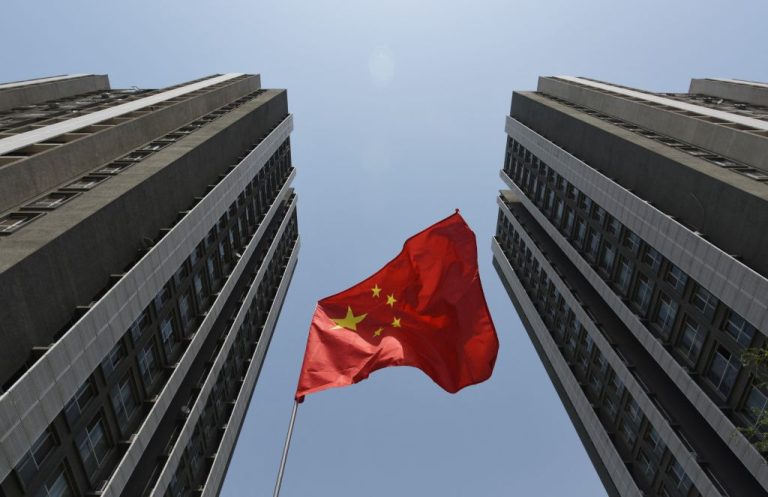
According to Reuters, in 1967, a then 28-year-old Grey was assigned to Beijing at the height of the Cultural Revolution’s chaos. Tensions erupted when British authorities in colonial Hong Kong arrested several Chinese Communist journalists. In retaliation, Beijing placed Grey under house arrest, turning him into a pawn in the geopolitical confrontation between the two governments.
Before his posting to China, Grey had dreamed of becoming a novelist, but chose journalism as a way to better understand the human experience. After joining Reuters, he was first stationed in East Berlin. One night in January 1967, he received a call from his editor asking if he would take up a posting in Beijing.
In his 1970 memoir Hostage in Peking, Grey recalled that the offer was every reporter’s dream assignment. “At the time, Beijing was at the very heart of the Cultural Revolution’s storm,” he wrote. “Major stories were breaking everywhere, yet only four Western journalists remained in the city.”
“I tried to hide my excitement,” he recalled. “At 28, I didn’t want to seem overeager or unreliable. So I simply said, ‘Yes, I rather like the idea.’”
Success
You are now signed up for our newsletter
Success
Check your email to complete sign up
Grey’s house arrest lasted roughly 26 months. He was confined to his residence and forbidden from leaving. The experience made global headlines but also left deep psychological scars. “I felt very low at times,” he later admitted, “but I never gave up hope.”
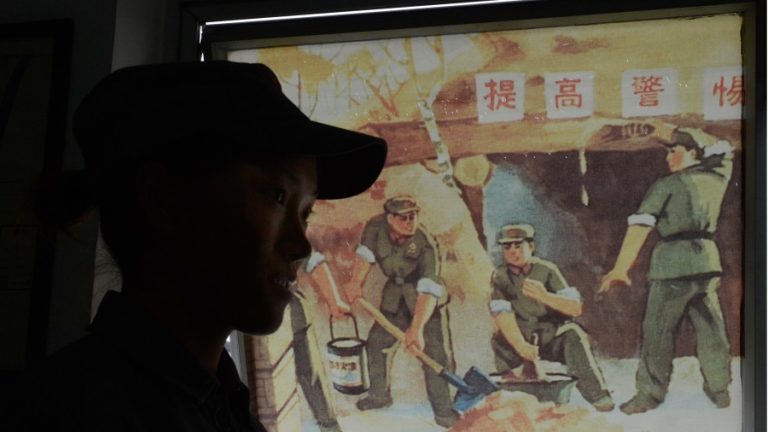
At first, life under house arrest was relatively calm. But soon, Red Guards stormed into his home, defaced his walls with slogans, humiliated him, and even tortured him. In a particularly cruel act, they killed his beloved cat, Ming Ming. After that, Grey was locked in a cramped room plastered with Mao Zedong quotations and propaganda posters.
To survive the isolation, Grey turned to writing as a form of self-therapy. He secretly kept diaries, wrote short stories, and even created his own crossword puzzles to keep his mind sharp. “I filled my time with wordplay and riddles,” he wrote in his memoir. “It was a way to stay sane—to stay human.”
The British government initially pursued quiet diplomacy in hopes of securing Grey’s release, but the effort achieved little. As months dragged on, Western journalists and media outlets launched public campaigns demanding that Beijing set him free. Eventually, after the Chinese journalists detained in Hong Kong were released, Grey was also freed in October 1969.
After more than two years under house arrest, Grey returned to a Britain that had changed dramatically. Once a relatively anonymous journalist, he found himself suddenly in the public spotlight—a shift that made readjusting to society a challenge. He went on to host current affairs programs for the BBC and pursued writing, producing historical novels set in China, Vietnam, and Japan, with Saigon becoming his most popular work.
Grey also explored unconventional and fringe topics, including the mysterious death of Australian Prime Minister Harold Holt and alleged extraterrestrial visitations. At one point, he joined the Raelian movement in France and even wrote a foreword for one of its founder’s books. These pursuits reflected both his openness to new ideas and the psychological turbulence stemming from his traumatic experiences.
Grey was married to Shirley for 22 years, and the couple had two daughters, Lucy and Clarissa. Although they later divorced, they maintained a close friendship. In his later years, Grey sought professional help for long-term post-traumatic stress disorder (PTSD). His daughters both pursued careers in journalism, carrying forward their father’s legacy.
According to Reuters, it was not until 40 years after his imprisonment that Grey finally sought psychiatric treatment and was diagnosed with post-traumatic stress disorder (PTSD). In later years, he became an advocate for forgiveness, letting go of resentment toward both the British and Beijing authorities, as well as the fellow journalists who had, even at his lowest point, continued to press him for stories and reporting leads.
By Wang Jun