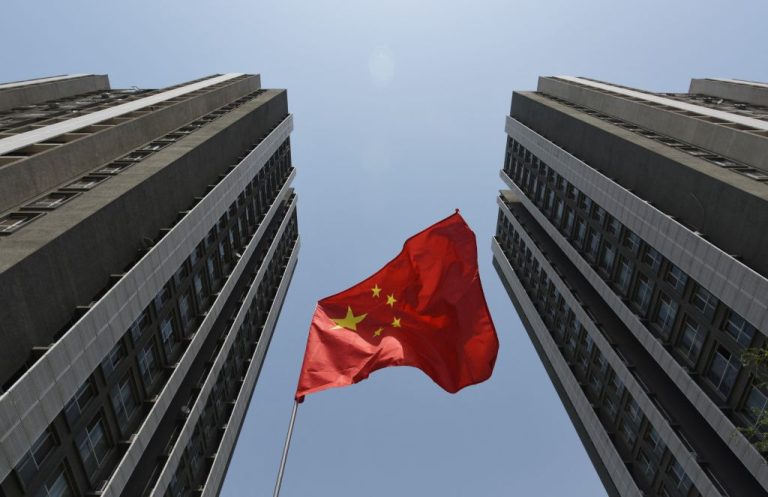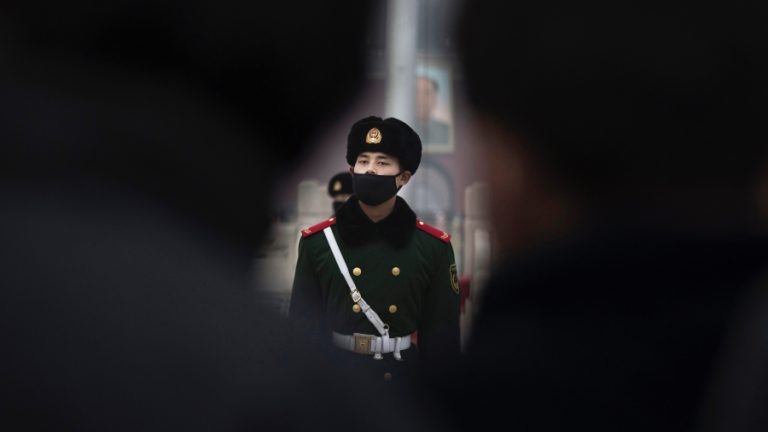
On Oct. 29, the website of China’s Central Commission for Discipline Inspection (CCDI) and the National Supervisory Commission published “Encyclopedia of Party Discipline and Law: Understanding the Rules Civil Servants Should Know—Regulations on Resigning from Public Office.”
The article highlighted five situations in which resignation requests will not be approved:
- Civil servants who have not yet met the minimum years of service.
- Those in sensitive positions who have not completed their confidentiality release period.
- Civil servants under audit or investigation.
- Those with important official duties that remain unfinished.
- Other situations as prescribed by laws and regulations.
Commentator Roden Lian wrote that the new resignation rules disrupt the notion that holding public office offers an easy exit from responsibility. He argued that authority is a public trust granted by the people, and therefore, civil servants cannot treat their jobs as ordinary employment. Lian concluded that the essence of the rules is to ensure that power remains in the public domain, not as a personal privilege.
Leaving isn’t that easy
Du Wen, former deputy director of the Legal Advisory Office of Inner Mongolia’s Legal Affairs Bureau, analyzed the new rules on his social media. He summarized the document’s core message as “leaving isn’t that easy.”
Du said the regulation issued under Xi Jinping effectively prohibits civil servants from resigning, responding to what he described as a growing wave of resignations. The clause stating that “those with important official duties unfinished cannot leave,” he said, is especially blunt: “If they don’t want you to leave, you simply cannot.”
Success
You are now signed up for our newsletter
Success
Check your email to complete sign up
He recalled his own experience: “When I tried to resign back then, it was because of this clause. Even after more than a year, I still couldn’t leave. Today’s work gets done, but tomorrow more comes in—you can’t push it away, refuse it, or delay it.”
Regarding the fifth category—“other situations as prescribed by laws and regulations”—Du noted that it functions as a catch-all provision. “Any situation where the Communist Party doesn’t want you to leave can be placed under this clause,” he said. “The law values logic, but the CCP values convenience. If they want to question or target you, they will always find a reason. It’s like how the crime of ‘picking quarrels and provoking trouble’ can apply to almost anything, or how fraud can be stretched to fit any accusation. If they want to act against you, they will.”
The system is like a ‘pirate ship’
According to Du, China’s civil service law may appear to allow resignations, but the five new restrictions effectively seal off the path. “This is Xi Jinping completely cutting off civil servants’ exit routes,” he said.
Even when a resignation is approved, Du explained, the organization retains leverage. Senior officials are prohibited from working in companies within their former jurisdiction for three years, while ordinary civil servants face a two-year restriction period. During that time, they must report their new employment to their previous unit annually, and these reports are verified for compliance.
Civil servants, Du said, now understand that the system is like a ship. “When you first board, you think it’s an iron rice bowl—secure and stable—but you soon realize it’s actually a pirate ship. The iron rice bowl becomes a cage. Once you enter the bureaucracy, you lose autonomy. That has been my experience.”
Du Wen noted that the current environment makes it difficult not only to resign but also to travel abroad. In recent years, Chinese authorities have tightened restrictions for civil servants and employees of state-owned enterprises, with local departments confiscating passports and severely limiting overseas trips. The higher an official’s rank and the more sensitive the information they handle, the stricter the controls.
The Financial Times reported that since 2023, an increasing number of teachers and public sector employees were required to surrender their passports. Some educational institutions even stated that employees traveling abroad must avoid “contacting foreign hostile forces.” Analysts suggest that under Xi Jinping, China is reverting to a Mao-era “closed country” approach focused on internal control and external defense.
Du added that the authorities have become increasingly wary of “naked officials”—cadres who move assets or family members abroad. In earlier years, Beijing had already launched major investigations and personnel reshuffles to remove such officials. “Now it’s even more extreme,” Du said. “Many local governments have broadened the definition of sensitive positions so much that almost anyone with access to internal information—even if they don’t handle classified material—can be labeled as sensitive.”
He added that professions once loosely supervised, such as journalism, are now closely monitored. “This year, many media outlets were required to collect all reporters’ passports,” he said.
Wages cut, morale collapsing
Reports suggest that the government’s new decree prohibiting resignations came amid a wave of departures from public institutions. Once considered a “golden rice bowl,” civil service jobs have faced pay cuts, frozen salaries, and shrinking benefits, prompting many officials to quit without notice.
Civil servants describe chronic overwork, minimal pay raises, and limited chances for advancement, leaving young employees disillusioned. Some report developing depression under mounting stress.
Bai Xue, a township-level civil servant for five years, said she often worked weekends and once went more than 100 consecutive days without a break. “You’re trapped in a cycle where you can’t move up and can’t leave,” she said.
Another official, Li Chen, said that before he resigned, five or six colleagues had died—one of them a man in his 30s who committed suicide due to depression. Fearing for his own health, Li left the job and later turned to social media work.
According to Newtalk, many government-run organizations have cut salaries or delayed payments because of budget shortfalls. Even official media outlets have suffered. Recently, employees of Puyang Radio and Television Station in Henan Province protested delayed wages, holding banners that read:
“The Party’s mouthpiece cannot abandon its staff; TV workers must defend their rights.”
“Claiming wages is a basic right; employees’ livelihoods are an urgent priority.”
A state-owned enterprise employee from Shanxi, identified as Zhile (a pseudonym), said that most industries and public sectors are in financial distress. Civil servants now face not only unpaid salaries but also uncertain bonuses. “Only monopoly sectors fully backed by government funds remain stable,” he said.
Surveillance and control
Du Wen said the CCP’s strict surveillance reveals deep insecurity. “In normal countries, civil servants don’t have to hand in their passports collectively,” he said. Such mass travel restrictions, he noted, even violate China’s own laws. “According to Chinese law, only the Public Security Bureau—or anyone conducting a lawful investigation—has the authority to hold citizens’ identification. No other entity is allowed to confiscate documents.”
He added, “All of this reflects an extreme trend of control under Xi Jinping. The intensity of this control and sense of crisis is unprecedented among CCP leaders since the reform era.” Some observers, he said, describe Xi as turning governance into a paranoid system of internal control—outwardly promoting the “Four Confidences,” but inwardly showing none at all.
Du concluded, “A regime that relies on holding its own colleagues and civil servants hostage to maintain stability is sending the clearest warning signal. After all, even a pirate ship eventually sinks.”