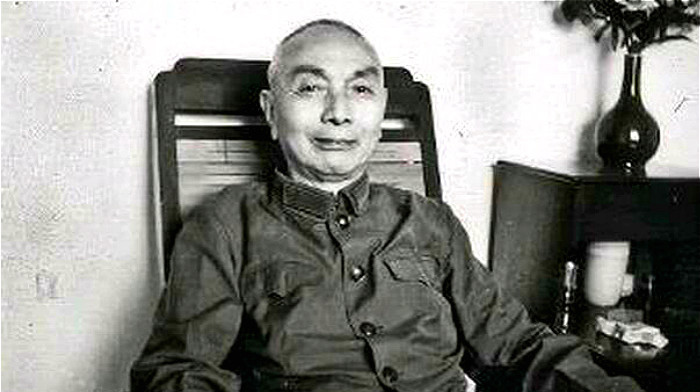
For decades, the name Guo Rugui lived in the shadows of the Chinese Civil War. A graduate of the Whampoa Military Academy and a trusted strategist to Chiang Kai-shek, Guo served as director of operations within the Nationalist Ministry of National Defense and held multiple high-level positions in the wartime command system.
But a widely repeated saying hinted at a deeper betrayal: “What lay on Chiang’s desk also lay on Mao’s.”
It captured the scale of the intelligence leak that crippled the Nationalist forces.
Chiang Kai-shek’s operational plans were being delivered to the Chinese Communist leadership almost in real time and at the center of this breach was Guo Rugui.
A black hole in the intelligence system
In 1947, as the civil war reached its peak, Guo Rugui—then director of operations—oversaw nationwide strategic planning and troop deployments. His office handled every confidential dispatch and operational order issued by the Nationalist command.
Success
You are now signed up for our newsletter
Success
Check your email to complete sign up
According to archival accounts, Guo relayed these plans to the CCP through intermediaries such as Ren Lianru and Dong Biwu. The intelligence reportedly reached Yan’an “almost simultaneously” with its arrival in the Nationalist command center.
The battlefield was no longer a contest in intelligence gathering—it became a one-way mirror.
Every operation approved by Chiang Kai-shek soon appeared on a second desk hundreds of miles away.
In the spring of 1947, the Menglianggu Campaign erupted. The Nationalist Army’s elite 74th Division was ordered to strike Communist forces in Shandong. But the entire operational plan had already been delivered by Guo Rugui to the CCP.
Armed with advanced knowledge of troop movements and supply lines, Communist forces set up an ambush that wiped out the division. General Zhang Lingfu was killed, and the 74th Division ceased to exist.
Chiang Kai-shek was furious but found no trace of the leak.
General Du Yuming warned: “Guo Rugui’s conduct is suspicious. He should be removed at once.”
Chiang refused, insisting: “I will never doubt a loyal servant.” The intelligence leak went unaddressed, and the defeat became the first clear example of a “pre-known loss.”
Huaihai: The peak of battlefield transparency
A year later, the Huaihai Campaign began. Guo Rugui remained in charge of the operations division. The Nationalists assembled 500,000 troops—Chiang’s final attempt to reverse the strategic tide.
Communist archives later stated: “The Nationalists’ movements, deployments, and withdrawal schedules were all known to us three days in advance.”
With this advantage, Communist forces encircled and destroyed key Nationalist units.
The Huang Baitao Corps fell, Du Yuming was captured, and the entire Xubeng theater collapsed.
Chiang Kai-shek, who had led China through eight years of war against Japan, lost the intelligence sovereignty essential for victory in the civil war. Under Guo Rugui’s watch, the Nationalist staff system became the fracture point through which its strategy disintegrated.
After the fall of Nanjing and the Nationalist withdrawal to Taiwan, the CCP portrayed Guo Rugui as someone who had “recognized the direction of history.” But they awarded him no military rank and did not name him among the founding contributors of the new regime. His presence faded from official honors—an illustration of how the Party treated those who defected to it.
At first, Guo believed he had chosen “the correct side of history.” He taught at the Nanjing Military Academy and helped compile war histories. Yet the reality quickly proved different. All military scholarships required political approval. “Professional competence subordinate to political authority” became the hard rule.
In the 1957 Anti-Rightist Movement, Guo Rugui was labeled a “right-leaning” figure.
During the Cultural Revolution, Red Guards denounced him as a “remnant of Chiang’s army” and a “deep-cover agent.” His home was raided repeatedly; he was subjected to struggle sessions and harsh public humiliation.
After the Cultural Revolution, he was rehabilitated and returned to teaching, but the damage was irreparable. In his notes, he wrote: “My two mistakes—first, trusting the wrong side; second, causing harm to others.”
The latter referred to the soldiers who died as a direct consequence of his leaked intelligence.
A blank final note
In his later years, Guo rarely discussed the past. On his deathbed, he left his family a single blank sheet of paper as his will.
His son explained: “Father said he wrote nothing because no words could absolve the debt of those who died because of him.”
The “wordless will” became the final symbol of his remorse.
After his death, the CCP buried him with the ceremony of an ordinary soldier. He was not included in any list of contributors—neither a hero nor an enemy. Guo Rugui was undeniably a Communist spy.
He crossed two political systems:
- For the Republic of China, he cost Chiang Kai-shek his nation.
- For the CCP, he witnessed firsthand the collapse of his own illusions.
He became one of the most tragic pawns in the history of modern China.
Guo Rugui’s final words— “I thought I served the country, but I only served the devil.” —reveal a deeper truth. When people recall the phrase “What lay on Chiang’s desk also lay on Mao’s,” it is more than a remark. It is a mirror—reflecting the failure of an intelligence system, and the downfall of a soldier’s soul.