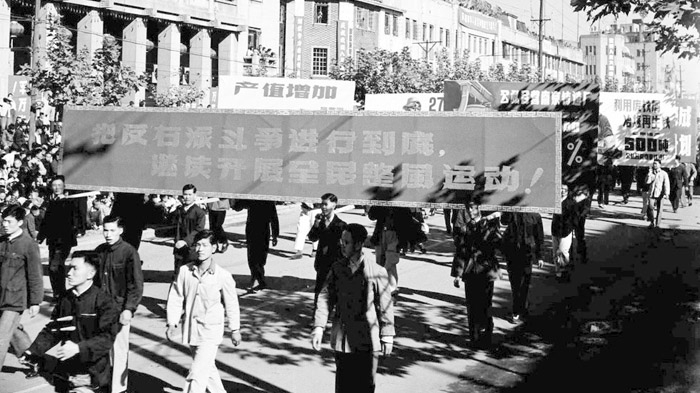
China’s Anti-Rightist Campaign swallowed more than half a million intellectuals, but very few left a mark as sharply as Huang Wanli.
On paper, he was just one more name on Mao’s rightist blacklist.
In reality, he represented something far more threatening to Mao Zedong: a mind too clear to deceive, and a spine too straight to bend.
A prodigy shaped by water and will
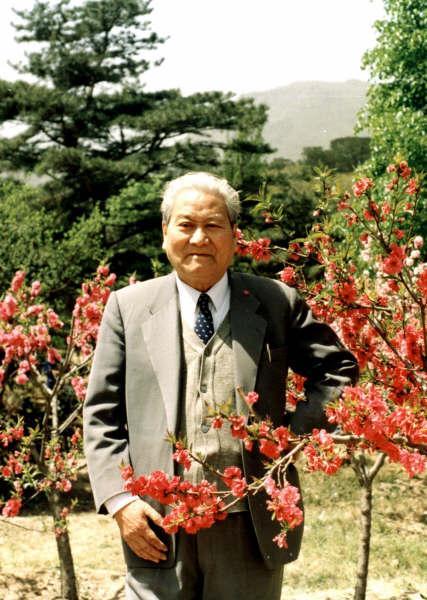
Huang was born in 1911 into the well-known Huang family of Shanghai. School after school, he finished first in his class. By his early twenties, he was already publishing technical papers admired by bridge-building pioneer Mao Yisheng.
But it was in the United States—at Cornell, Iowa, and the University of Illinois—that he found his true calling. His doctoral work on flood modeling was two decades ahead of its time. He then joined the Tennessee Valley Authority, driving thousands of miles to study America’s major water projects.
Success
You are now signed up for our newsletter
Success
Check your email to complete sign up
By age twenty-six, Huang returned to China and spent years walking riverbanks, climbing ravines, and mapping tributaries across Sichuan and Gansu.
He was building not just expertise, but a reputation: China’s most gifted hydrologist of his generation.
A short story Mao could not ignore
When Mao announced “let a hundred flowers bloom” and encouraged intellectuals to “speak out,” Huang took him at his word.
His satirical short story, “Words Among the Flowers,” criticized corruption in Beijing’s infrastructure work. Tsinghua University’s president forwarded it upward. Days later, the piece appeared in People’s Daily with a handwritten note from Mao: “What kind of talk is this?”
That one line sealed Huang’s political fate.
By the summer of 1957, he was attacked nationwide, stripped of his teaching duties, banned from research, and branded a major “rightist.”
The Cultural Revolution: humiliation without surrender
Red Guards arrived in 1966 and tore his life apart room by room.
They beat him with belts until his back bled. They shaved his hair into a humiliating half-bald mess. Huang quietly shaved it clean himself—and then shaved the heads of other persecuted teachers. It was the only form of dignity still available.
His entire family—three generations—was expelled from the Tsinghua faculty residences and forced into a damp, moldy shack. Their monthly allowance dropped to 20 yuan. Huang swept the water-engineering building every morning, rain or shine.
He never begged, never confessed, never wrote a self-criticism.
Years in the labor camps
In 1969, the university sent him to the Tsinghua “May 7th Cadre School” in Jiangxi—a former labor camp that had been abandoned because of schistosomiasis.
At nearly sixty, he carried water for the entire brigade, hauled bricks, dug earthworks, and worked the fields in brutal heat.
Accused of being a “foreign spy,” he endured endless interrogations. At one point, he collapsed on a dirt road under the summer sun and thought the end had come. He wrote a short poem—his “final words”—before regaining consciousness.
But Huang survived, continued labor reform in Sanmenxia, and at night quietly drafted research papers by hand.
He simply refused to disappear.
Why Huang Wanli became Mao’s enemy
The reasons were neither accidental nor personal. Each one touched Mao’s deepest insecurities.
He challenged the Sanmenxia Dam—the project Mao tied to his own legacy
Sanmenxia was built as a Soviet-style national miracle meant to “make the Yellow River run clear.”
Huang warned the opposite would happen: catastrophic siltation, farmland loss, and inevitable failure.
He was right. And Beijing never forgave him for being right before everyone else.
He spoke openly about democratic accountability
His short story contrasted U.S. public oversight with Beijing’s corruption. To Mao, this wasn’t criticism—it was provocation.
He mocked political sycophants
Huang’s complaint about “Goethe-types” and “Dante-types”—intellectuals who praised leaders mechanically—was a direct jab at Mao’s personality cult.
He refused to write a self-criticism
When intermediaries hinted Mao might restore him if he apologized, Huang instead sent a poem questioning why no one else had dared tell the truth about Sanmenxia.
In Mao’s eyes, this was rebellion. At the Lushan Conference in 1959, Mao reportedly said: “Peng Dehuai is like Huang Wanli—born with a rebellious bone.”
From Mao, that was not a compliment. It was a sentence.
A legacy Mao could not erase
Huang Wanli spent the most productive years of his life in labor camps, sweeping floors, and surviving on scraps. But the very qualities that made him “dangerous”—independence, clarity, honesty—also made him one of modern China’s most respected engineers.
His predictions about Sanmenxia all came true.
His warnings about political flattery aged even better.
And his refusal to kneel became the foundation of his legacy.
Mao silenced him.
History restored him.
Huang Wanli remains not just a “rightist,” but a reminder of what it costs to tell the truth in a country built on punishment for honesty.