By Li Jingyao
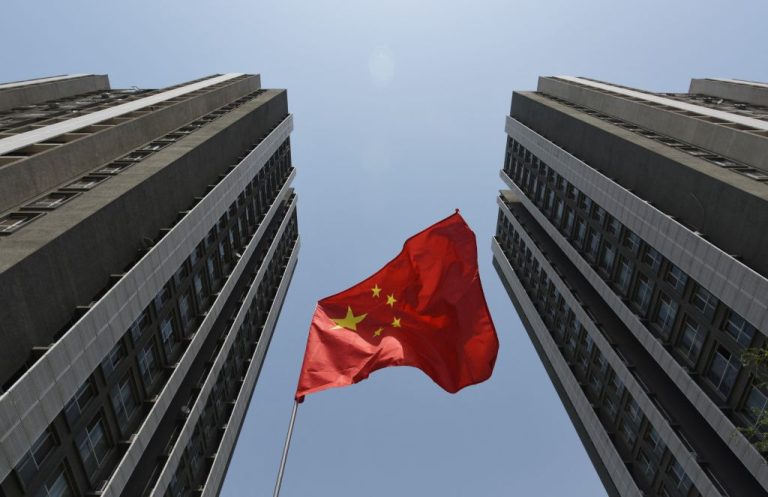
A newly updated U.S. National Defense Authorization Act (NDAA) has drawn sharp reactions from Beijing after provisions calling for the public disclosure of Chinese Communist Party (CCP) leadership wealth were reported to be included. The development has also fueled renewed online speculation surrounding Politburo member Ma Xingrui — an intensifying rumor cycle that some commentators claim involves massive alleged graft and, by extension, China’s first lady Peng Liyuan.
On Dec. 18, U.S. President Donald Trump signed the NDAA passed by both chambers of Congress. The updated bill requires the U.S. Director of National Intelligence to publish a report on a government website and submit it to relevant congressional committees assessing the wealth of senior CCP leaders, including estimates of personal wealth, financial assets, and business interests.
RELATED: Leaked Claims Tie Ma Xingrui’s Corruption Case to Xi Jinping’s Wife Peng Liyuan
U.S. NDAA provision calls for report on CCP leadership wealth
The targets include the CCP general secretary, members of the Politburo Standing Committee, and Politburo members. The legislation also contains multiple provisions aimed at countering perceived China-related threats and strengthening Taiwan’s defense.
Success
You are now signed up for our newsletter
Success
Check your email to complete sign up
China’s Ministry of Foreign Affairs responded forcefully. Spokesperson Guo Jiakun said at a routine press briefing on the afternoon of the 19th that the U.S. FY2026 NDAA “hypes up the China threat,” interferes in China’s internal affairs, and harms China’s sovereignty, security, and development interests. He said China is “strongly dissatisfied and firmly opposed,” adding that Beijing has lodged “solemn representations” with Washington multiple times.
It is widely recognized that corruption among China’s political elite has been severe, with many senior officials alleged to have hidden substantial assets overseas.
Xi family overseas assets ‘exceed $1 billion’
This is not the first time U.S. authorities have sought to examine elite CCP wealth. In 2024, the U.S. Director of National Intelligence produced an unclassified report on “the wealth and corrupt activities of the leadership of the Chinese Communist Party.” The report covered CCP leader Xi Jinping, the 205-member Central Committee, the 25-member Politburo, and the seven-member Politburo Standing Committee, as well as local officials across 23 provinces, five autonomous regions, and four municipalities.
The report said that determining corruption among top CCP leaders is “particularly difficult to ascertain from the outside,” but it stated that Xi’s siblings, nieces, and nephews held business investments and real estate valued at more than $1 billion.
The report noted that Xi launched a sweeping anti-corruption campaign in 2012 and punished nearly five million officials at various levels in subsequent years. It assessed that the campaign was intended “to preserve the CCP’s domestic rule and legitimacy,” and that it was also used “to target Xi’s political rivals.” The report added: “China’s lack of transparency, the pervasive censorship within the government, and the lack of regulations requiring disclosure of leaders’ assets make it difficult for the public to research corruption issues or leaders’ personal wealth.”
Public commentary has argued that disclosures involving Xi and other senior officials reinforce the view that the long-running, high-profile anti-corruption drive, despite bringing down numerous senior figures, has functioned primarily as a tool in factional struggles.
Rumors intensify around Ma Xingrui
Over Xi Jinping’s 13 years in power, corruption investigations have often been seen as a mechanism for removing political rivals or clearing obstacles. However, analysts note that after last year’s Third Plenum, the political climate began to shift, with members of the “Xi faction” increasingly purged on corruption-related grounds. Some observers interpret this as an anti-Xi bloc moving to dismantle Xi’s power base.
More recently, Ma Xingrui — Politburo member and former Xinjiang party chief — has been the subject of corruption rumors and is said to have missed multiple important meetings, prompting talk of a political “disappearance.” Ma is described as being linked to a Shandong network and as having close ties to Peng Liyuan. The Politburo serves as China’s top ruling body.
Anti-CCP blogger Jiang Wangzheng, who frequently posts claims about the Ma Xingrui case on X and other media platforms, agree with the analysts. According to these claims, the alleged case involves more than 300 billion yuan and encompasses four major areas: alleged corruption tied to the aerospace system, alleged Xinjiang corruption, alleged links to the Evergrande case involving Xu Jiayin, and an alleged 4+ billion yuan case connected to Peng Liyuan’s brother-in-law.
Political commentator “Wall-Within Ordinary Person” said Ma’s alleged money-making accelerated after he went to Xinjiang, arguing that Xinjiang’s stability-maintenance budget alone reaches hundreds of billions of yuan and that the region’s rich resources are controlled through state-owned channels. The commentator alleged that the case is not limited to the fall of Xinjiang’s second-ranking official, executive vice chairman Chen Weijun, but also involves the Xinjiang SASAC director.
The commentator said: “Ma Xingrui treated Xinjiang’s finances and the SASAC as Peng Liyuan’s money bag, and the embezzled amount exceeded 100 billion yuan.”
The same commentator claimed that any alleged bribes received by Ma Xingrui’s wife in Hong Kong may not even be fully known to Ma himself, adding that small sums would be insignificant compared with the alleged scale attributed to Ma and Peng.
The commentator further said: “Ma Xingrui is a ‘transportation master.’ He moved Xinjiang’s money through Hong Kong and transferred it overseas. The Peng Liyuan family has at least hundreds of billions in assets — rich enough to rival a nation.”
‘Without political reform, corruption will never end’
Analysts argue that the ferocity of Beijing’s response to the NDAA reflects how sensitive the issue of elite wealth disclosure remains in a system widely perceived as deeply corrupt.
It contrasts China with democratic systems such as the U.S. and Taiwan, where asset declarations by leaders are routine. In June, Trump filed a personal financial disclosure spanning more than 230 pages, listing stocks, dividends, real estate, and investment holdings. It claims he earned $57.35 million from a cryptocurrency issued last year and more than $50 million from Mar-a-Lago club income, and that he also receives a monthly retirement pension of $6,484 from SAG.
It also notes that Taiwan disclosed President Lai Ching-te’s assets in July, including one plot of land and a building, bank deposits of NT$11.25 million (about 2.53 million yuan), U.S. Treasury holdings of about NT$11.86 million, and an outstanding mortgage of NT$12.46 million. By comparison, the wealth of Xi Jinping and other CCP officials remains “a closely guarded secret.”
Commentator Zhou Xiaohui is cited as saying that, given U.S. and allied intelligence capabilities, Western governments likely possess substantial information on CCP officials’ corruption and overseas assets. Past reporting also allege that families of senior figures such as Wang Qishan, Yang Jiechi, and Wang Yi held property abroad. It also references the 2016 “Panama Papers” leak — over 11 million legal and financial records — which it says contained evidence of major CCP “red families” using offshore companies to hide large sums of money.
Finally, “Wall-Within Ordinary Person” argued that even if a small number of figures within the CCP, such as Hu Jintao, Li Keqiang, and Hu Chunhua, were not corrupt, that would not change the system’s underlying incentives. The commentator claimed that one-party rule inevitably breeds corruption, and said that even a leadership transition would not be enough without structural political reform, warning that relying on party discipline alone to fight corruption would ultimately be “an empty mirage.”
Editorial note: This article is based on publicly circulating reports and commentary from independent analysts. The claims described have not been independently verified by Vision Times, and relevant authorities have not publicly confirmed the allegations.