By Xu Rong
The Jingxi Hotel, located on the western side of Beijing’s Chang’an Avenue, is a place that repeatedly enters public view whenever the Chinese Communist Party (CCP) convenes its most important internal meetings. Those familiar with CCP political customs know that while large, ceremonial events such as Party Congresses are typically held at the Great Hall of the People, the Party’s most critical and closed-door decision-making meetings — including Central Committee plenary sessions — are usually held at the Jingxi Hotel.
Among these was the historic Third Plenary Session of the 11th Central Committee, a meeting that marked a decisive turning point in CCP history. Over time, the Jingxi Hotel has thus become a silent witness to countless major political events and internal power struggles.
A hotel with a political mission
The Jingxi Hotel takes its name from its location at the western end of Chang’an Avenue, Beijing’s most politically symbolic boulevard. It officially opened on Sept. 14, 1964, and was once ranked alongside the Beijing Hotel, Minzu Hotel, Qianmen Hotel, and Overseas Chinese Hotel as the capital’s famed “Five Great Hotels.”
The complex consists of the West Building, East Building, and a dedicated Conference Building. From its inception, its primary mission has been to host important Party, government, and military meetings. Enormous sums of public money have been invested in every aspect of the hotel: conference facilities, lodging and dining conditions, sound systems, service protocols, security arrangements, protection measures, and even fitness facilities — all funded by the Chinese people.
Success
You are now signed up for our newsletter
Success
Check your email to complete sign up
Administratively, the Jingxi Hotel is part of the military system. It falls under the General Staff Department’s Support Department and is managed by an entity known as the Jingxi Hotel Administration Bureau. Although classified as a military public institution, it operates under enterprise-style management, a hybrid structure common within the CCP system.
Early diplomatic role
Shortly after opening in 1964, the Jingxi Hotel hosted official delegations from Algeria, Hungary, Czechoslovakia, Bulgaria, Pakistan, and Myanmar, as well as more than 30 professional delegations from 34 other countries and regions.
On Oct. 21 of that same year, the hotel received three major delegations — from Northeast China, Central-South China, and the People’s Liberation Army — attending the Third National People’s Congress, along with more than 260 conference staff members. Over the following decades, nearly all NPC delegations stayed at the Jingxi Hotel, including delegations from Taiwan.
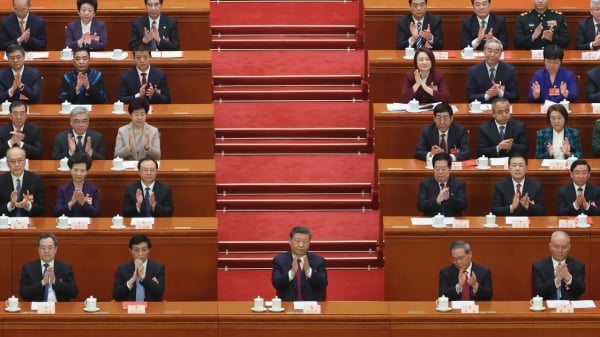
The site of closed-door power
The Jingxi Hotel’s Conference Building is fully equipped for high-level political meetings. Its First Conference Hall on the third floor is especially iconic. Beginning with the 12th Plenary Session of the 8th Central Committee in October 1968, the vast majority of CCP Central Committee plenary sessions have been held in this room.
In February 1978, it was here that the Third Plenary Session of the 11th Central Committee took place — the meeting that effectively ended Mao-era political campaigns and launched China’s so-called “Reform and Opening” period. (For Western readers: CCP “plenary sessions” are closed, elite gatherings where real policy direction is decided, often behind opaque factional negotiations.)
Shelter — and prison — during political turmoil
During the ten years of political chaos known as the Cultural Revolution, the Jingxi Hotel served as a protected refuge for many senior Party officials, shielding them from mass political attacks. At the same time, it was also a place where people were detained.
The hotel holds many untold historical stories. After the Gang of Four — Mao Zedong’s radical allies blamed for the Cultural Revolution — were placed under investigation, they were held in an underground facility beneath the Jingxi Hotel. Although underground, the conditions were far from harsh: the rooms were ventilated and dehumidified daily, sterilized with ultraviolet light, and equipped with bathrooms and even living rooms.
One cannot help but wonder whom the Gang of Four were expected to receive in such accommodations.
Their meals were identical to those of staff: two dishes and one soup per meal, with one meat and one vegetable dish. Fish, meat, and eggs were provided regularly.
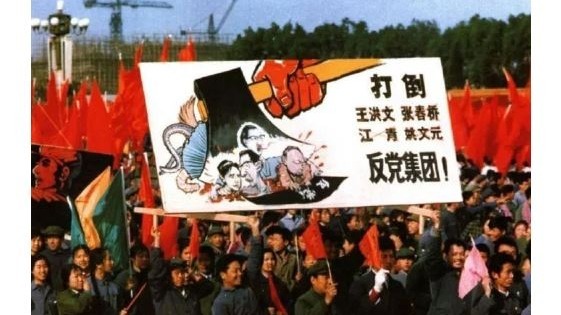
Zhang Chunqiao’s detention
On one occasion, Zhang Chunqiao, a core member of the Gang of Four, suddenly stopped eating after several days. A staff member confronted him:
“Why aren’t you eating? You committed so many crimes — are you on a hunger strike now?”
Zhang replied calmly:
“I’m not on a hunger strike. You young people don’t understand. I’m not feeling well — eating too much makes me uncomfortable.”
Despite this, Zhang was an avid smoker. After finishing his supply the next day, he demanded that staff purchase more cigarettes for him. Higher authorities also regularly sent personnel to deliver clean clothes for the detainees.
Distinctive CCP rituals
The Jingxi Hotel embodies strong CCP institutional characteristics. One of its most distinctive features is its highly synchronized service during meetings: pouring water, refilling cups, and handing out towels are all done in unison, with identical timing and movements — a visual reflection of discipline and control.
Another hallmark is the hotel’s renowned yogurt, long considered exceptional. Its milk comes from a dedicated in-house auxiliary food production base. Although many luxury hotels later attempted to imitate this practice, the taste and quality reportedly never matched the original.

Renovation without change
Between 2000 and 2002, the Conference Building underwent a complete reconstruction, following the principle of “repairing the old to look exactly as it was.” Everything in the First Conference Hall — the layout, doors and windows, columns, tables, chairs, and even the design of the water cups — was preserved in its original form.
On the front wall still hangs Mao Zedong’s handwritten slogan:
“Self-reliance and arduous struggle.”
Yet one cannot help but ask how such luxury embodies either “self-reliance” or “arduous struggle.”
Where the money came from
According to publicly available reports, part of the renovation funding came from “assistance” provided by provincial and municipal governments.
- The Tianjin municipal government contributed nearly 5.5 billion RMB for seismic reinforcement of the West Building and Conference Building.
- In the 1990s, the Shanghai municipal government allocated 280 million RMB for renovations to the East Building.
- The Beijing municipal government provided 140 million RMB for reinforcement of the West Building and restaurant facilities.
- In 2004, Jiangsu Province allocated 25 million RMB for vehicle purchases, expanding the hotel’s conference fleet to 128 vehicles.

The most secure hotel in Beijing
The Jingxi Hotel is known for having the strictest security and confidentiality measures in Beijing. Regular security inspections ensure that no dangerous items or surveillance devices can evade detection.
Access control is extremely rigid. Entry requires a conference pass; ordinary identification or work badges are insufficient. Individuals must be escorted by conference security personnel or hotel staff. For this reason, it is widely known as “the hardest hotel to enter.”
It is also the only hotel in Beijing that does not accept individual or foreign guests directly. Any such stay must receive approval from higher authorities.
During major meetings or political events, security departments conduct intensive inspections and deploy layered guard plans. Even official delegates are not permitted to bring additional people into secured areas. Security relies on both human guards and advanced technical surveillance, and all conference rooms are equipped with specialized anti-leak devices to ensure confidentiality.
A special female military unit
The Jingxi Hotel also houses a special unit of female soldiers, affiliated with “Central Military Commission Platform No. 1” — a highly classified communications command center. Their responsibility is communications security and support.
Each member of this unit is trained to understand multiple regional Chinese dialects and possesses the ability to identify individuals by voice alone.