By Fu Longshan
Hu Yaobang once stated that the Xidan Democracy Wall, a short-lived forum for public political dissent in Beijing, was established at Deng Xiaoping’s instigation. Its purpose, he said, was to discredit Hua Guofeng—the Mao-appointed successor after Mao Zedong’s death—and clear the way for Deng’s return to power.
Within the Chinese Communist Party (CCP) system, so-called “rehabilitation” (pingfan) has never marked a true conclusion. It is instead a redistribution of interests and political capital. The Party’s senior figures understand this well: once a page of history is truly turned, who will be held responsible for the blood spilled on the previous one?
Hu Yaobang refused to accept the premise that “someone must always remain beyond reckoning.” This refusal is precisely why Party insiders later branded him “naïve.” It was not that Hu lacked intelligence or experience, but that on several critical questions he persistently rejected the CCP’s darkest—yet most fundamental—operating logic: that political stability depends on selective amnesia and permanent immunity for those at the top.
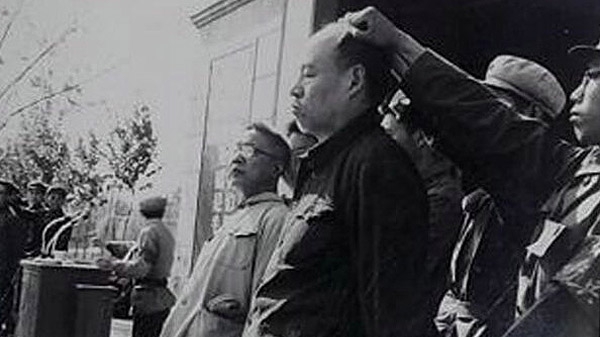
1978–1979: Rehabilitations at a speed that alarmed the leadership
After late 1978, Hu Yaobang became the de facto leader of the large-scale rehabilitation of wrongful convictions left over from earlier political campaigns, especially the Cultural Revolution (1966–1976), a decade marked by mass persecution, arbitrary imprisonment, and widespread deaths.
Success
You are now signed up for our newsletter
Success
Check your email to complete sign up
The pace and breadth of these reversals unsettled many senior Party figures. They affected veteran cadres purged in earlier struggles, intellectuals labeled “bourgeois,” and officials who had fallen victim to shifting ideological lines.
Those who worked with Hu later recalled that when reviewing case files, he adhered to a simple principle: people must not be tormented twice. He had little patience for procedural hedging—such as leaving political “tails” on cases, a common CCP practice that formally rehabilitated victims while quietly preserving grounds for future punishment.
Just as justice seemed within reach and historical responsibility might finally be clarified, a new phrase began circulating quietly within Party ranks: “Yaobang’s heart is too soft—once a case reaches his desk, history gets turned over.” This was not praise. It was a warning.
What frightened the Party elite was that Hu had acquired what they privately called the power to define history. In the CCP system, defining history also defines guilt, innocence, and legitimacy. A man willing to pass moral judgment on the past was a man who could not be reliably controlled.
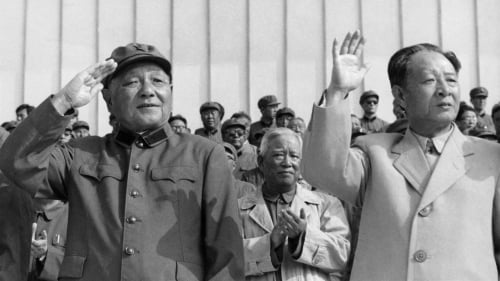
An unbroken man
To senior leaders, Hu Yaobang lacked sufficient “Party spirit”—a term that in CCP usage means unconditional loyalty to organizational discipline over personal conscience.
His defining trait was empathy. He felt genuine anger at miscarriages of justice. He disliked evasive phrasing and had an impulse to speak plainly—to “speak human language,” rather than relying solely on rigid Party formulas known internally as “organizational language.”
In a normal political system, this might be considered a virtue. In the CCP system, it was fatal.
Those Deng Xiaoping truly trusted—figures such as Chen Yun, an economic planner and ideological conservative—shared one essential quality: you never knew what they truly believed, but you knew they would never speak out of turn. Hu Yaobang was the opposite.
A crucial factor was that Hu had not risen through the Party after being fully “broken in.” For the CCP leadership, the safest path to succession has always been long and grinding: advancement from the grassroots to the local level, repeated political purges, enforced silence, and eventual promotion. Only after such a process does one become fully reliable—a tool who has learned self-censorship instinctively.
Hu Yaobang did not complete that cycle.
During the Cultural Revolution, he was a victim, not a perpetrator. After Mao’s death, he rose rapidly as part of the leadership’s effort to “set things right.” He lacked the full experience of being repeatedly purged, humiliated, and trained in fear that the system typically demands.
To the Party elite, this made him dangerous. He had never been completely shattered. And a man who has not been completely shattered always retains the possibility of acting according to conscience.

1980–1982: Power without patience
Hu Yaobang was neither a technocratic economic manager nor a conventional administrative premier. Instead, he controlled the Party’s most sensitive levers: the Organization Department (which controls appointments), the Central Party School (which trains future leaders), propaganda oversight, political rehabilitation, and the evaluation of cadres.
In the CCP system, control over personnel and ideology matters more than control over policy.
After becoming General Secretary—the Party’s top formal position at the time—Hu exerted real influence over who rose and who fell. Institutionally, this was legal. Politically, it was dangerous.
Veteran cadres privately complained that Hu valued moral integrity over political stability and lacked sensitivity to factional balance. One widely circulated anecdote describes a personnel discussion in which a colleague urged Hu to “wait a little.” Hu replied, “If we wait any longer, the wrongful cases will die of old age.”
Once the remark spread, the message was clear: Hu would place morality above political timing.
The limits of loyalty
In 1983, the Party launched the “Anti–Spiritual Pollution” campaign, a nationwide ideological crackdown targeting Western ideas, liberal thought, and cultural openness. Such campaigns were a familiar tool for reasserting control.
Hu carried out the campaign with restraint and resisted expanding its scope. He did not turn it into a mass purge.
Afterward, internal assessments diverged. One faction believed Hu was shielding intellectuals. Another accused him of insufficient firmness. A phrase circulated among senior officials: “It’s not that he doesn’t oppose it—he opposes it in a way that doesn’t look like opposition.”
To the elite, this meant one thing: in a crisis, Hu might not obey.
That concern deepened in 1985, when Baixing magazine published an interview in which Hu spoke with unusual candor. He publicly voiced views normally confined to internal meetings.
Inside the system, the verdict was blunt: “Yaobang took what could be said inside the room and said it out the window.”
Hu Yaobang’s regrets
Between July 13 and Aug. 24, 1988—one year before Hu’s death—Yang Shangkun visited him six times. Yang was a senior Party leader and later president of China, closely aligned with Deng Xiaoping.
Each visit lasted roughly five hours. The following excerpts are drawn from Yang Shangkun’s Diary, in which Hu reportedly recounted the hidden history of key political events.

July 14, 1988
Hu told me he had never expected Deng Xiaoping to be so domineering—unable to tolerate dissent, ruling from behind the curtain. Although Deng held no top formal title after the early 1980s, he exercised ultimate authority through informal power.
Hu deeply regretted using underhanded means to bring down Hua Guofeng in order to support Deng’s return.
Hu said the Xidan Democracy Wall was established at Deng’s urging, intended to discredit Hua Guofeng. But once Deng secured power, he shut down the Democracy Wall and imprisoned Wei Jingsheng, one of China’s most prominent democracy activists.
July 19, 1988
Hu told me that the April Fifth Incident of 1976—the mass mourning protests following Premier Zhou Enlai’s death—had also been encouraged by Deng Xiaoping.
The April Fifth Incident, centered in Tiananmen Square, was later officially condemned as “counterrevolutionary” before being rehabilitated after Mao’s death.
According to Hu, Deng saw the protests as a way to challenge Mao’s radical allies, especially Jiang Qing and Zhang Chunqiao of the “Gang of Four.”
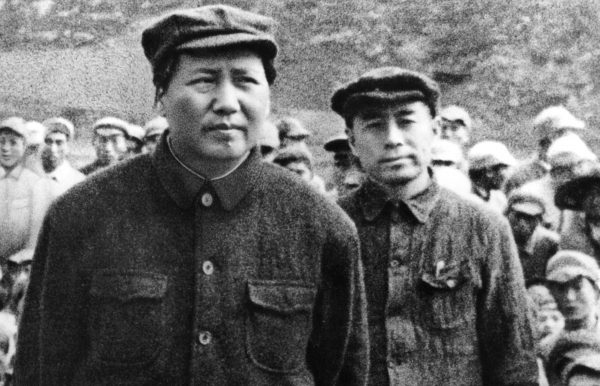
Aug. 5, 1988
Hu warned me plainly: “Xiaoping is the kind of person who burns the bridge after crossing it. You must be careful.”
He then described what he called the most shameful episode of his life—one he felt morally compelled to disclose.
In April 1980, under the pretext of purging the so-called “three kinds of people” (a political label used to justify punishment), 24 Beijing public security officials were deceived into traveling to Dali, Yunnan, where they were secretly executed.
Hu said their real crime was possessing evidence implicating top leaders in past political manipulation.
Aug. 6, 1988
Hu expressed another regret. He said that whenever citizens wrote letters criticizing Deng Xiaoping, he forwarded them to the security services and demanded harsh punishment.
As a result, more than 300 people were sentenced, and over 60 took their own lives.