By Meng Hao, Vision Times
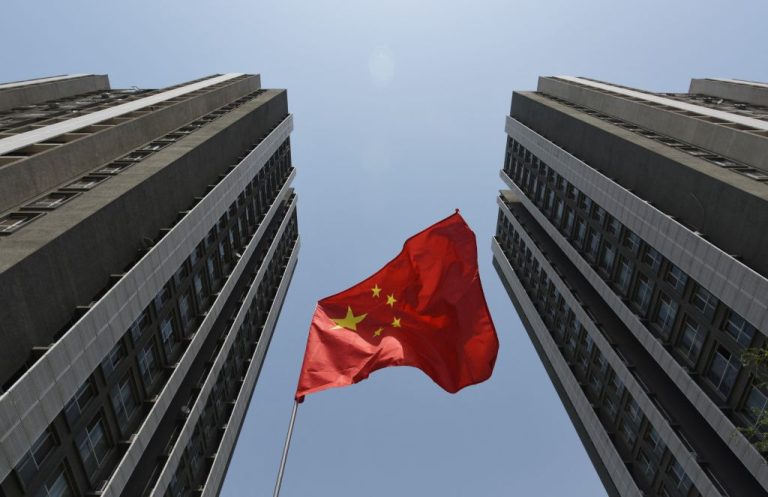
Hudson Institute China Center director Yu Maochun recently argued that the Chinese Communist Party’s (CCP) rule is defined by a deep lack of political legitimacy — and therefore in constant fear of being toppled. Former Chinese entrepreneur Hu Liren echoed that warning in a recent livestream, predicting that 2026 could place Xi Jinping in an increasingly dangerous, high-stakes struggle for survival.
Though coming from different backgrounds, both analysts describe structural forces within the CCP’s top levels that they believe are reinforcing one another. If unresolved, they warn, the regime’s stability will face mounting pressure and ultimately find itself unable to recover.
RELATED: Beijing Launches Sweeping Early-Year Purge as Xi Seeks to Tighten Control of Armed Forces
A regime in fear
Yu stressed that the CCP fundamentally lacks a true mandate from public consent, leaving its leadership perpetually insecure. “Politically speaking, the CCP does not have legitimacy. That is why this regime lives day and night in fear; fear of insecurity and instability.” According to Yu, Xi’s deepest anxieties center on three scenarios: “a coup, a military mutiny, and a popular uprising.”
Success
You are now signed up for our newsletter
Success
Check your email to complete sign up
China’s post-Mao succession involved elite power struggles, and the CCP’s belief that “political power grows out of the barrel of a gun” makes military instability a core threat. Yet Yu emphasized that the greatest fear is ultimately “a popular uprising,” the possibility of mass resistance.
That fear, he argues, has driven the construction of one of the world’s most extensive surveillance and repression systems, reaching from grassroots control to overseas intimidation.
Purges lead to more instability
Hu Liren’s assessment aligns closely. He argued that Xi’s sweeping purges may consolidate power in the short term but deepen long-term instability. “Right now, the military could erupt at any time, and anti-Xi forces are extremely strong.” The pair pointed to the recent high level purges of senior military officers Zhang Youxia and Liu Zhenli as examples of growing instability and dissastisfaction within the regime.
RELATED: Purges of Zhang Youxia and Liu Zhenli Expose Xi Jinping’s Grip on the PLA
Hu said Xi has used large-scale military reshuffles and loyalty-building campaigns to remove veteran commanders and promote a new generation of officers seen as part of an “Xi family army.” But this, he suggested, also reflects Xi’s growing isolation. Recent state media emphasis on Xi “caring for officers and soldiers” has been widely interpreted as an attempt to stabilize morale, signaling concern over military loyalty.
Both analysts describe Xi as becoming the “chairman of everything,” yet trapped in a lonely authoritarian condition with “no enemies, and no friends.” Yu compared Xi to “a frog at the bottom of a Qing Dynasty well,” arguing that his lack of foreign language ability and limited international engagement have left him increasingly detached from global realities.
Worsening economic crisis
Both experts pointed to economic decline as a central danger. Yu said Xi claims to understand everything, yet has left the economy in disarray. High unemployment, weakening trade, collapsing real estate values, and shrinking household wealth have sharply reduced consumer confidence.
“Even if ordinary people have money, they don’t dare spend it, because the future is highly uncertain,” said Yu. Meanwhile, Hu offered an even more direct forecast, claiming Xi “can hold on for at most three more years.” He warned that China’s manufacturing base remains dependent on overseas consumer orders, while outsourcing, private-sector retreat, and foreign capital flight are accelerating.
After 2026, Hu predicted, declining foreign exchange earnings could place the renminbi under severe depreciation pressure. “People now don’t even dare use their money… they want to resist risk.”
Both analysts argued that economic decline and political instability are feeding into each other, creating a dangerous cycle. Yu noted that the middle class and “red capitalists” once formed a key pillar of CCP stability, but many have now lost confidence. “If they have money, they run to Tokyo, London, San Francisco, New York,” said Yu.
Hu also argued that anti-corruption campaigns increasingly resemble wealth redistribution designed to extend regime survival.
A ticking time bomb
Yu warned that relentless purges inside the military destabilize promotion networks: when one senior figure falls, thousands of subordinates are implicated, weakening cohesion. Hu described rising public frustration in terms of a ticking time bomb: “The whole country is a powder keg — one spark and it ignites.” He also pointed to youth disillusionment, “lying flat” attitudes, disguised unemployment, and middle-class decline as forces building deeper resentment.
Yu emphasized that the CCP’s greatest fear is the emergence of nationwide coordination and credible grassroots leaders — something the regime works aggressively to prevent through fragmentation and control. He also referenced the early-2026 US military action in Venezuela as a signal to authoritarian regimes. He argued it sent shockwaves through what he called an “international rogue bloc.”
For Taiwan, Yu stressed the contrast: Taiwan’s leaders are democratically elected and possess strong legitimacy, unlike dictatorships sustained by fraud. “Taiwan can save the world, while Venezuela needs the world to save it.”
High stakes
Hu similarly warned that Xi could attempt external escalation, especially toward Taiwan, to divert domestic pressure. But he argued history shows that empires often collapse through reckless foreign adventures. Beijing views Taiwan as a “breakaway province” that must be reclaimed by any means necessary, even if that includes taking it by force via military intervention.
Both analysts converged on a similar conclusion: 2026–2029 may represent a critical window. Hu predicted that foreign exchange strain, currency pressure, and internal power vacuums could force Xi into succession planning, potentially triggering broader upheaval. “One spark, and the whole country will boil,” notes Hu.
Yu argued that the regime’s aggressive posture abroad cannot conceal its internal fragility. In their view, extreme centralization and repression are accelerating, not resolving, structural instability. When it comes to Taiwan, both described its democratic and economic success as an increasingly powerful counterexample, one that Beijing finds difficult to suppress.
Editorial note: Views expressed in this article are the opinions of the author and do not necessarily reflect the views of Vision Times.