By Meng Hao, Vision Times
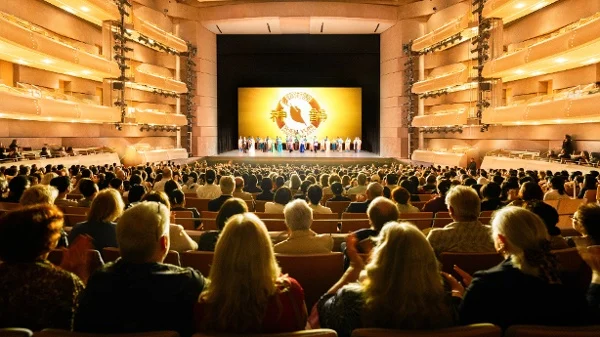
On the world-class stages of Shen Yun Performing Arts’ 2026 global tour, a Chinese classical dancer leaps into the air with precision and strength, completing the demanding dance technique known as the “Dao Ti Zi Jin Guan,” balancing on one leg while the other arcs high behind her like a drawn bow.
In that moment, she seems to break free from gravity itself, much like her own life journey, which began under the shadows of repression in Guangzhou, China, and has carried her through exile, hardship, and ultimately onto some of the world’s most prestigious stages. That performer is none other than Shen Yun principal dancer Ellie Rao (Rao Deru).
On July 27, 2025, Rao published an essay in the U.S. outlet “The Hill” commemorating the 26th anniversary of her father’s death after being persecuted for his faith. The article, alongside her more than decade-long performing career, offers a powerful portrait of courage, remembrance, and hope.
RELATED: What Shen Yun’s Dancers Carry Onto the Stage
A childhood shattered by persecution
Success
You are now signed up for our newsletter
Success
Check your email to complete sign up
Rao was born in Guangzhou into what she describes as an ordinary and warm family. Her father worked as a food safety inspector, and her mother was a dental nurse. Their life was stable, until the Chinese Communist Party (CCP) launched its sweeping crackdown on Falun Gong practitioners in 1999.
Falun Gong, also known as Falun Dafa, is a meditation practice rooted in the principles of truthfulness, compassion, and forbearance. Despite being peaceful in nature, the CCP has launched a brutal campaign to eradicate the practice since 1999. Thousands have since perished at the hands of Chinese police, with many adherents today still undergoing routine monitoring, arbitrary travel bans, and arrests.
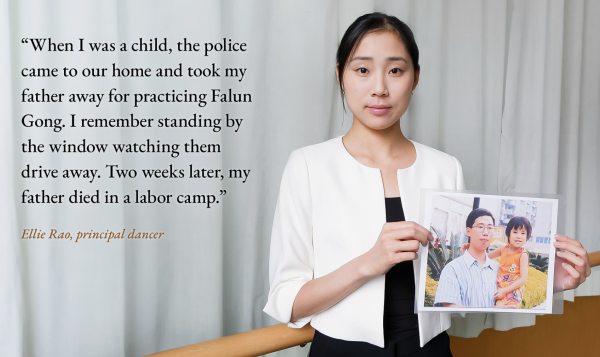
“I watched as my father was dragged away by police. I was only four years old,” Rao recalled in her essay. She described an otherwise normal morning when a knock at the door, disguised as a water company inspection, quickly turned into plainclothes officers forcing their way inside. Standing by the window, she watched the police car carrying her father disappear down the road, a heartbreaking moment that became a final goodbye.
RELATED: UK Government Condemns Threats Against Shen Yun, Issues Firm Response
Two weeks later, her father died in the hospital, badly injured and barely breathing. The reason, she wrote, was his refusal to abandon the principles of “Truthfulness, Compassion, and Forbearance.”
At the age of nine, Rao and her mother fled China, eventually arriving in the United States as refugees through Thailand. In Washington, D.C., she attended a performance that would change the course of her life: Shen Yun. “In that performance, I felt something I couldn’t find anywhere else in the world today,” she recalled. “In the dancers’ movements, I saw hope.”
Forged through art
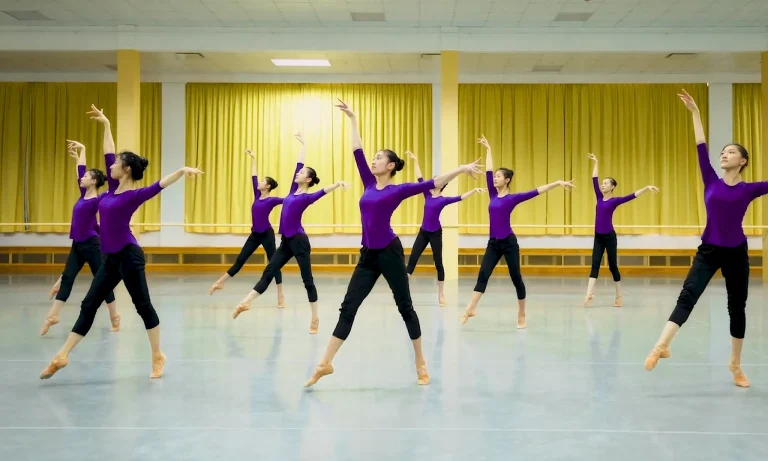
Determined to pursue that hope, Rao applied to Fei Tian Academy of the Arts in New York, later continuing her studies at Fei Tian College. She earned both bachelor’s and master’s degrees in Chinese classical dance. The discipline, she explained, is grueling. Chinese classical dance demands not only athletic technique, but also shen yun, an inner spiritual expression conveyed through movement.
Rao said that moves like the “Dao Ti Zi Jin Guan” require more than flexibility, precision, and strength. They require inner force. “Every time I do this movement, I feel a surge of power fill my body,” she said. “My limbs stretch completely, as if I’m flying across the stage.”
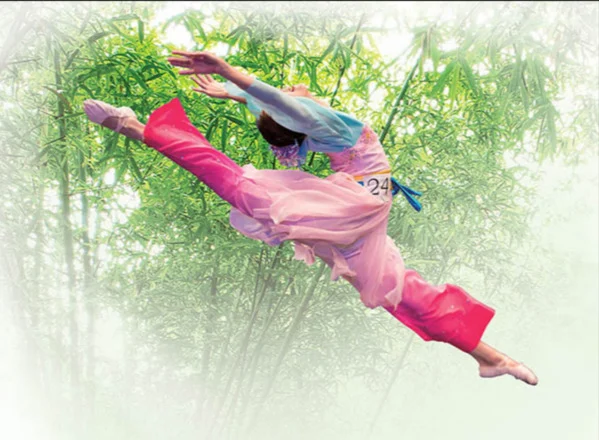
For Rao, Chinese classical dance carries profound cultural depth. “In gymnastics, you can keep a blank expression as long as the movements are correct,” she said. “But Chinese classical dance must come from the heart.” She believes traditional Chinese culture is “divinely inspired,” and that its moral and spiritual foundations form the soul of true artistry.
RELATED: Communist China Impersonates World Leaders to Threaten Shen Yun
Her path has not been without setbacks. During an Australia tour, she recalled being criticized for falling short in her performance, an experience that taught her humility and constant discipline. That perseverance helped her achieve international recognition, including multiple awards at NTD Television’s International Classical Chinese Dance Competition, culminating in a silver medal in the adult women’s division in 2021.
Carrying her father’s legacy on stage
This year marks Rao’s 13th season touring globally with Shen Yun. Each year’s production includes pieces that portray stories of faith under persecution. For Rao, performing such works is not only artistic expression — it is a continuation of her father’s legacy. “This is how I show the truth to the world,” she said. “No matter how brutally the truth is suppressed, it always finds a way to pierce through the darkness.”
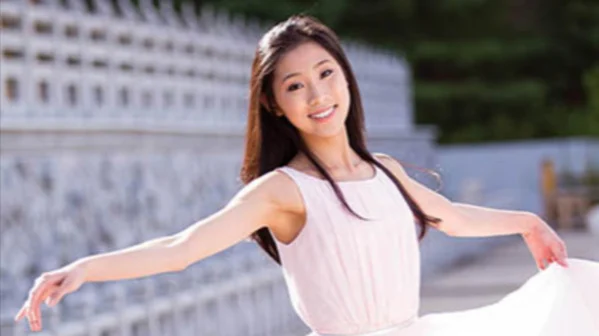
Many Shen Yun performers share similar family histories, creating what she describes as a deep bond — speaking for those who can no longer speak. In her essay, Rao noted that even on U.S. soil, pressure has followed them. She cited incidents including slashed tour bus tires, bomb threats, and sinister attempts to undermine Shen Yun’s nonprofit status and threaten venues to pull scheduled performances.
Yet these disruptions, she said, have only strengthened her resolve to share traditional values through art. “As long as people are still breathing, still able to see, dance will exist, and life will continue through dance,” Rao said, quoting Shakespeare to express her belief in the enduring power of art.
The hope she carries, she explained, lies in returning to traditional principles — that good and evil are ultimately repaid, and virtue must come first. She often imagines what her father would feel if he could see her today, performing on the world’s most renowned stages, expressing through dance the faith he upheld with his life.
From a childhood morning shattered in Guangzhou to the bright lights of New York’s prestigious Lincoln Center, Ellie Rao’s journey spans continents and hardship. Through the power of dance, she has transformed trauma into strength, proving that art can heal, and that conviction can give even the most graceful movements the power of a life song.