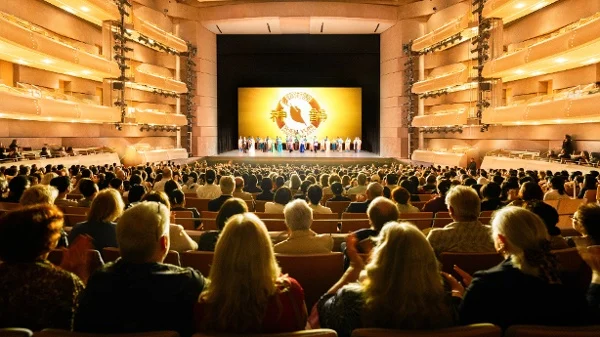
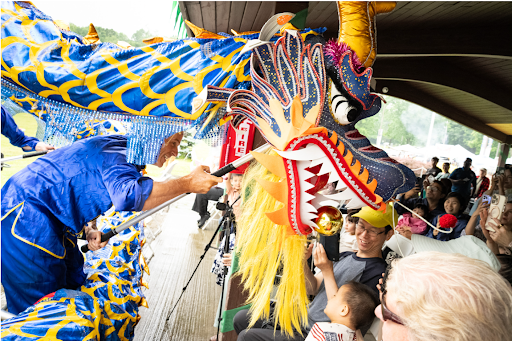
On Feb. 14, more than a thousand people gathered in Northern Virginia for the 17th annual Chinese New Year celebration hosted by the Asian Community Service Center (ACSC) in Falls Church. Held at Luther Jackson Middle School, the event brought together families, community leaders, and elected officials to welcome the arrival of the Year of the Horse at one of the most traditional Lunar New Year festivities in the greater Washington, D.C. region.
This year’s program centered on the traditional virtue of filial piety (孝順) — the enduring principle of honoring, respecting, and caring for one’s parents and elders. The theme underscored the importance of preserving and revitalizing cultural values that have long stood at the heart of Chinese civilization. The event also featured an arts and writing segment that featured impressive, heart-felt works from local residents hosted by Vision Times and the Asian Community Service Center (ACSC).
RELATED: Hudson Valley’s Largest Chinese New Year Celebration Unites Middletown Community
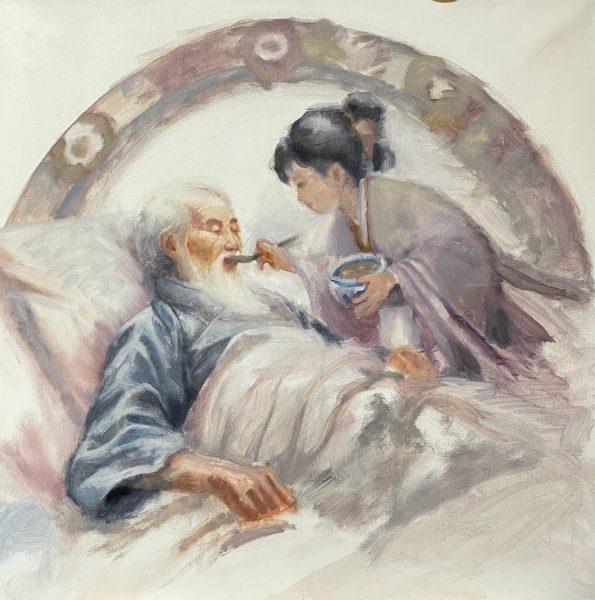
The first-place artwork, “Filial Piety,” depicting a girl feeding and tending to her ill father, was created by Wattana Bounthong and was sold during the event on Feb. 14:
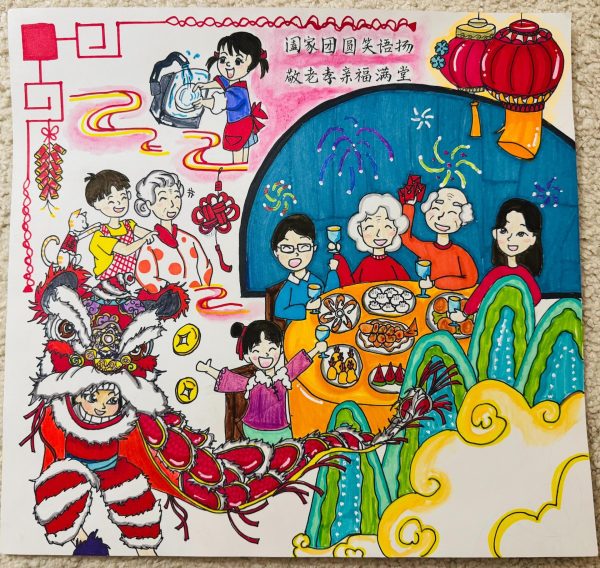
The second-place artwork, “Family Gathering,” was created by Yazhi Jiang, age 15, from the New Year Arts contest segment organized by Vision Times and the Asian Community Service Center (ACSC):
Success
You are now signed up for our newsletter
Success
Check your email to complete sign up
The event also featured an essay and arts contest, in which Arthur Zhang received second place:
Filial Piety Across Distance: A Promise That Endures
By Arthur Zhang
Filial piety is often understood as caring for one’s parents in their old age, providing comfort, and repaying the kindness they gave in raising us. In traditional Chinese culture, it means being close to them, sharing daily life, and offering support with one’s own hands. Yet for many families in today’s world, especially those torn apart by hardship and injustice, filial piety must sometimes be carried out across distance, longing, and pain.
My parents were farmers in rural China. They worked from dawn to dusk in the fields, enduring years of exhausting labor so that their children might one day have a better life. Their own childhoods were marked by hunger and hardship, especially during the man-made famine and poverty caused by extreme communist campaigns such as the People’s Commune and the Great Leap Forward. Those years left lasting scars on their health.
Even when food was still scarce in the 1980s and 1990s, my mother always put her children first. She would quietly deny herself, saving the best food available — an egg, a small treat — for my brothers and me. As a child, I did not fully understand the weight of that sacrifice. Only later did I realize that her love was expressed not in words, but in the simple, constant choice to endure hardship so that her children might have a little more warmth and nourishment.
Watching my parents grow older, I studied hard with a single wish: to someday support them, so they could finally rest and enjoy a life with less burden. In time, a hopeful change came. After they began practicing Falun Dafa meditation in the 1990s, their health improved significantly. They regained energy and peace of mind, and our family felt a quiet sense of gratitude for this renewal. It seemed that after so many years of hardship, they might finally have a chance to enjoy a calmer life.
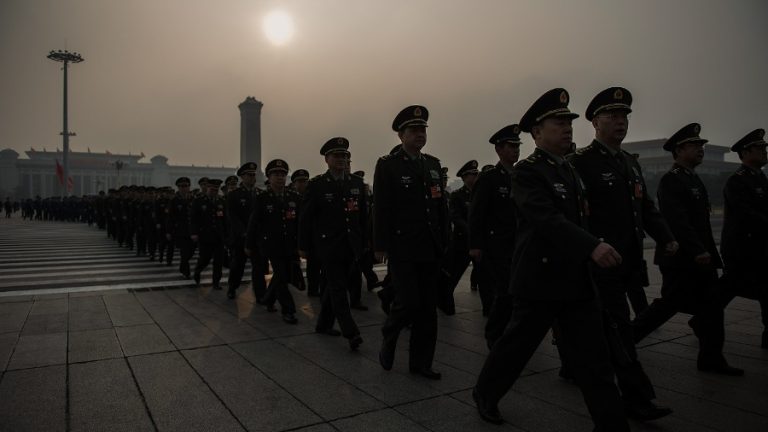
Yet this fragile hope was shattered when the persecution launched by Jiang Zemin and the Chinese Communist Party began in 1999. Our family was thrust into fear and suffering. My eldest brother and I were detained in forced labor camps for our beliefs, and other relatives were harassed and detained. For my parents, every day felt unbearably long. They lived with constant worry, unable to protect their children, counting the days in fear and uncertainty. The pain of parents who wait for news of their children, not knowing whether they are safe, is a suffering no family should have to endure.
In 2012, I fled China to avoid another potential arrest and later found refuge in the United States. Here, I can live freely and speak without fear. Yet freedom came with a deep ache: I could no longer return home as long as the CCP rules China. The distance between my parents and me was not merely geographical, it was enforced by ongoing persecution. While others could reunite with family during festivals and holidays, I could only send messages of care across borders, hoping my thoughts might reach them.
On August 29, 2022, police raided my parents’ and second brother’s homes, seizing their belongings. We lost contact. Three months later, worn down by constant harassment and the anguish of being separated from her sons, my mother passed away. I was not by her side. I could not hold her hand, care for her in her final days, or fulfill the traditional duties of filial piety in person. This loss remains a wound in my heart.
Yet filial piety is not only about physical closeness. It is also about honoring one’s parents through one’s conscience, values, and choices. My parents taught me kindness, resilience, and integrity through their lives. To live truthfully, to remain compassionate toward others, and to endure hardship without losing one’s humanity — these are ways I strive to honor them each day. Remembering their sacrifices, I try to extend care beyond my own family, hoping that fewer parents will have to endure the fear and grief that mine did.
Our family’s suffering is not unique. There are countless families separated by persecution, imprisonment, and fear. Many children cannot return home; many parents wait in silence. When we speak of filial piety today, it is not only a personal virtue but also a call to protect the dignity of families everywhere. A society that honors filial piety must also protect the basic rights that allow families to stay together in safety.
As the New Year arrives — a time for reunion, gratitude, and hope — I remember my parents with deep respect. Though I could not fulfill all my duties in the traditional sense, my heart remains with them. Filial piety, to me, is a promise that endures across distance and time: to live in a way that honors the sacrifices of one’s parents, to uphold goodness in the face of hardship, and to wish that all families may one day live without fear, able to care for one another in peace.