By Jintao Pai, Vision Times
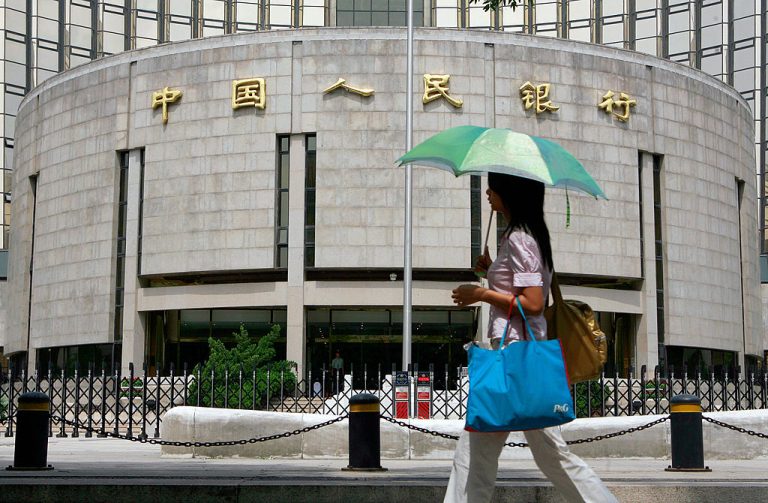
News that Zhou Liang, a senior official in China’s financial regulatory system and longtime aide to former Vice President Wang Qishan, is under investigation has sent shockwaves across the country and set off a slew of online chatter over shifting power dynamics and turmoil within China’s political elite.
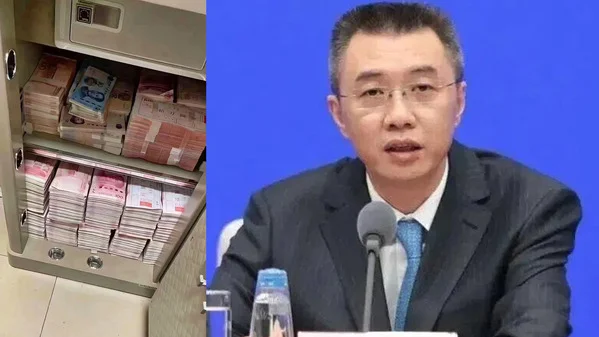
Zhou currently serves as a member of the Communist Party committee and deputy director of the National Financial Regulatory Administration (NFRA). His sudden investigation has surprised observers, as he had shown few public signs of political trouble before the announcement. For more than two decades, Zhou worked closely with Wang Qishan, one of the Chinese Communist Party’s most influential political figures. During that time, Zhou was widely regarded as a key gatekeeper of financial information and internal policy discussions.
Some commentators suggest that Zhou’s role gave him access to extensive knowledge about China’s financial system and the networks surrounding it.
An expert of China’s inner workings
According to individuals familiar with Zhou’s work style, he developed a reputation inside government circles for his exceptional memory and command of financial data. Sources say that during meetings he could often recall detailed statistics with remarkable precision, sometimes correcting reports presented by other officials. On one occasion, he reportedly corrected a department director’s statistical figure from six months earlier, surprising those present with his ability to recall the exact data.
Success
You are now signed up for our newsletter
Success
Check your email to complete sign up
RELATED: China’s Political Advisory Body Under Scrutiny as Top Level Officials Go Missing
But Zhou’s influence extended beyond financial figures. Colleagues describe him as politically astute and skilled at cultivating relationships. “He knew how to navigate the bureaucracy,” one associate said. “He was the kind of person who could maintain good relations with almost anyone.”
Having spent years in the disciplinary inspection system, Zhou also developed a deep understanding of anti-corruption procedures and political oversight mechanisms.
Grassroots origins
Unlike many senior Chinese officials, Zhou Liang did not come from a prominent political family. Born in Yongzhou, Hunan Province, he rose through the ranks from relatively modest beginnings. After earning a master’s degree in economics, he joined the Chinese Communist Party (CCP) at age 24 and entered government service the following year. In 1996, he began working in the General Office of the Guangdong provincial government, where he handled administrative duties.
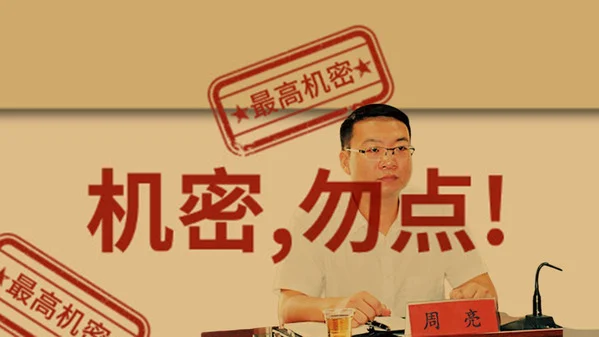
His career trajectory changed dramatically in 1997, when Wang Qishan, then president of China Construction Bank, was transferred to Guangdong as a provincial Party leader. Wang reportedly noticed Zhou’s writing ability and economic knowledge and soon brought him into his inner circle as a personal secretary.
From that point forward, Zhou’s career became closely tied to Wang’s rise within the Party. When Wang moved to Beijing in 2000 to head the State Council’s Office for Economic Restructuring, Zhou followed him. Two years later, when Wang became Party secretary of Hainan Province, Zhou again accompanied him.
During the SARS outbreak in 2003, Wang was recalled to Beijing to help manage the crisis. Zhou moved with him and advanced within the Beijing municipal government, gaining further exposure to the central political leadership. Author Ren Zhiqiang wrote in his autobiography “Ambition with Elegance” that Wang once asked Zhou to call him to arrange a meeting shortly after Wang became Beijing’s mayor.
Anti-corruption campaign
When Xi Jinping launched a sweeping anti-corruption campaign after taking power in 2012, Wang Qishan was appointed head of the Central Commission for Discipline Inspection (CCDI). Zhou accompanied him to the powerful disciplinary body and quickly rose through its ranks. He became one of the youngest officials at the vice-ministerial level, serving as deputy secretary-general and later executive deputy director of the CCDI’s Organization Department.
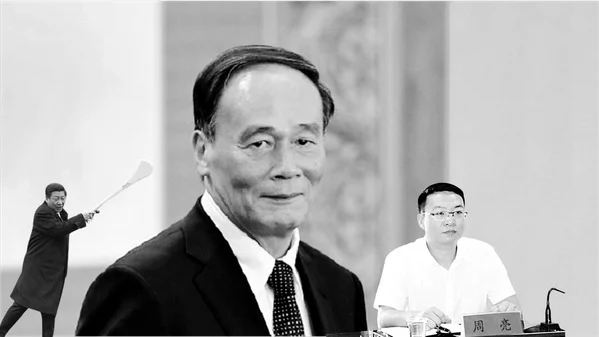
That department oversaw personnel appointments and leadership structures across the disciplinary inspection system, making it a key center of influence within China’s anti-corruption apparatus.
During this period, Zhou was widely seen as a trusted lieutenant of Wang Qishan. When Wang stepped down from the CCDI in 2017 and later became China’s vice president, Zhou’s career path shifted. He was transferred to the financial regulatory system and appointed vice chairman of the China Banking Regulatory Commission, a move widely viewed as placing him on the front lines of financial oversight.
Shift to financial regulation
Following the restructuring of China’s financial supervision framework in 2023, Zhou became deputy director of the newly established National Financial Regulatory Administration. In official settings, colleagues described Zhou as calm, methodical, and analytical. “He didn’t speak much during meetings,” one financial regulator recalled. “But when he did speak, every sentence was precise and logically structured.”
Zhou’s investigation comes amid a broader anti-corruption push in China’s financial sector. Reports indicate that at least 65 financial officials were investigated in 2025, including senior executives from major banks and regulatory bodies.
Just days before Zhou’s investigation became public, Liu Wei, a senior inspector in the NFRA’s Risk Resolution Department, was expelled from the Party and removed from office. Some observers also note that Zhou’s long career in the disciplinary system may have given him deep knowledge of sensitive political and financial matters.
Editorial note: Views expressed in this article are the opinions of the author and do not necessarily reflect the views of Vision Times.