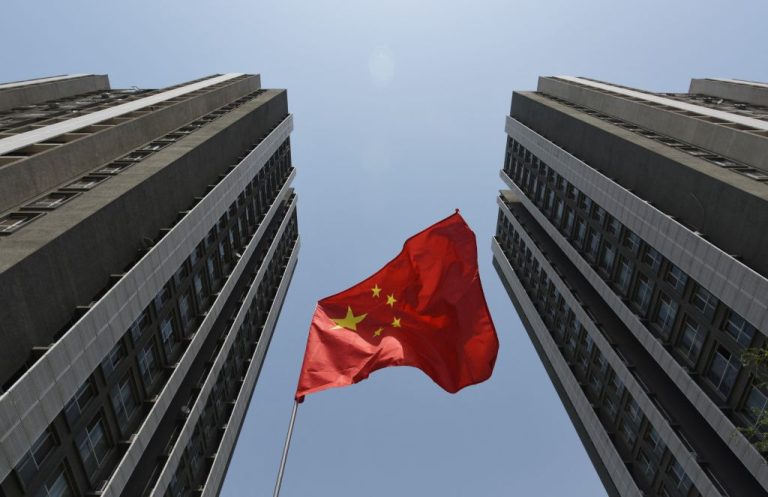
Taiwan’s Legislative Yuan Internal Affairs Committee held a public hearing on amendments to the National Security Law on March 26. The Ministry of the Interior noted that the Chinese Communist Party (CCP) has added two new warfare strategies: “dislocation warfare” and “erosion warfare.” Taiwan must ensure the existence of the state in order to protect citizens’ right to freedom of speech. When individual speech infringes on national sovereignty, state agencies may impose appropriate sanctions to protect the public interest.
According to a report by the Central News Agency, on Dec. 18, 2025, the Executive Yuan approved a draft amendment to the National Security Law. It stipulates that no one may publicly advocate, through writing, images, or other means, that foreign countries or Mainland China wage war against the Republic of China or use non-peaceful methods to eliminate its sovereignty. Those determined by the Ministry of the Interior in consultation with the Ministry of Justice, Mainland Affairs Council, and relevant agencies to have violated these provisions may be fined between NT$100,000 and NT$1 million.
During the Legislative Yuan’s review of the draft, opposition lawmakers questioned the amendments as an “interference with freedom of speech.” To ensure thorough deliberation, the Internal Affairs Committee will hold two public hearings by the end of March, in principle with one hosted by the Democratic Progressive Party and one by the Kuomintang.
National existence is the foundation for protecting freedom of speech
On March 26, the Internal Affairs Committee held a public hearing on the amendments to the National Security Law. The meeting was chaired by rotating convener and Kuomintang lawmaker Liao Xianxiang, and included representatives from the Ministry of the Interior, Deputy Minister Ma Shiyuan, the Legal Affairs Division of the Mainland Affairs Council, Zhou Mingrui, as well as academic representatives such as Wu Sezhi, assistant professor at Taipei University of Marine Technology, and former Soochow University political science professor Xie Zhengyu.
Ma Shiyuan stated that the draft amendment aims to penalize those who publicly advocate eliminating the sovereignty of the Republic of China. He explained that the requirement is limited to “public” actions, and the legal effect is administrative fines rather than criminal penalties, which significantly reduces concerns about infringing on citizens’ rights. Given the current objective realities, the draft is an appropriate measure to balance national security with freedom of speech while minimally impacting citizens’ rights.
Success
You are now signed up for our newsletter
Success
Check your email to complete sign up
Ma emphasized that while protecting freedom of speech is a constitutional fundamental right, the state must exist in order to protect that right. “When an individual exercise of freedom of speech essentially infringes on national sovereignty, state agencies may impose appropriate sanctions to protect the public interest of the majority.”
CCP adds ‘dislocation warfare’ and ‘erosion warfare’
Ma Shiyuan noted that previously, China employed three types of warfare against Taiwan: media warfare, psychological warfare, and legal warfare. Now, the adversary has added two more strategies. The first is “dislocation warfare”, which manipulates Taiwan’s originally reasonable institutional designs to make them dysfunctional—affecting government agencies, the Legislative Yuan, and causing current controversies.
The second is “erosion warfare”, which aims to undermine the foundations of Taiwan’s democratic freedoms, especially through agents of the adversary in Taiwan who exploit the tolerance of Taiwan’s democratic system to attack it.
Ma stated that many people see the amendments as restricting freedom of speech or limiting citizens’ political expression, but this is a misunderstanding and unrealistic idealism. The key now is to increase the cost of enemy attacks. The amendment strengthens the state’s “immune system.”
He added that Taiwan’s democratic freedoms, religious freedoms, and economic freedoms serve as an important benchmark for the future development of the Chinese cultural sphere, and Taiwan has an undeniable responsibility. Therefore, the amendment framework should not be limited to small-scale or narrow discussions of specific speech restrictions but should be viewed from a macro perspective. “Democratic countries worldwide face the same gray-zone threats, and legislators should provide new responsibilities and systems to resist such aggression.”
Outdated laws cannot provide comprehensive protection
Professor Xie Zhengyu said that freedom of speech is the core of democratic politics and all civil liberties, protecting against authoritarian infringement. In recent years, cross-strait relations have become zero-sum, with legal frameworks emphasizing politically realistic, security-driven regulation. This has stigmatized normal cross-strait exchanges and led to a vicious, irreversible cycle.
Xie called on Mainland China to refrain from threatening Taiwan with verbal or military pressure and expressed high expectations that Taiwan’s parties will safeguard non-violent freedom of speech and use democratic methods to correct democratic deficiencies.
Wu Sezhi stated that as a democracy, Taiwan needs strong laws to enhance its democratic resilience. The National Security Law amendments can shift Taiwan from passive defense to active prevention, bridging gaps in physical and digital legal frameworks and equipping law enforcement with precise tools to counter hybrid warfare. He said, “Outdated laws cannot provide comprehensive protection against increasingly diverse organizational infiltration, cognitive warfare, and psychological deterrence in non-kinetic battlefields.”
According to Public Television News, the Mainland Affairs Council warned that Taiwanese visiting Hong Kong should be cautious. The Hong Kong National Security Law now allows authorities to demand electronic device passwords, with refusal punishable by up to one year in prison, attracting international attention.
The council noted that risks for travel and exchanges in Hong Kong may continue to rise and advised Taiwanese to carefully consider visits. Scholar Wu Sezhi added that ongoing amendments to the Hong Kong National Security Law indicate Beijing is increasingly restricting Hong Kong’s democracy and human rights.
By Li Jingyao