Satellite imagery and on-site photos show that China is deploying multiple vessels and a floating barrier at the entrance to Scarborough Shoal (Huangyan Island) to strengthen control over this disputed area in the South China Sea, according to a Reuters report on April 15.
The move comes as the Philippines continues to escort fishermen with coast guard and fisheries enforcement vessels, with tensions in the area steadily escalating.
Satellite images show vessels deploying floating barrier to block entrance of the Scarborough Shoal
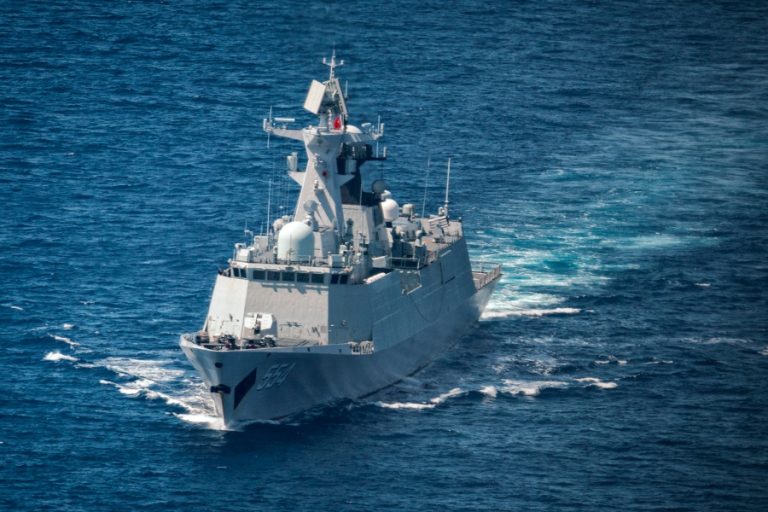
Satellite imagery provided by Vantor (formerly Maxar Technologies) shows that between April 10 and 11, four Chinese fishing vessels, one ship believed to be a China Coast Guard or naval vessel, and a newly installed floating barrier were present at the entrance channel of Scarborough Shoal.
Reuters, citing image analysis, reported that one vessel believed to be a China Coast Guard or naval patrol ship appeared on April 10 in waters outside the entrance of the shoal.
Jay Tarriela, spokesperson for the Philippine Coast Guard, said that China installed a barrier approximately 352 meters (about 1,150 feet) long between April 10 and 11, intended to restrict the entry and exit of vessels.
Success
You are now signed up for our newsletter
Success
Check your email to complete sign up
Tarriela added that multiple Chinese maritime militia vessels were also present in the area, forming a blocking posture near the entrance.
Fishing resources dispute and conflicting sovereignty claims
Scarborough Shoal has long been regarded as a traditional fishing ground and lies within the Philippines’ Exclusive Economic Zone, although China also includes it within its territorial claims.
Last year, China announced the establishment of a national nature reserve in the area, triggering a strong response from Philippine security agencies, which called it a “prelude to occupation.”
The Philippine side stated that the waters are an important livelihood source for local fishermen, while China’s continued deployment of patrol forces restricts Filipino fishing vessels from operating in the area.
Although both sides assert their respective claims, the sovereignty issue has not yet been resolved under international law.
Law enforcement and military presence continues to strengthen
Philippine Navy spokesperson Roy Trinidad said that between April 5 and April 12, approximately 10 China Coast Guard vessels were operating in waters near Scarborough Shoal.
Tarriela further noted that Chinese vessels and fishing boats appear alternately at different times, maintaining continuous pressure on Filipino fishing activities in the area. The Philippine side, meanwhile, has been deploying coast guard and fisheries vessels to escort fishermen in order to maintain a visible presence in the waters.
Since the 2012 standoff, China has maintained a continuous presence in the waters, and has been accused of coordinating coast guard and fishing vessel systems for joint patrols. However, Beijing has never acknowledged the existence of a “maritime militia” mechanism.
Spillover of regional tensions
Analysts point out that the current situation is not limited to maritime friction between China and the Philippines, but is also influenced by broader geopolitical dynamics.
In January this year, the Philippines and the United States conducted a joint maritime operation near Scarborough Shoal, marking the 11th such exercise in the area. Since President Ferdinand Marcos Jr. took office, Manila has significantly strengthened its defense cooperation with Washington.
Meanwhile, multinational military exercises are expanding. Joint drills called “Balikatan” involving the United States, Australia, and Japan are set to take place in various parts of the Philippines, with some areas located only about 120 nautical miles from Scarborough Shoal from April 20 to May 8.
Diplomats say these developments are being closely monitored, especially as regional countries are concerned that the United States is simultaneously distracted by tensions in the Middle East. Some observers believe China may take the opportunity to reinforce its existing deployments in the South China Sea.In addition, the BBC reported that the Philippines recently accused Chinese fishermen of releasing cyanide in the waters of the Spratly Islands, allegedly damaging marine ecosystems. China’s Foreign Ministry denied the allegations, calling them “baseless.”