Leaders from five Nordic countries — Norway, Sweden, Finland, Iceland, and Denmark — met with Indian Prime Minister Narendra Modi and other Indian officials in Oslo on May 19 to deepen strategic and economic ties during the third India-Nordic Summit.
Analysts said the meeting carries growing geopolitical significance as countries seek new economic and strategic partnerships amid rising global fragmentation and conflict-driven economic pressures.
“As leaders of vibrant democracies and large open market economies, they underscored their shared interest in fostering a robust and resilient global order based on international law that promotes peace, stability, inclusive economic growth and sustainable development,” India’s Ministry of External Affairs said in a joint statement.
The ministry said the summit comes “at a time of global geopolitical flux and rapid economic and technological transformation,” adding that both sides aim to elevate ties into a “trusted Green Technology and Innovation Strategic Partnership.”
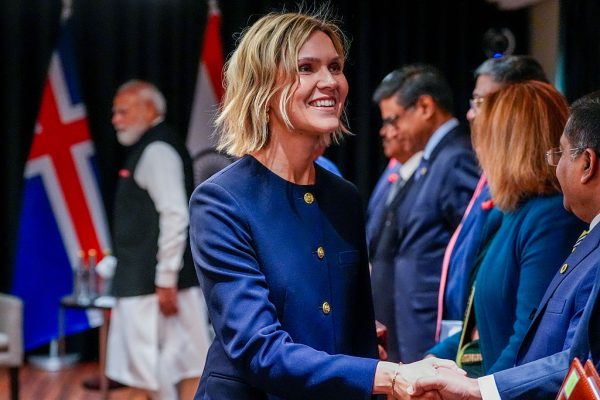
The meeting took place several months after India and the European Union signed a free trade agreement and roughly a year after India finalized a trade and economic partnership agreement with Iceland, Liechtenstein, Norway, and Switzerland.
Success
You are now signed up for our newsletter
Success
Check your email to complete sign up
Leaders at the summit also discussed conflicts in Europe and the Middle East, along with cooperation in areas including the blue economy, circular economy, digital infrastructure, AI, climate action, energy security, water management, research and education, healthcare, defense, and space and geospatial sectors.
Strengthening ties amidst intensifying global competition
Analysts said the summit reflects India’s effort to strengthen ties with northern Europe as geopolitical competition between the United States, China, and Russia intensifies.
Ljubisa Ivanovic, a Belgrade-based journalist, told Vision Times that New Delhi is seeking broader strategic partnerships as it works to preserve its “strategic autonomy.”
“With the upcoming ‘clash’ or bitter rivalry between the USA and the West on one side, and China on the other, India has chosen the West,” Ivanovic said.
- India, Japan Deepen Economic Security Ties With Focus on Semiconductors, Critical Minerals
- Reflections on Witnessing the India–Pakistan Conflict From Taiwan
- India’s Yuan Payment for Iranian Oil Highlights Pragmatism, BRICS Push for Dollar Alternatives, Experts Say
He added that Prime Minister Narendra Modi’s trip could strengthen India’s strategic role in northern Europe and connect New Delhi more closely to emerging geopolitical issues in the region.
“With time, it will be more and more visible in my opinion, especially having in mind difficult relations between India and China, and even Pakistan in that context, as China’s proxy.”
Priyajit Debsarkar, a London-based author and geopolitical analyst, said Europe is increasingly searching for alternative economic partners following shifts in global trade patterns and tariff disputes.
India, he said, offers an attractive alternative because of its democratic institutions and legal framework.
“The fundamental principles driving the Indian economy are still based on democracy values and the Rule of law, in contrast to that of China,” Debsarkar told Vision Times.
“The proposition is a bit tricky, because there is perceived to be high end growth, however, on other aspects, for example, the European values of democracy, human rights, and equal participation, human representation of minorities, women, children, and things like that, I think … the Indian proposition is much more aligned to the European model.”
The Nordic countries also reiterated support for India’s bid for a permanent seat on a reformed and expanded United Nations Security Council.
Shobhit Mathur, vice chancellor of New Delhi-based Rishihood University, said the summit advances India’s green transition goals while also strengthening its international standing.
“The unanimous Nordic endorsement for India’s permanent UNSC seat is a hard-won geopolitical dividend that reflects India’s rising weight in shaping multilateral institutions on its own terms,” Mathur said.
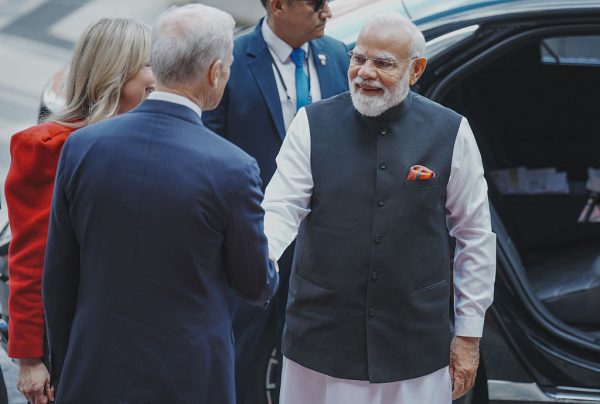
Ivanovic said the summit reinforced India’s image as a global power seeking partnerships across Europe and in advanced technology sectors.
“In short, the trip was geopolitically significant because it was about expanding India’s influence, reducing strategic dependence, gaining technological partnerships, and strengthening its role in emerging global issues like the Arctic and Indo-Pacific balance,” he said.
The joint statement also acknowledged growing links between the Arctic and Indo-Pacific regions and emphasized opportunities for joint Arctic research. India currently holds observer status in the Arctic Council.
$100 billion trade and investment framework
The European Free Trade Association (EFTA) and India signed the India-EFTA Trade and Economic Partnership Agreement (TEPA) in March 2024, with the agreement taking effect in October 2025.
EFTA includes Norway, Switzerland, Iceland, and Liechtenstein.
Under the agreement, EFTA countries committed to invest $100 billion in India over the next 15 years and support the creation of one million jobs.
Leaders at the summit said the framework would provide a major boost to India-Nordic economic cooperation.
Pratik Dattani, founder of London-based think tank Bridge India, said the agreement reflects broader geopolitical and economic shifts since last year.
“A lot geopolitically has changed since last year and the TEPA framework reflects the need to find new partners who have a need to diversify their risk away from the U.S.,” Dattani told Vision Times.
“Clean energy and sustainability are areas where the U.S. has rescinded much of global leadership to China, so it is right that both India and Nordic nations seek ways to enhance cooperation with a real set of specific commitments on investment and trade,” he said.
During Modi’s visit to Norway, the two countries also elevated bilateral ties to a “Green Strategic Partnership,” focusing on green shipping, renewable energy, maritime cooperation, Arctic research, space collaboration, and technology and innovation.
“For Norway and the Nordic side, India is not just a trade partner but also a strategic market and geopolitical partner. India offers access to a huge consumer base, growing industries, and an important role in the Indo-Pacific, which matters as Europe seeks stronger partnerships in Asia,” Ivanovic said.