On May 7, a Chinese military court announced suspended death sentences for former Chinese Defense Ministers Wei Fenghe and Li Shangfu, a development widely viewed as one of the harshest military purges under Chinese Communist Party (CCP) leader Xi Jinping. Analysts say the case signals not only deep-rooted corruption inside the People’s Liberation Army (PLA), but also a far more politically sensitive issue: Questions surrounding loyalty to Xi himself.
But just one day after the sentencing, the PLA Daily published a commentary titled: “坚持有腐必反、有贪必肃” meaning, “Persist in Punishing Corruption Wherever It Exists.” While the article publicly backed the CCP leadership’s decision and reiterated the need to uphold the “Chairman Responsibility System” under Xi, observers noted the order of the messaging as unusual.
RELATED: Two Former Chinese Defense Ministers Face Life Behind Bars in Growing Military Crackdown
Political loyalty above all else
The article first stressed that “the military must never harbor individuals who are disloyal to the Party,” before later mentioning corruption and bribery. U.S.-based Chinese affairs commentator Heng He argued this wording was highly significant.
Speaking on his self-media program, Heng said the phrase about “disloyalty” clearly referred to “political loyalty,” while corruption was treated as secondary. In practice, he argued, “disloyalty to the Party” effectively means disloyalty to Xi Jinping himself.
Success
You are now signed up for our newsletter
Success
Check your email to complete sign up
Wei served as China’s defense minister from March 2018 to March 2023, covering Xi’s second term in office. Li Shangfu succeeded him in March 2023 but was removed just months later in August. Heng noted that because both men were personally elevated during Xi’s tenure, the CCP leader cannot shift blame onto predecessors such as former CCP leader Hu Jintao.
According to Heng, the case exposes major structural failures within the CCP system. He argued that any functioning political system should possess mechanisms capable of identifying and blocking individuals deemed harmful to the regime from rising to positions of power. Yet two consecutive Chinese defense ministers, among the most senior and strategically important officials in the country, were ultimately accused of crimes serious enough to warrant suspended death sentences.
RELATED: How Cai Qi Went From a Reform-Minded Official to Xi Loyalist and Hardline Party Enforcer
“That means the system itself failed,” Heng said, arguing that the CCP no longer has the ability to properly vet or control its own top officials. Heng also pointed to another implication: Xi’s years-long effort to consolidate personal authority may not have succeeded as fully as projected. Xi has spent years elevating his status within the Party, drawing comparisons to Mao Zedong and Deng Xiaoping. Yet even officials personally promoted by him allegedly developed what the Party called “two-faced loyalty.”
Anti-corruption push backfiring?
Xi first rose to prominence through his anti-corruption campaign during his initial term. But after more than a decade of purges, investigations, and military crackdowns, the downfall of Wei and Li has led critics to question whether the campaign itself has failed. If Xi’s own handpicked military loyalists were deeply corrupt, observers argue, it raises doubts about the effectiveness of his governance model.
Li Shangfu was widely viewed as a protégé of Zhang, with U.S.-based analyst Li Muyang suggesting Zhang may have also been connected to the bribery networks tied to military promotions and procurement. Since Li received a suspended death sentence and life imprisonment without the possibility of parole, Li argued that any future punishment handed to Zhang would likely be no lighter.
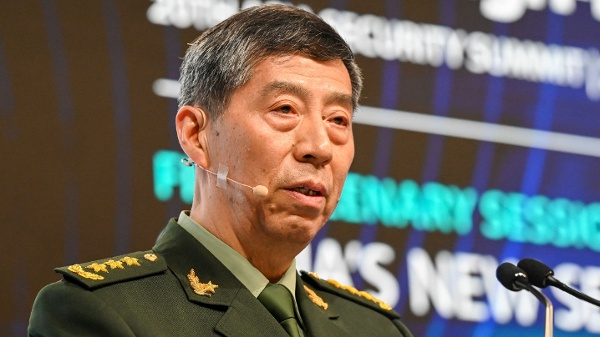
The punishments issued to Wei and Li are among the harshest military rulings Xi has overseen since taking power, even surpassing the treatment of former Central Military Commission Vice Chairman Guo Boxiong. Guo was sentenced to life imprisonment for bribery, but the court did not explicitly state he would remain imprisoned for life without parole. In contrast, the military court specifically ruled that Wei and Li would receive “life imprisonment without commutation or parole.”
The year 2027, marking the PLA’s centennial anniversary, has long been viewed by outside observers as a potential target date for Beijing to achieve the military capability necessary to seize Taiwan by force.
But sweeping corruption scandals inside the Rocket Force and weapons procurement system appear to have shattered confidence in the PLA’s operational reliability. Beijing views Taiwan as a breakaway province and has vowed to reclaim the self-ruling island by any means necessary.
Wei Fenghe previously served as commander of the PLA Rocket Force, while Li Shangfu oversaw military weapons procurement as head of the Equipment Development Department under the Central Military Commission.
Rocket force scandal
In the summer of 2023, Xi launched a sweeping purge of Rocket Force leadership. But reports soon emerged alleging widespread corruption involving fake missile components and exaggerated claims about China’s nuclear deterrence capabilities.
By 2024, U.S. intelligence assessments reportedly concluded that corruption inside the Rocket Force was severe. Among the most widely cited allegations were claims that some missiles were filled with water instead of fuel, and that missile silo lids in western China malfunctioned and could not open properly for launch operations.
These systems form the backbone of China’s military deterrence strategy against Taiwan and regional rivals such as the United States and Japan. Analysts say the revelations suggested that enormous sums of China’s defense spending may have been squandered through corruption.
According to Li Muyang, the scandal may have “fundamentally disrupted” Xi’s strategic calculations. Rather than building a modernized military capable of intimidating Taiwan and deterring foreign intervention, Xi instead discovered that the very generals he trusted most may have undermined the PLA from within.
The PLA Daily article itself acknowledged that Wei and Li had “caused enormous damage to the Party’s cause, national defense and military construction, as well as the image of senior leading cadres.” Observers say the unusually severe rhetoric reflected Xi’s growing fury toward former allies now accused of jeopardizing both his authority and his long-term ambitions.
Editorial note: Views expressed in this article are the opinions of the author and do not necessarily reflect the views of Vision Times.