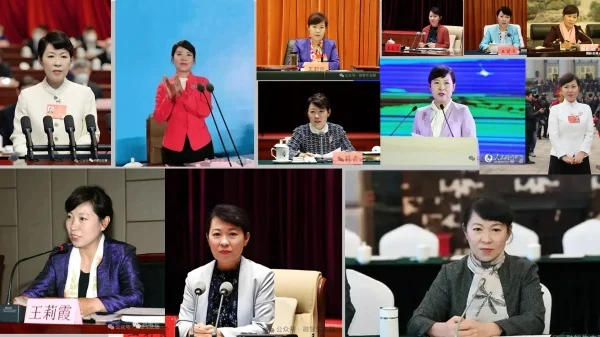
According to Chinese state media, former Inner Mongolia Autonomous Region Chair Wang Lixia has been formally indicted on bribery charges, marking the latest development in a high-profile corruption case involving one of China’s most senior female officials.
The indictment follows Wang’s removal from office last year and her subsequent expulsion from the Chinese Communist Party (CCP). While authorities have focused on corruption allegations, the case has also generated speculation among overseas commentators and analysts regarding the political circumstances surrounding her downfall.
RELATED: China’s Agriculture Minister Han Jun Ousted as Purges Hit Xi Jinping’s Inner Circle
Bribery charges
According to a June 3 report by state-run Xinhua News Agency, Wang’s case was investigated by China’s National Supervisory Commission before being transferred to prosecutors for review and prosecution.
China’s Supreme People’s Procuratorate approved her arrest on suspicion of bribery and designated prosecutors in Daqing, Heilongjiang Province, to handle the case. Prosecutors have since filed charges with the Daqing Intermediate People’s Court.
Success
You are now signed up for our newsletter
Success
Check your email to complete sign up
Authorities accuse Wang of using positions she held in Shaanxi Province and Inner Mongolia to seek benefits for others in matters including project approvals and business contracts, while accepting large amounts of money and valuables in return.
A member of the CCP’s 20th Central Committee, Wang held numerous senior posts during her political career, including vice governor of Shaanxi Province, Communist Party secretary of Hohhot, deputy party secretary of Inner Mongolia, and chair of the regional government. She was placed under investigation in August 2025 and expelled from the Party and public office in February 2026.
Political connections
Wang spent much of her career in Shaanxi and Inner Mongolia, two regions where senior CCP leaders Zhao Leji and Shi Taifeng previously held top positions. As a result, analysts have noted her longstanding ties to political networks associated with both men. However, Chinese authorities have not indicated that her prosecution is connected to factional politics, and the official charges remain focused on corruption.
Like many high-profile investigations involving senior officials, Wang’s case has prompted debate among political observers seeking to understand whether factors beyond bribery allegations contributed to her removal.
Some overseas commentators, including former Inner Mongolia official Du Wen, have suggested that Wang’s downfall may be linked to the handling of the deadly 2023 coal mine collapse in Alxa League, Inner Mongolia. The accident at Xinjing Coal Mine killed 53 people and injured six others, according to official figures released by Chinese authorities.
Du has alleged that local officials concealed information about the disaster and that subsequent investigations eventually implicated Wang. He also claimed that senior Party figures were drawn into efforts to address the political fallout from the incident.
Broader questions remain
Political commentator Tang Jingyuan has previously argued that Wang’s assignment to Inner Mongolia reflected broader efforts by Beijing to monitor local political networks. He suggested that her eventual downfall may have stemmed from dynamics beyond ordinary corruption investigations.
However, at present, the only publicly confirmed allegations against Wang are those outlined by Chinese prosecutors: that she abused her official positions for personal gain and accepted substantial bribes during her time in office. Whether court proceedings will reveal additional details remains unclear.
As with many corruption cases involving senior CCP officials, observers are likely to continue scrutinizing the political context surrounding Wang’s prosecution, especially as China’s disciplinary and judicial processes remain highly opaque. Investigations conducted by the CCP’s internal disciplinary bodies are often carried out behind closed doors, with limited public disclosure and few substantive updates until formal charges are announced.
Editorial note: This article is based on publicly circulating reports and commentary from independent analysts. The claims described have not been independently verified by Vision Times, and relevant authorities have not publicly confirmed the allegations.