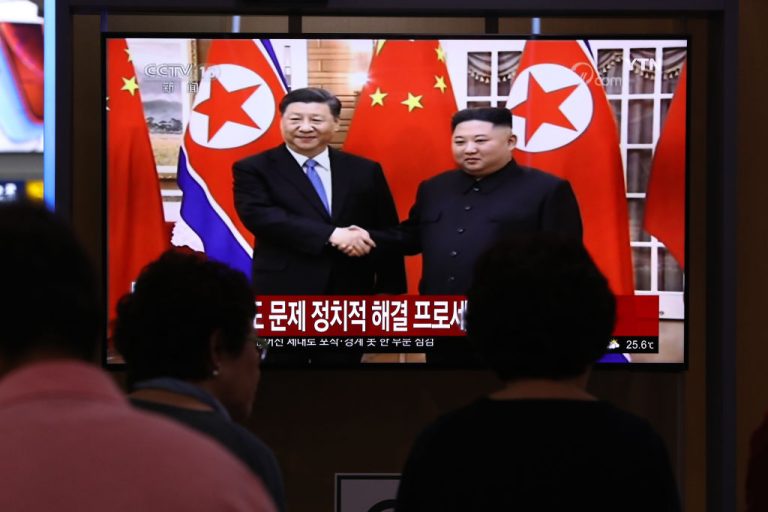
On June 8-9, Chinese leader Xi Jinping traveled to North Korea for his first overseas trip of 2026, drawing renewed attention to the evolving dynamics among Beijing, Pyongyang, and Moscow.
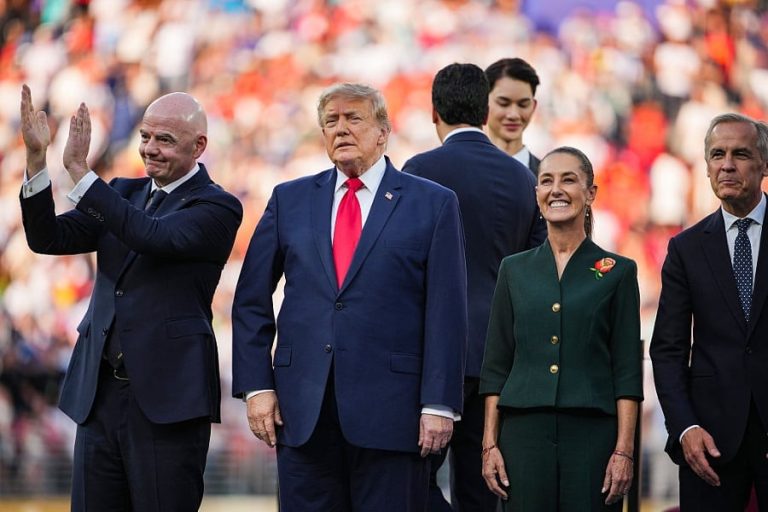
The visit came less than a month after Xi met with U.S. President Donald Trump and Russian President Vladimir Putin’s state visit to China. While Xi received a high-profile welcome in Pyongyang, analysts say the trip highlights both the importance and the fragility of China-North Korea relations.
RELATED: Taiwan Says US Arms Sale Will Still Happen Following Trump-Xi Meeting
From diplomatic chill to signs of renewal
Relations between Beijing and Pyongyang appeared to cool in recent years. Observers noted the muted commemoration of the 75th anniversary of diplomatic ties in 2024, an unusual development given the historical significance of the relationship. The lack of high-profile celebrations fueled speculation that North Korea’s growing military and diplomatic cooperation with Russia had created friction with Beijing, which has long viewed the Korean Peninsula as a key strategic buffer zone.
More recently, however, signs of renewed engagement have emerged. In March, China and North Korea resumed cross-border passenger rail service between Beijing and Pyongyang for the first time in six years, following pandemic-era border closures. International passenger trains between Dandong and Pyongyang have also resumed regular operation.
Success
You are now signed up for our newsletter
Success
Check your email to complete sign up
Xi’s visit is widely seen as the strongest indication yet that both governments are seeking to stabilize ties. For Beijing, maintaining influence in Pyongyang remains important as Russia’s role in North Korea grows. For Kim Jong Un, improved relations with China offer economic benefits and diplomatic leverage at a time of heightened regional tensions, offering some evidence of a gradual thaw, analysts say.
North Korea’s growing ties with Russia
At the same time, North Korea has expanded its relationship with Russia, creating new complexities for Beijing. Since the outbreak of the Russia-Ukraine war, Moscow and Pyongyang have drawn increasingly closer. During Putin’s visit to North Korea in June 2024, the two countries signed a mutual defense treaty. Western governments have accused North Korea of supplying Russia with ammunition and military assistance in exchange for energy resources, economic support, and military technology.
According to reporting by the BBC, Beijing seeks stability along its border with North Korea and wants to maintain influence over the Kim regime, but it also wishes to avoid being drawn into crises triggered by Pyongyang’s nuclear ambitions.
Former CNN correspondent Mike Chinoy told the Associated Press that North Korea’s growing alignment with Russia is one factor behind Beijing’s efforts to reinvigorate ties with Pyongyang. For Kim Jong Un, maintaining strong relationships with both China and Russia broadens North Korea’s diplomatic options while preserving access to crucial economic support.
Despite North Korea’s expanding partnership with Russia, analysts note that Beijing remains indispensable to the country’s economic survival. China continues to be North Korea’s largest trading partner and a critical source of energy, food, and investment.
Denuclearization remains a point of tension
One of the most notable aspects of Xi’s visit was the continued ambiguity surrounding China’s position on North Korea’s nuclear weapons program.
Following the Trump-Xi summit in May, the White House said both leaders had reaffirmed their shared goal of achieving denuclearization on the Korean Peninsula. U.S. Trade Representative Jamieson Greer later stated that both sides agreed denuclearization remained the ultimate objective.
Beijing’s official readout of the summit, however, made no mention of North Korea’s nuclear program. Just hours before Xi arrived in Pyongyang, Kim Jong Un’s sister, Kim Yo Jong, publicly declared that North Korea’s status as a nuclear-armed state was “absolutely non-negotiable.” Her remarks were widely interpreted as a signal that Pyongyang has no intention of revisiting denuclearization talks.
Some analysts believe the statement was timed deliberately to strengthen North Korea’s bargaining position ahead of Xi’s visit and to reinforce Pyongyang’s commitment to continued nuclear development.
A balancing act
Political commentator Cai Shenkun argued that North Korea’s nuclear program serves purposes beyond deterring the United States, South Korea, and Japan. Writing on social media, Cai said the Kim regime also views nuclear weapons as a safeguard against excessive influence from larger powers, including China.
“North Korea’s nuclear arsenal is not only directed at the U.S.-South Korea-Japan alliance,” Cai wrote. “It is also a strategic guarantee for preserving the Kim family’s autonomy and preventing outside powers from interfering in North Korea’s internal affairs.”
Cai pointed to North Korea’s longstanding emphasis on self-reliance, from Kim Il Sung’s doctrine of juche to Kim Jong Un’s continued insistence on political independence. He also cited comments attributed to former U.S. Secretary of State Mike Pompeo in his memoir, in which Kim suggested that a complete U.S. withdrawal from South Korea could leave North Korea more vulnerable to Beijing.
According to Cai, Kim Yo Jong’s insistence that North Korea’s nuclear status is non-negotiable reflects a broader concern that Pyongyang could become a bargaining chip in negotiations among major powers.
As a result, he argues, China and North Korea are neither straightforward allies nor outright adversaries. Instead, their relationship is characterized by a constant balancing act, one in which North Korea depends heavily on China economically while simultaneously guarding against excessive Chinese influence.