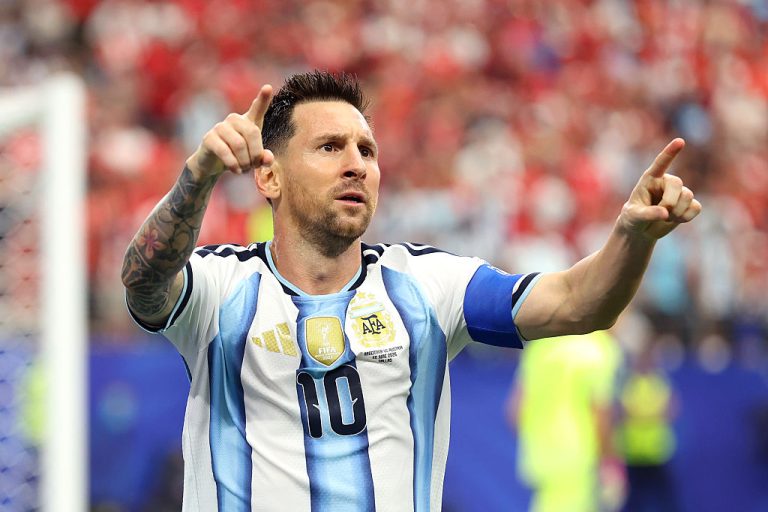
At 39, Lionel Messi arrived at the World Cup no longer capable of producing the relentless acceleration and explosive dribbling runs that defined his younger years. Yet his influence over Argentina had hardly diminished. Throughout the tournament, he remained the team’s creative and tactical center, directing play through his vision, positioning, and decision-making.
A BBC analysis observed that Messi had adapted his game to the physical realities of age. Rather than dominating through speed, he shaped matches by reading space, controlling the rhythm of attacks, and choosing precisely when to pass, move, or take on a defender. At times, his command of the game made him appear less like an ordinary player and more like a coach operating on the field.
The BBC analysis revisits the enduring debate over how Messi compares with Pelé and Diego Maradona in the contest for football’s greatest player.
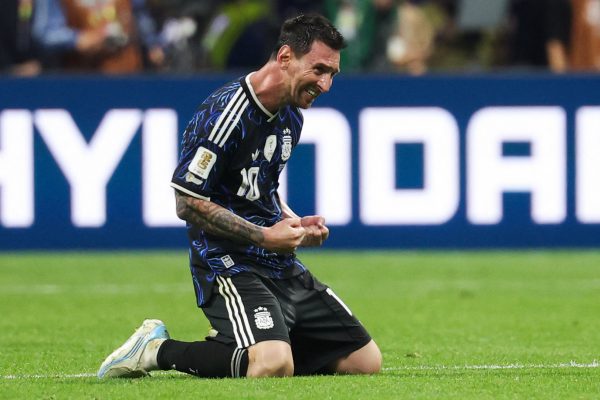
The case for Messi rests on twenty years at the top
Messi’s supporters point first to his longevity. While many great players burned brightly across a relatively short peak, he has performed at a world-class level for nearly two decades, adapting his game while remaining one of football’s most decisive players.
His record reflects that sustained excellence. Messi has won the Ballon d’Or eight times, along with league titles in Spain and France, the Champions League, the Copa América, and the 2022 World Cup in Qatar, where he produced remarkable scoring and assist totals.
Success
You are now signed up for our newsletter
Success
Check your email to complete sign up
His backers also emphasize his range. He helped build a European dynasty at Barcelona before leading Argentina’s revival on the international stage, succeeding in two very different environments that demanded different qualities from him.
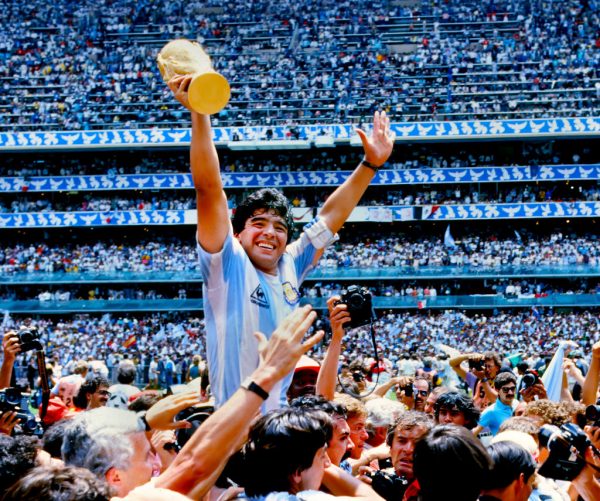
In Argentina Maradona still owns the national heart
Yet the BBC found that admiration for Messi does not automatically translate into the same emotional identification many Argentines feel toward Diego Maradona. For a significant number of supporters, Maradona remains the figure who most fully embodies the Argentine character and serves as a symbol of national identity.
Maradona rose from poverty, led Argentina to the 1986 World Cup title, and spent much of his life defying authority, embracing political causes, and cultivating a rebellious public image that resonated deeply with his countrymen. Messi, by contrast, has generally kept a low profile away from football and avoided political controversy.
He displayed a more emotional and openly combative style of leadership during Argentina’s victorious 2022 World Cup campaign. Even so, Spanish journalist Guillem Balagué, one of Messi’s leading biographers, argued that some Argentines will always feel Maradona represents them more completely.
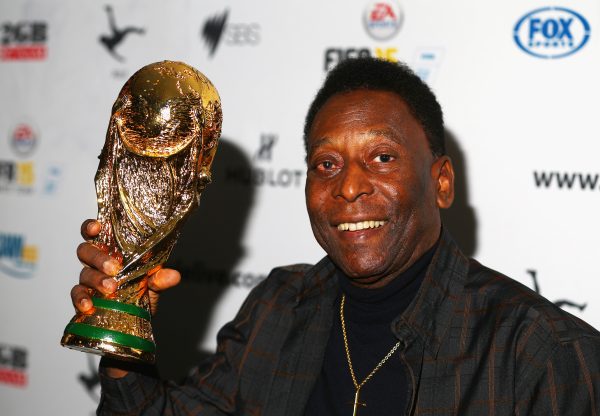
Pelé remains the only man with three titles
The third name in the debate is Pelé, the Brazilian legend who died in 2022 and remains the only player to win the World Cup three times, lifting the trophy in 1958, 1962, and 1970.
Tostão, Pelé’s former Brazil teammate, has argued that Messi was more complete than Maradona and sustained his brilliance over a longer career, although he considered Pelé the superior athlete. “After Pelé, Messi is the best in history,” he said.
Pelé himself was far less generous. In a 2018 interview with the Brazilian newspaper Folha de S.Paulo, he argued that Messi relied too heavily on his left foot and lacked the all-around technique of the game’s greatest players. He ranked not only Maradona above him, but also Germany’s Franz Beckenbauer and Dutch great Johan Cruyff, both dominant figures of the 1970s.
RELATED:
- Spain Defeats Argentina 1–0 to Win 2026 World Cup
- Milei Skips World Cup Final Over Fears He Could Jinx Argentina
- Lamine Yamal’s Remarkable Rise Sets Up World Cup Final Against Lionel Messi
The three careers unfolded in different footballing worlds
No ranking can escape how dramatically football changed across their three eras, the BBC noted. When Pelé won his first World Cup in 1958, the sport had neither modern sports science nor a truly global television audience. By Maradona’s peak in the 1980s, football attracted worldwide attention but had not yet become today’s multibillion-dollar industry. Messi, meanwhile, played in an age of advanced performance data, constant media coverage, and instant global scrutiny, with every match analyzed in real time.
Pelé helped transform football into a global game. Maradona became a symbol of both sport and politics during a turbulent period in Argentine history. Messi built his legacy under pressures and expectations neither man had faced.
Because the game changed so profoundly across their careers, so did the demands placed on its greatest players. That makes comparisons across generations increasingly difficult—and helps explain why the debate over football’s greatest player may never be settled.
This article was originally published in Chinese by Taiwan’s Central News Agency (CNA) on July 18, 2026, and is republished with permission. It has been translated and edited for clarity.