Published with permission from LuxuryWeb Magazine
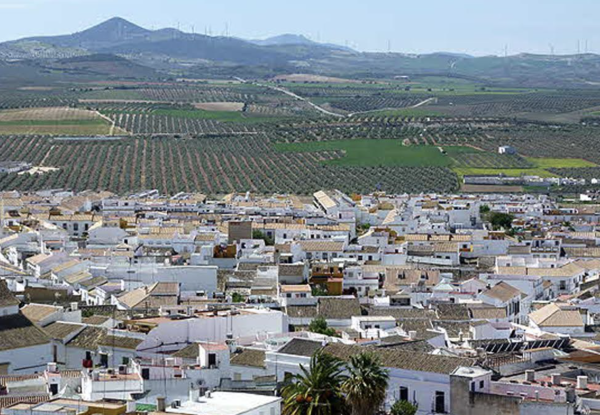
Located in the sun-soaked south of the Iberian Peninsula, where the Mediterranean Sea meets the Atlantic Ocean, lies Andalucía — Spain’s second-largest autonomous region. Globally celebrated for its contributions to art and culture, including flamenco and bullfighting, Andalucía also boasts a world-renowned gastronomy. Its wines, olives, olive oils, Iberico ham, and other cured pork delicacies are not only regional treasures but global culinary staples.
At the heart of Andalucía — framed by Seville to the west, Málaga to the south, Córdoba to the north, and Granada to the east — lie hilltop towns and villages that fiercely preserve their customs and identities.
Rooted in history
While Spain remains culturally rooted in Roman Catholicism, modern-day Spaniards are religiously diverse, with many identifying as non-religious or belonging to other faiths. Religious freedom is protected under the Spanish Constitution, but the spirit of Catholic tradition still profoundly shapes public celebrations — especially during Semana Santa, or Holy Week.
We had the privilege of experiencing this sacred time firsthand in Baena, Carmona, Osuna, Puente Genil, Priego de Córdoba, Alcalá la Real, Lucena, and Cabra — towns that together form the “Caminos De Pasión” trail, offering immersive cultural and culinary experiences.
Success
You are now signed up for our newsletter
Success
Check your email to complete sign up
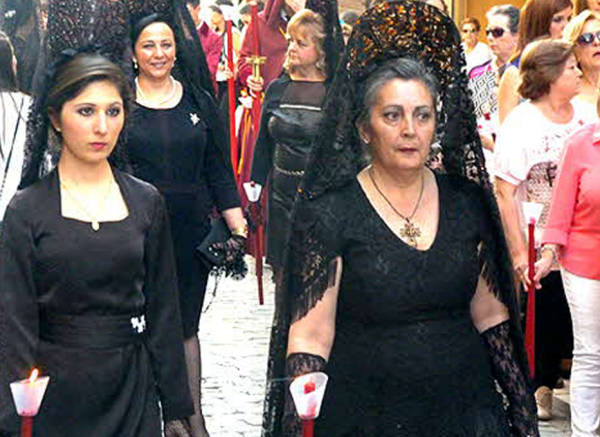
Each town along the trail showcases its own unique interpretation of Semana Santa, with nuanced differences that are deeply meaningful to the locals. The processions are organized by Brotherhoods of Men, Sisterhoods of Women, or a mix of both, and each group maintains its own traditions. While some of these brotherhoods date back centuries and are tied closely to the Church, others function more as social and cultural organizations—but all are grounded in family, friendship, and local pride.
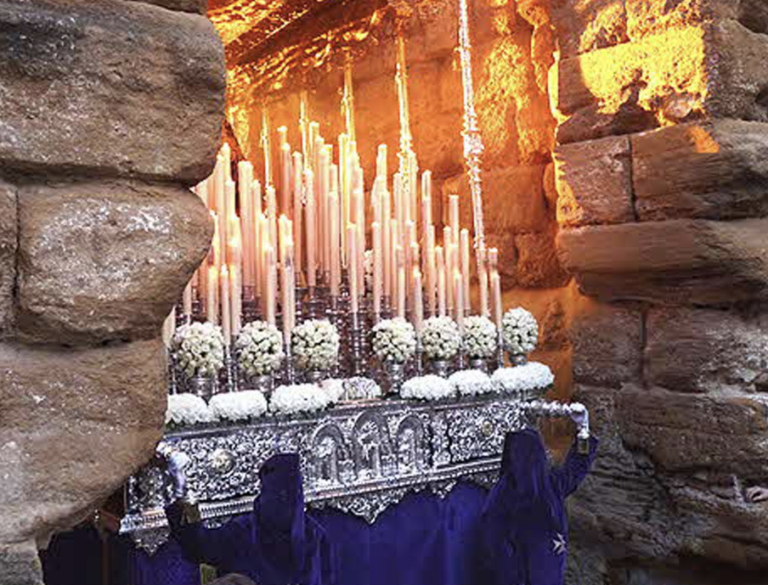
Each brotherhood wears a distinct tunic color and headgear, with some donning masks and nearly all carrying candles. The processions are accompanied by hooded penitents, many in black robes and sometimes even walking barefoot over the sharp pebbled streets of the historic towns. Their floats, or pasos, are elaborately adorned with embroidered fabrics, jewels, sacred relics, and fresh flowers—white symbolizing purity, purple for suffering.
An ornate ceremony
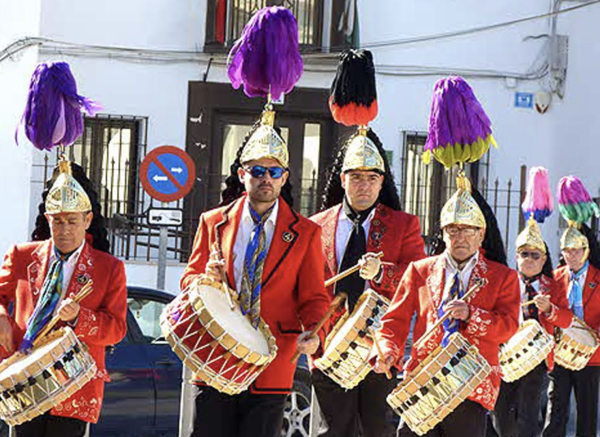
We began our visit in Baena, where the town awakens before dawn to the pounding of drums. Men dressed in historic attire march through the streets in pairs or small groups — often father and son or lifelong friends — wearing feather-topped helmets of their choosing. These drummers represent the jubilant crowds arriving in Jerusalem for Passover.
A long-standing rivalry persists between two drum groups: the Coliblanco (white tail) and Colinegro (black tail), though the origins of this competition have been lost to time. As the day unfolds, various brotherhoods take turns parading their sacred statues through Baena’s steep and narrow streets—a ritual virtually unchanged since the Baroque period.
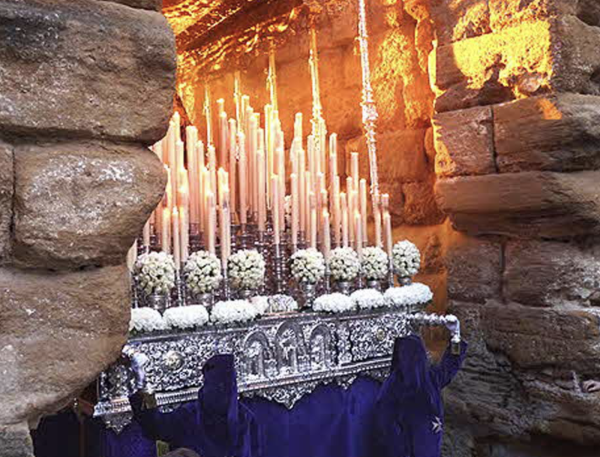
Carmona is home to one of the oldest icons paraded during Holy Week in Andalucía, “Señor de la Amargura.” As dusk fell, we stood among the crowd watching a massive float pass through one of the ancient city’s surviving arched gates. A crier called out instructions to the invisible bearers beneath the float, while spectators held their breath. The float cleared the narrow stone opening with mere inches to spare. When it finally emerged, music erupted and the crowd broke into joyous applause.
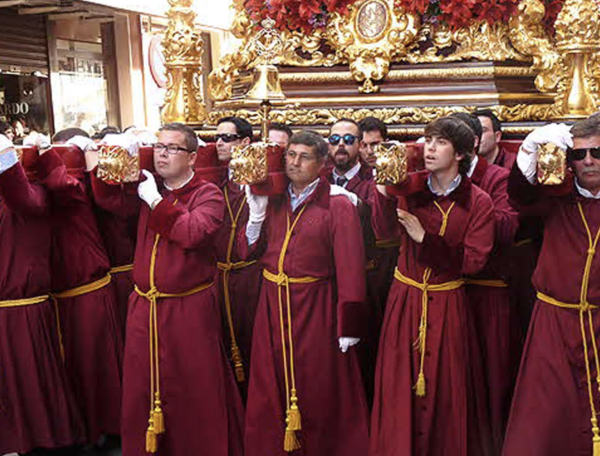
In Osuna, situated halfway between Seville and Granada, the Semana Santa traditions reflect both cities. The floats, known as pasos, are carried using either Seville’s crossbeam technique or Granada’s shoulder-borne method—sometimes both in combination.
Due to their immense weight, the carriers frequently stop to rest, signaled by bells or whistles, before lifting the floats again in perfect unison. The rhythm of the music often sets the pace, helping the carriers navigate the winding, cobbled streets as throngs of onlookers cheer them forward.
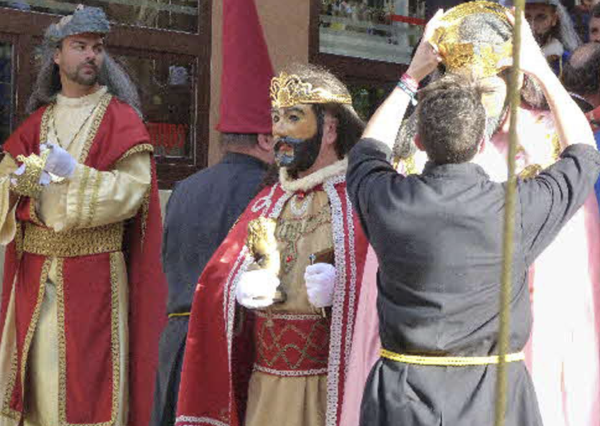
Puente Genil’s celebrations feature dramatized biblical scenes from both the Old and New Testaments. Each costumed figure is intricately accessorized to reflect their identity, with some costumes dating back centuries and lovingly preserved for future generations. Here, Easter Week is affectionately called “la Mananta,” or “it feels inside,” a phrase that speaks to the emotional connection locals feel. Jesus of Nazareth is the town’s Patron Saint, adding an extra layer of reverence.
Watching the masked and costumed figures being gently assisted by fellow brotherhood members —adjusting wigs, straightening robes — was deeply touching, a quiet expression of love and honor.
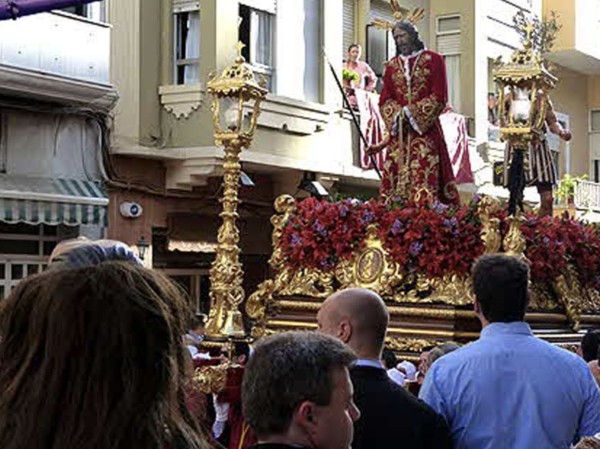
Priego de Córdoba’s Holy Week is solemn and devout. Penitents play a central role in processions that meticulously reenact biblical scenes. Rituals passed down through generations culminate on Good Friday, when townspeople accompany the float of Jesus of Nazareth up to Calvario Hill for the blessing of the hornazo—a traditional hen-shaped pastry featuring a hard-boiled egg in its center.
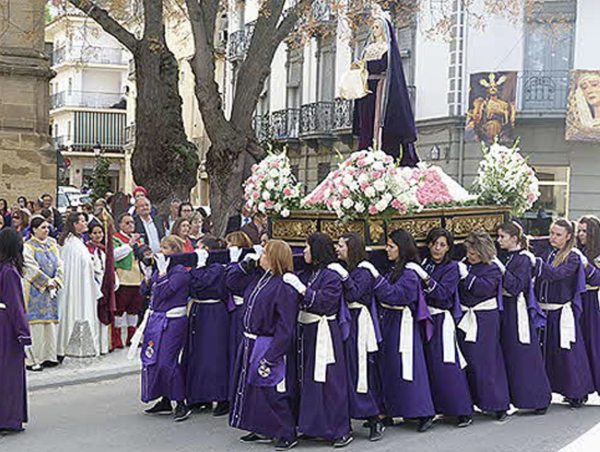
In Alcalá la Real, the steep hills leading to La Mota Castle create a dramatic backdrop for the festivities. The town’s main square and boulevard are adorned with banners and blooms. Here, the energy is a unique blend of devotion and exuberance. One brotherhood caught our attention with its vivid costumes—red boots and britches, white stockings, green coats with red trim, and flower-topped helmets. While many towns now include women in their processions, Alcalá featured an all-female brotherhood dressed in lavender tunics making the challenging uphill climb toward the castle—a powerful sight.
Vibrant festivities
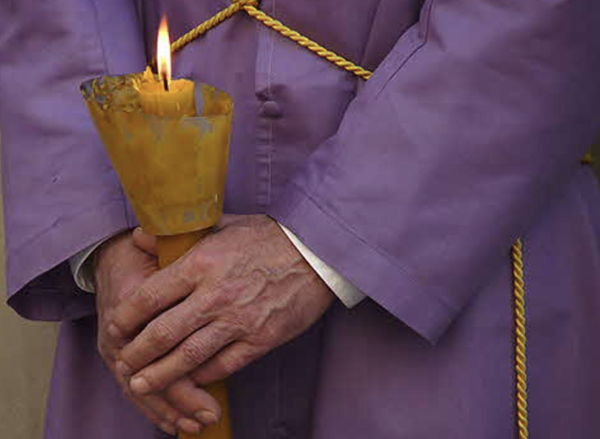
Lucena exuded a festive charm. Nearly every resident, from toddlers to the elderly, carried a lit candle, creating a warm sea of flickering lights. Pools of wax dotted the streets, often gathered and cooled into souvenirs for children — small tokens of a memorable day. Lucena is home to sixteen brotherhoods, several with histories stretching back over 400 years. The pasos here are carried to the steady beat of a drum, amplifying the collective excitement and spiritual energy.
Cabra gave us a glimpse into the nighttime processions, rich with historic tradition. The town’s Easter rituals, dating back to the late 15th century, include parades of “Jews” and “Christians” accompanied by drumming and distinctive trumpets called abejorros. Some of the ornate floats were created in the 17th and 18th centuries, bearing religious icons still revered today. The music was exuberant, matching the emotion of the event and adding unforgettable vibrancy to the already moving experience.
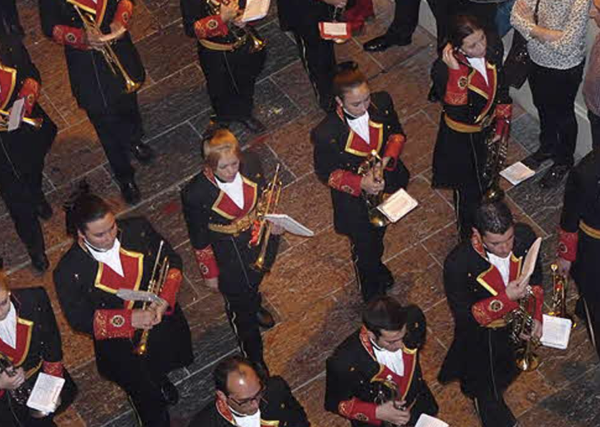
In every town we visited, music was an essential part of the Semana Santa processions. Drummers and marching bands amplified the passion of the celebrations, stirring the hearts of both participants and onlookers. Perhaps most memorable of all was witnessing families of all ages come together—whether participating in the processions or lining the streets in support.
It was a true testament to community, tradition, and the enduring spirit of Easter in Andalucía.
For more information on Semana Santa (Holy Week) in Spain, please visit:
Caminos De Pasión
Junta De Andalucía
Tourist Office of Spain
Visit LuxuryWeb Magazine to see the original article and more.