Since its application on the Nazi flag, the swastika invariably evokes feelings of anger, fear, hatred and disgust among Westerners; yet the overwhelming perception of this symbol in ancient times was diametrically different. Join me in a journey through the ages to see how a universally positive — and sometimes sacred — symbol was hijacked, twisted and defiled.
Prehistoric swastikas
Long before the advent of written language, ancient cultures of present-day Eastern Europe employed the swastika symbol in stone and bone carvings. The earliest known example was found on an ivory bird carved from mammoth tusk over 10,000 years ago. Discovered in Ukraine in 1908, the figurine featured several swastikas linked together.
Single swastikas can be seen in Vincan artifacts from the Neolithic period. Possibly Europe’s first civilization, Vinca culture emerged about 8,000 years ago across what is now Bosnia, Croatia, Herzegovina and Serbia.

Swastikas became more widespread during the Bronze age, and can be seen on ancient Greek pottery, ancient Roman mosaics, and the famous “Swastika Stone” in Britain. The symbol’s early meaning is unclear, although it may be a depiction of the sun.
Profound symbolic meaning
As civilization evolved, the swastika was imbued with a spiritual significance as complex and varied as the many cultures that adopted it. These few lines can represent the source of generation, or Creation itself; in some cases the two faces (turning to the right or to the left) symbolize the microcosm and the macrocosm; the four arms can be seen as the earth’s four quarters or four directions — the top and bottom of which align with the center of the universe.
Success
You are now signed up for our newsletter
Success
Check your email to complete sign up
The word Swastika is derived from the Sanskrit roots su and asti. When combined the ‘u’ becomes a ‘v,’ and the resulting word “svastika” is a positive affirmation of existence, meaning something like “Life is good!” “There is value,” or “Conducive to well-being.” This coincides with the Chinese understanding of the symbol.
In China, the traditional swastika represents light and hope; and like the Taiji pattern of yin and yang, it is symbolic of the continuous cycle of life, in harmony with the universe. The swastika pattern was given its own written character during the Tang Dynasty, called wan (萬). This character literally means 10,000, but also signifies enduring prosperity, well-being and longevity. Today it is widely seen as a symbol of good fortune.
Other names in Sanskrit include “arani” (fire), and “pramantha” (an instrument for kindling fire). To some, the swastika represents a sacred fire, possibly linked with the transition upon death to the afterlife. Cremation vessels of various origins are decorated with swastikas, as are many gravestones and burial sites. Early Scandinavians saw it as the path for departed souls leading to the afterlife.
With all these positive connotations, how could the swastika get usurped by the Third Reich?
A twisted understanding and cunning manipulation

It began with the discovery of an ancient lost city of Greek mythology. In 1868, Heinrich Schliemann, a German archeologist and antiquarian, set out to find Troy. In 1871, the small, fortified city was uncovered in Hisarlik, Turkey; and among the ancient artifacts were some 1,800 swastikas. News of the fantastic discovery spread, as did the popular use of the swastika symbol.
Because the symbols adorned religious and ceremonial artifacts, Schleimann determined that the swastika was a “significant religious symbol of our remote ancestors;” but his colleague Emile-Louis Burnouf, who studied Hindu texts, made a different connection — one with the ancient Aryan people. The Aryans were believed to have constituted the peak of human civilization — not because of their race, but their character, as the Sanskrit word “ārya” means honorable, noble, or respectable.

Nevertheless, German nationalists, propelled by the recent unification of Germany along with the discovery of similar artifacts in their country, were convinced that the Aryans originated in Germany, and that they were thus the “master race.” While the rest of the world was employing the swastika for good luck, blessings and peace, the symbol took on a new meaning in Germany.
Even before Adolf Hitler gained leadership in the Nazi party, the swastika was already a well-established icon for German nationalists and anti Semitic groups. His 1921 application of the swastika on the Nazi party flag was a cunning move that appealed to pride and forsook humanity.
Was the swastika irrevocably ruined? In eastern cultures, where Hitler had little impact, the swastika continues to carry benevolent connotations. Would it be possible to restore its reputation in the west as well?
Do not be conquered by evil, but conquer evil with good.
Romans 12:21
Reclaiming the swastika for good
Over a century has passed since the swastika’s meaning was distorted; but for thousands of years before that, it had Divine connections and signified righteousness, universal harmony and enduring faith.
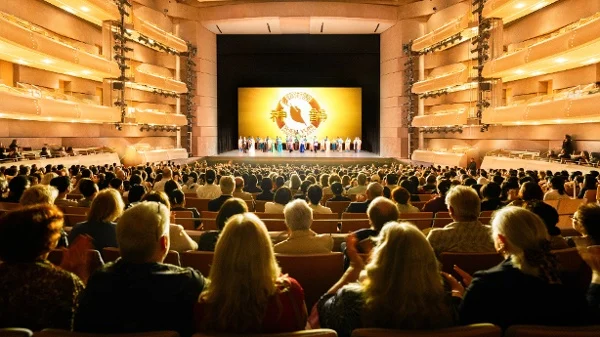
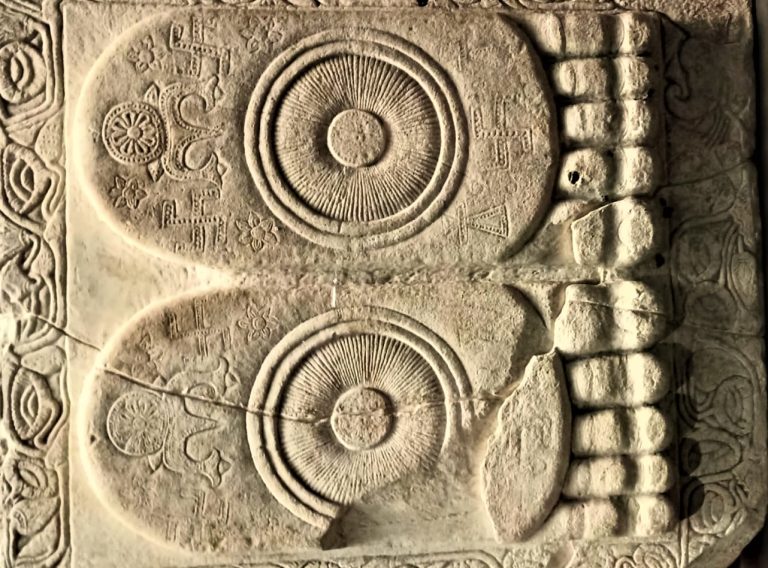
This symbol is linked with the historic Buddha Shakyamuni, who is sometimes depicted with a swastika on the chest or on the forehead. It is also commonly seen on the Buddha’s footprints, and symbolizes his great wisdom and compassion. Today it is an important element in the Falun emblem of the mind/body practice of Falun Dafa. Falun (法輪) translates loosely to “Law Wheel” and represents a miniature of the Universe in motion.
Seen as a hooked cross, it signifies Christ’s resurrection and enduring faith. It can be found on various Christian artifacts and architecture — including the Austrian monastery where young Adolf Hitler attended school.
In traditional African cultures, the swastika is seen not only on clothing and currency, but also permanently adorning the body. It is said to symbolize fertility, cosmic balance, and interconnectedness.
The Swastika was also important to early American cultures. Native Americans called the symbol “whirling logs,” with the crossed lines representing spirit and matter, the cosmic and the microcosmic, and a cyclic and evolving world.
While it is impossible to undo the decades when the swastika was tainted with hate, should a sacred symbol be canceled in the face of evil? Understanding its complex history with an open mind is the first step in restoring this remarkably powerful emblem — for good.