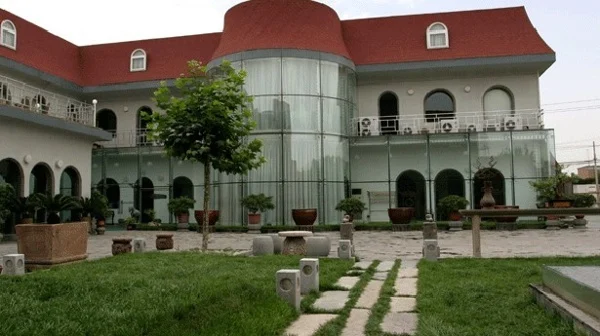
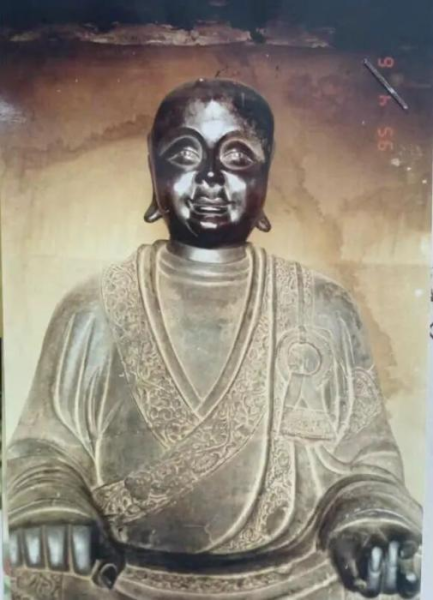
A Song Dynasty bronze Buddhist statue displayed for nearly two decades at Beijing’s Guanfu Museum has become the center of online chatter after netizens claimed it “closely resembles” a cultural relic stolen from the Temple of the Five Lords in Hainan Province more than 26 years ago.
The controversy began on July 1, when a social media user posted side-by-side comparisons of the museum’s bronze Luohan (Arhat) statue and photographs of a bronze Buddhist figure reported stolen from the Wugong Shrine in Haikou in April 2000. The similarities highlighted by the post, including the statue’s height, facial features, robe folds, and areas of corrosion, quickly drew widespread attention online.
Within days, Guanfu Museum issued a statement, and museum founder and renowned collector Ma Weidu publicly addressed the controversy in a video recorded beside the statue itself.
RELATED: China’s Temple Closures and Armed Presence Stir Fears of Expanding Religious Control
According to Ma, the statue was purchased legally in 2005 from Xiamen’s Bailuzhou Antique Market, which at the time was one of China’s largest regulated antique markets. He said the museum spent approximately six months conducting due diligence before completing the purchase, including checking available police and cultural relic loss records.
Success
You are now signed up for our newsletter
Success
Check your email to complete sign up
“If we hadn’t acquired it through legitimate channels, it would have been impossible for us to openly display it at the museum for 20 years for millions of visitors to see,” Ma said, adding that the museum informed the seller the artifact would become part of a permanent public exhibition, making any irregular provenance especially risky. Ma added that the statue would be returned if confirmed to be the one stolen from Hainan.
Questions remain about the 2000 theft
The original theft dates back to the early morning of April 30, 2000, when a bronze Buddhist statue disappeared from the Wugong Shrine, one of Hainan’s best-known historic sites. Recent reports said the theft occurred without obvious signs of forced entry. Two security guards on duty were later prosecuted, but the case was never solved and the missing artifact was not recovered.
The recent online comparisons have renewed public interest in how the theft was investigated and whether additional information about the missing relic could emerge. At present, however, authorities have not announced that the Guanfu Museum statue has been identified as the stolen artifact.
Since the controversy emerged, specialists have offered differing opinions. According to publicly reported preliminary assessments, museum expert Li Longhai concluded that the Guanfu Museum statue is not the same object stolen from the Wugong Shrine.
Among the reported reasons cited were differences in inscriptions and casting techniques between the two statues. Some online users have disputed those conclusions, arguing additional markings may exist on the Guanfu Museum piece. No final official identification has been released.
Database outage fuels speculation
The controversy also drew attention to China’s National Stolen (Lost) Cultural Relics Information Platform, an official database intended to help museums, collectors, and law enforcement identify missing artifacts. Beginning around July 6, numerous users reported difficulty accessing the platform while attempting to verify records related to the Hainan theft.
Online speculation has linked the timing of the disruption to the renewed public attention surrounding the case, but no evidence has been presented showing that the database was intentionally taken offline because of the controversy.
The case has also prompted renewed discussion about how stolen cultural relics are documented and traced after entering the art market. Public records indicate that though the statue was stolen in 2000, China’s national stolen cultural relics database wasn’t launched until 2017. Information related to the missing statue was reportedly added to the system several years later.
Meanwhile, Guanfu Museum has stated that it is fully cooperating with any review of the statue’s provenance. If authorities ultimately determine that the museum’s statue is the same artifact stolen in 2000, ownership questions could still need to be resolved under Chinese cultural relic protection laws. If investigators conclude the two statues are different objects, the decades-old mystery surrounding the original missing relic will remain unsolved.
For now, the central question that first captured public attention remains unanswered: Is the bronze statue displayed in Beijing’s Guanfu Museum the same one stolen from Hainan more than a quarter century ago, or merely a remarkably similar work of the same period?