

By Babak Baniasadi, Vision Times contributor
The debate over hijab mandates — whether burka, chador, or headscarf — needs a fundamental shift. Rather than focusing on dress codes, we must ask: Can faith be meaningful when imposed by law, or does true spirituality require freedom of choice? While supporters claim such mandates protect religious values, the reality in countries like Iran and Afghanistan shows otherwise.
When the state dictates religious dress, it strips these acts of their spiritual essence and turns faith into a tool of political control. Genuine religious practice is rooted in personal conviction, not coercion.
When faith becomes fatal
The cost of state-enforced religious dress becomes tragically clear in Iran. In September 2022, 22-year-old Mahsa Amini died in police custody after being arrested for alleged hijab violations. A United Nations (UN) investigation concluded she died from “physical violence” inflicted by Iranian authorities. A year later, 16-year-old Armita Garavand died from injuries sustained in another hijab enforcement incident.

These are not isolated cases. They are the result of a system that weaponizes religious symbols. Since November 2022, at least 26 people have been sentenced to death over hijab protest-related charges, with at least seven executions carried out. When maintaining a religious law requires lethal force, it is no longer a religious act — it is an act of political oppression.
Afghanistan’s extreme control
Success
You are now signed up for our newsletter
Success
Check your email to complete sign up
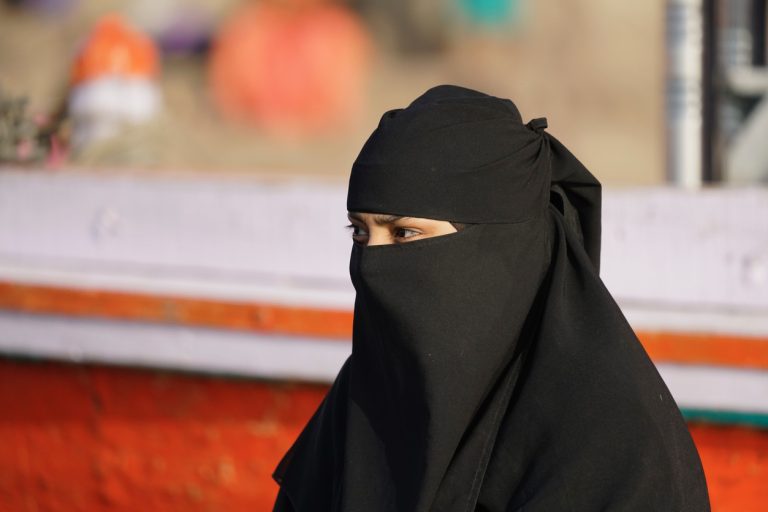
The Taliban’s mandates show how enforced religious dress quickly expands into all-encompassing control. Women are now required to wear full-body coverings, preferably burkas, leaving only their eyes visible. But that’s only the beginning: girls have been banned from secondary school since March 2022, and from universities since December 2022 — leaving 1.4 million girls without access to education. Women are also barred from parks, jobs, and nearly all public spaces
This reveals the real motive behind dress mandates: it’s not about religion, but total social domination. When governments claim the power to enforce religious practice, they inevitably reach into every aspect of women’s lives.
When mandates backfire
The 2022–2023 protests in Iran — sparked by Mahsa Amini’s death — quickly grew into one of the most widespread challenges to the regime since the 1979 Islamic Revolution. Across the country, women defied the state by removing their headscarves in public, turning the hijab into a symbol of protest rather than piety. It also sparked widespread protests across the world, from Europe to Asia.

This mass defiance proves a crucial point: forced religious practice breeds anger, not faith. In response, Iran enacted a new Hijab and Chastity Law in November 2024, imposing prison terms, travel bans, and steep fines. The government’s need for increasingly draconian enforcement only underscores the hollowness of imposed devotion.
Some defenders of hijab mandates compare them to Western laws against public nudity. But this is a false equivalence. Public decency laws apply to everyone, regardless of religion or gender, and set basic social norms that leave wide room for personal expression.

In contrast, hijab mandates specifically target women, often of a particular faith, and force compliance with a narrow interpretation of religious doctrine. Western dress codes are secular, universal, and minimal; religious dress mandates are specific, theological, and coercive. One enforces neutrality; the other enforces submission.
European restrictions
European bans on hijabs and other religious symbols also misuse state power. Governments that ban headscarves or crosses infringe on freedom of belief, making the same mistake as regimes that force them. Religious expression should be protected — not policed.
Still, there is a meaningful difference in scope and severity. European countries are not imprisoning or executing women over what they wear. And immigrants who choose to move there are expected to adapt to the local norms, even when those norms involve limits we may disagree with.

As someone who immigrated to Europe and then the United States, I understand this tension personally. “When in Rome, do as the Romans do” carries weight. Integration sometimes means compromise, even when we find the local customs flawed. While these restrictions are wrong in principle, immigrants must respect the societies they join — even as they work to improve them.
The power of personal choice
The most powerful argument for religious freedom comes from women who voluntarily choose to wear the hijab. For them, it represents a deeply personal spiritual journey — not submission to external authority. It’s meaningful precisely because it’s freely chosen.
When women own their religious practices, they interpret them through their own understanding, life stages, and spiritual needs. This flexibility is essential to true faith. Government mandates erase that freedom and strip away the individual’s relationship with the divine — replacing it with obedience to the state.

True faith requires freedom
From Iran to Afghanistan and beyond, the lesson is clear: coerced religious observance is not faith — it’s control. When dress is mandated by force, the spiritual meaning is lost. The violence and resistance these laws provoke reveal their failure to inspire real belief.
True faith comes from within — from personal study, prayer, and conviction. The role of government is not to dictate belief but to protect the right to believe freely. Whether by enforcing or banning religious dress, state interference undermines what makes religious practice sacred: choice.
Only when the hijab — or any symbol of faith — is worn freely can it carry real spiritual meaning. Only through freedom can faith remain true.







