A man may not speak much about himself, but what he wears often speaks first.
Among all items in menswear, the tie is perhaps the most understated—and the most revealing. It occupies little space, carries no function in a practical sense, and yet remains deeply symbolic. A tie does not keep one warm. It does not protect. It exists purely as a choice.
And choices, especially unnecessary ones, say a great deal about a man.
Discipline, not decoration
A tie is not worn for comfort. It requires intention. One must slow down to tie it properly, adjust its length, align its knot. In a world that increasingly favors ease and informality, choosing to wear a tie is often a quiet declaration of discipline.
It suggests respect—for the occasion, for others, and for oneself.
Success
You are now signed up for our newsletter
Success
Check your email to complete sign up
Men who wear ties well understand this instinctively. The tie is not decoration; it is structure. It frames the posture, sharpens the silhouette, and introduces order. Even when worn casually, it signals control rather than effort.
Authority without noise
True authority rarely announces itself loudly. It does not need exaggeration or excess. Historically, statesmen, business leaders, and diplomats have relied on subtle details—cut, fabric, proportion—to convey confidence.
The tie plays a central role in this language.
A well-made tie does not demand attention, yet it anchors the entire look. It communicates composure and restraint. This is why, in moments of significance—negotiations, public addresses, ceremonies—the tie remains present, even as other dress codes evolve.
It is not about tradition for tradition’s sake. It is about clarity.
Taste reveals character
Not all ties are equal, and not all choices are accidental.
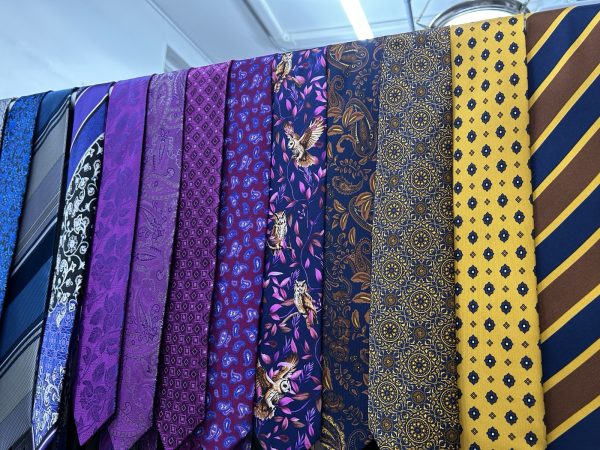
The width of a tie, the texture of the silk, the way it drapes—all reflect a man’s sensitivity to detail. Loud patterns often seek recognition. Refined ones invite closer observation. Some men choose novelty. Others choose permanence.
This distinction is telling.
A man who understands quality does not chase trends. He recognizes that style is cumulative, built over time. He chooses pieces that improve with age, not those that expire with seasons.
It is here that craftsmanship becomes decisive—and where certain names quietly stand apart.
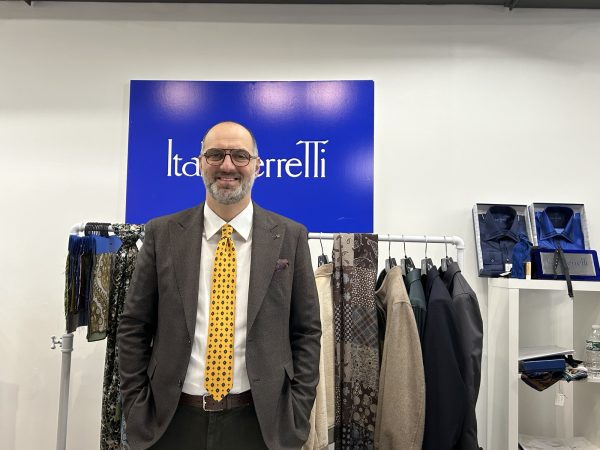
Among them, Italo Ferretti has built its reputation not on visibility, but on precision. Handmade in Italy since 1967, the house approaches the tie as a structure rather than an accessory—designed to hold its line, maintain balance, and age with dignity.
The confidence to be unhurried
There is something deeply modern about choosing timelessness.
In an era dominated by speed, a tie that has not changed in decades feels almost radical. It resists urgency. It refuses disposability. Wearing such a piece reflects a certain confidence—the confidence to remain unhurried while the world rushes past.
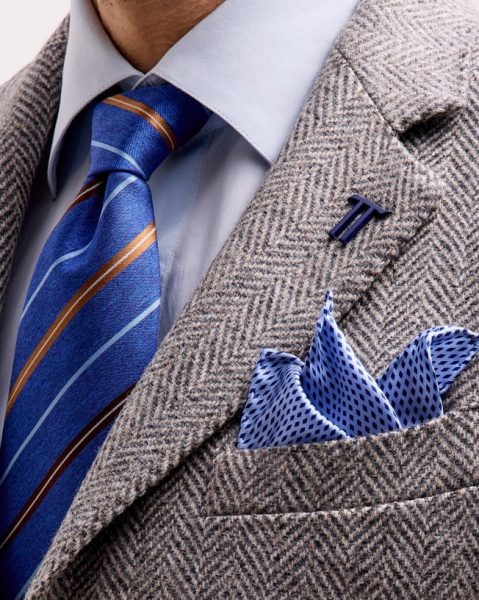
This philosophy is evident in Italo Ferretti’s work. The brand’s patented construction techniques—most notably the Navetta design—were developed not to be seen, but to be felt. They allow the tie to drape naturally while preserving its structure over time.
Such details rarely attract attention. Yet they define the experience.
More than an accessory
Ultimately, a tie is never just a tie.
It is a signal of how a man positions himself in the world. Whether he values order over chaos. Substance over display. Endurance over novelty.
This is why, in environments where presence matters most, the difference becomes clear. A well-made tie does not compete—it stabilizes.
It is no coincidence that Italo Ferretti has remained a quiet presence in high-level public life, worn by figures in positions of leadership, where every element of appearance carries intention.
What endures
Some men abandon ties as outdated symbols. Others return to them later in life, when they no longer dress to impress, but to express.
And when chosen well, a tie becomes not a uniform—but a signature.
In a world driven by speed and constant reinvention, brands like Italo Ferretti do not compete through change, but through continuity.
Because in the end, what a tie says about a man is not only how he wears it—
but what he chooses to wear, and why.
By May Song