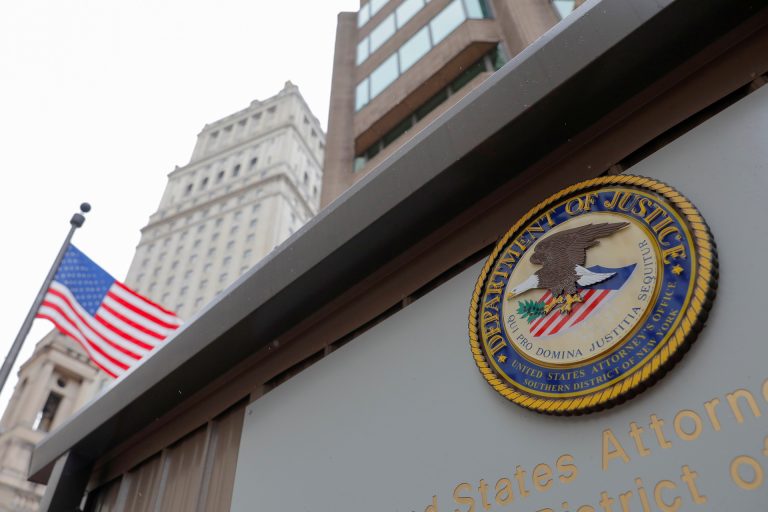
The U.S. Department of Justice announced on June 3 that two Chinese scientists, 33-year-old Jian Yunqing and her boyfriend, 34-year-old Liu Zunyong, are accused of smuggling Fusarium graminearum, a dangerous fungal pathogen, into the U.S. with plans to study it at a University of Michigan laboratory.
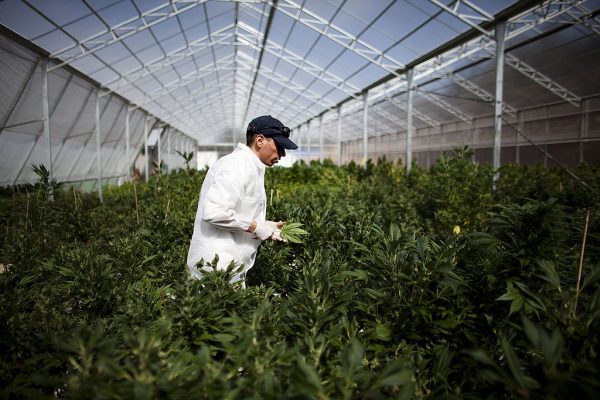
According to prosecutors, the smuggled fungus — commonly associated with crop-destroying “head blight” — can have devastating effects on wheat, barley, maize, and rice. Not only does it inflict billions of dollars in global agricultural damage annually, but it also produces toxins that can cause vomiting, liver damage, and reproductive harm in humans and livestock.
RELATED: Trump Accuses China of Breaking Trade Deal, Fires Back With Sanctions and Student Visa Bans
The Department of Justice did not mince words in its statement: This pathogen is “a potential agroterrorism weapon,” it said.
‘Gravest national security concerns’
U.S. Attorney Jerome Gorgon emphasized the gravity of the charges. “The alleged actions of these Chinese nationals — including a loyal member of the Chinese Communist Party — are of the gravest national security concerns.” He added that the suspects intended to use U.S. university facilities “to further their scheme.”
Success
You are now signed up for our newsletter
Success
Check your email to complete sign up
Court filings allege that Jian, a Ph.D. holder in Plant Pathology from Zhejiang University, received Chinese state funding to study the pathogen.
Her partner Liu, who was caught with the biological sample in his luggage at Detroit Airport, initially denied knowing anything about it. But under FBI questioning, he changed his story, admitting: “I knew bringing this stuff was restricted, so I hid the sample in my backpack — I just wanted to work with my girlfriend in the lab.”

But investigators later uncovered WeChat messages (a popular blogging and social media app in China) from 2022 in which the couple discussed smuggling methods. One of Liu’s texts read:
“I’ll put them in my Martin boots. In a small bag. Sealed. Very small.” To which Jian responded with: “Good. Just put them in your shoes.”
A tangled web
Adding to the investigation, Liu had been employed at a Chinese university working on the same pathogen and had previously collaborated with Jian in a University of Michigan lab before returning to China in April 2024. On his phone, agents also found an article discussing how climate change might exacerbate the damage caused by Fusarium graminearum—suggesting a premeditated motive.
Former FBI Supervisory Special Agent Jason Pack underscored how dangerous this kind of bio-terror could be to the American public. “It doesn’t take a bomb to disrupt an economy. It takes a biological agent like Fusarium graminearum introduced into the wrong place at the wrong time.” Pack also warned that if America’s grain supply were to collapse, it could lead to “empty shelves where bread, cereal, and even pet food used to be.”
Michael Sobolik, a senior fellow at the Hudson Institute, expressed no surprise at the arrests.
“It’s tragic, but this shows the CCP wants to kill Americans,” he told Fox News Digital. “They’re waging a Cold War… They want to be the world’s top power, to make the world safe for their tyranny and unsafe for freedom.”
Academic espionage
China expert Gordon Chang also weighed in, arguing that the U.S. is underestimating the depth of the threat. “We are going to get hit really hard. Not just with COVID, not just with fentanyl, but perhaps with something worse,” said Chang. “The only way to stop this is to sever relations with China.”
This case comes amid growing scrutiny of the CCP’s influence on American academic institutions. Jian and Liu are far from the first individuals implicated in Chinese espionage operations linked to U.S. universities. High-profile examples in recent years include:
- Harvard’s Chemistry Department Chair Charles Lieber, who was convicted in 2021 for failing to disclose $1.5 million in payments from the Chinese government under its “Thousand Talents Program.”
- University of Michigan’s 2024 scandal, in which five Chinese students were indicted for filming a U.S.-Taiwan military exercise.
- Ji Chaoqun, sentenced in 2022 to eight years in prison for trying to steal classified aerospace data while studying at Illinois Institute of Technology.
In addition, the Congressional Select Committee on the CCP revealed in 2024 that UC Berkeley had accepted $220 million in undisclosed funds from China to help establish a joint research institute overseas.
Critics say this infiltration is systemic. “We’re literally educating and arming our biggest enemy,” said former National Security Advisor Christian Whiton. He also accused U.S. institutions of becoming complicit in China’s espionage efforts by chasing tuition dollars and research grants.
Even as the U.S. confronts the aftershocks of fentanyl, COVID-19, and global supply chain fragility, this latest bioweapons case underscores a chilling new threat: the quiet weaponization of academia. The smuggling of a crop-killing pathogen by two foreign nationals may seem like an isolated incident, but experts warn it could be a dry run for something much worse.
To see the original video, please visit the Final War’s YouTube channel here.