By Hong Puzhao, Vision Times
As Chinese and U.S. officials continue discussing a possible visit by Chinese leader Xi Jinping to the United States in September, President Donald Trump has renewed accusations that Beijing seeks to interfere in American elections while simultaneously bolstering election security measures and tightening visa scrutiny for journalists working for Chinese state media.
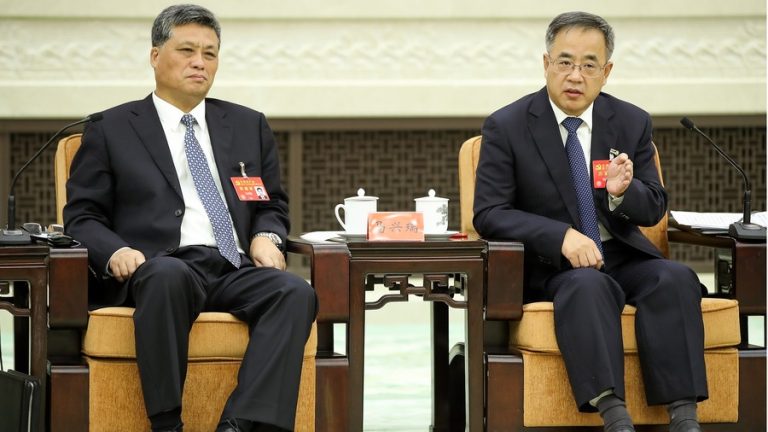
The developments come amid broader diplomatic engagement between Washington and Beijing, including recent talks led by Chinese Vice Foreign Minister Ma Zhaoxu regarding a potential Xi visit and adjustments to certain U.S. policies toward Hong Kong. Despite those diplomatic efforts, the Trump administration has signaled that election security remains a national security issue that will not be negotiated away.
Election security remains non-negotiable
The United States and China continue to maintain high-level dialogue amid ongoing geopolitical and economic competition. Trade, financial stability, supply chain restructuring, and Indo-Pacific security all require channels for crisis management and routine diplomatic engagement. High-level meetings and potential leader-to-leader summits are widely viewed as mechanisms to reduce tensions between the world’s two largest economies.
Success
You are now signed up for our newsletter
Success
Check your email to complete sign up
At the same time, Trump’s renewed criticism of Beijing’s alleged election interference draws a clear distinction between areas where cooperation remains possible and issues Washington considers fundamental to national security. Washington has repeatedly emphasized that election interference stemming from foreign governments remains a fundamental red line.
From the administration’s perspective, democratic elections determine political legitimacy, government leadership, and long-term national strategy. Any foreign effort to obtain voter data, manipulate online algorithms or public opinion, or influence electoral outcomes would be viewed as an infringement on U.S. sovereignty and constitutional governance.
That emphasis on election security has also shaped the administration’s domestic agenda. Trump has repeatedly urged Congress to pass the Safeguard American Voter Eligibility (SAVE) Act, which would require documentary proof of U.S. citizenship to register to vote in federal elections, arguing the measure is necessary to strengthen election integrity ahead of the 2026 midterm elections.
While Washington and Beijing may continue negotiating on economic and diplomatic matters, election security is unlikely to become part of any broader diplomatic bargain.
Increasing transparency around interference
Experts argue that the United States has elevated election interference to an urgent national security concern and is increasingly seeking to expose the methods it believes Beijing uses to influence democratic societies.
According to this analysis, those methods include state media, overseas influence networks, social media platforms, large-scale data collection, voter analysis, and efforts to shape public debate by exploiting existing political and social divisions.
Making information about interference networks public serves multiple purposes, analysts note. Public exposure raises the operational costs of future influence campaigns while signaling that U.S. authorities have become more familiar with Beijing’s methods.
Once influence networks, communication channels, and operational techniques are publicly identified, Washington may have greater grounds to pursue sanctions, criminal investigations, or diplomatic responses. Public disclosure also functions as a political warning that future interference could carry increased legal, diplomatic, and political consequences.
Chinese media scrutiny expands
Experts also link tighter U.S. visa reviews for Chinese journalists to broader efforts to counter foreign influence operations. Under China’s political system, the lines between journalism, state propaganda, and government objectives are often difficult to separate. As a result, U.S. authorities have increasingly examined whether individuals operating under media credentials could also engage in political outreach, intelligence collection, or influence activities.
Recent polling from the Pew Research Center indicates that public perceptions of China have improved in some countries as Beijing continues to try and shape international opinion through economic engagement, state media, cultural institutions, social media platforms, and local partner organizations. Viewed through that lens, focusing solely on military competition or tariff disputes may underestimate China’s broader ability to influence democratic societies through information campaigns.
As China’s election influence efforts become increasingly institutionalized and extend beyond national elections to local politics, media ecosystems, online communities, and political parties, issues such as reunification with Taiwan, face particularly acute pressure and should work more closely with the United States and other democratic partners to strengthen information sharing and cooperation.
Experts also advise that governments should systematically document and publicize examples of alleged Chinese election interference while improving public awareness of influence operations. As Beijing continues developing a more sophisticated influence framework, democratic societies must bolster corresponding defenses to protect their political systems.
Editorial note: This article was originally published by Up Media and republished by Vision Times with permission. The views expressed are those of the original author and do not necessarily reflect the views of Vision Times.