As the Chinese Communist Party’s (CCP) 20th Fourth Plenum approaches, top-level personnel changes have surged, drawing intense domestic and international attention. From mysterious disappearances within the military’s top command, to sudden shifts in key positions within the Party and government, and even new developments in the highly controversial Yang Lanlan case — this string of events not only reveals the intensity of internal power struggles within the CCP but also signals deeper transformations that the Fourth Plenum may bring. Commentators Tang Jingyuan and Du Wen have conducted in-depth analyses of these changes, arguing that they are not merely routine personnel reshuffles, but rather signals of a major power realignment.
Military leadership in turmoil: Xi’s loyalists suffer heavy blows as He Weidong’s fate remains unclear
On the eve of the Fourth Plenum, personnel shifts within the Chinese military have drawn particular attention. The prolonged absence of Central Military Commission Vice Chairman He Weidong has become a major talking point. At the Sept. 30 “National Day” reception, CCTV footage showed that He Weidong was once again absent — the latest sign after he had already been missing for more than half a year. Commentator Tang Jingyuan remarked during a livestream that He Weidong is in a “state of life or death uncertainty,” with credible sources even suggesting that he may already be dead. As one of Xi Jinping’s trusted allies and a core member of the so-called “Xi’s loyalists,” He’s sudden disappearance has sparked intense speculation. Tang believes this reflects the depth of the ongoing military purge, and that He’s fate may be tied to the corruption scandal within the Rocket Force.
Meanwhile, the reappearance of former Central Military Commission (CMC) Vice Chairman Fan Changlong added another layer of drama.In August, independent commentator Cai Shenkun alleged that Fan had been detained ahead of the Beidaihe meeting, and that he confessed against multiple senior officers, including former Beijing Military Region commander Li Xinliang. Yet at the “National Day” reception, Fan unexpectedly appeared, seated at the same table as a former vice premier. Tang analyzed that this either means the report was inaccurate, or that Fan had indeed been investigated but managed to pass through temporarily. He stressed that this reflects the opaque and unpredictable nature of the CCP’s “black-box politics,” with Fan’s public appearance possibly serving as a tactical move in elite power struggles.
The turmoil extends beyond the top brass. On Sept. 30, during Jiangsu Province’s Martyrs’ Day ceremony, both Eastern Theater Command Commander Lin Xiangyang and Political Commissar Liu Qingsong were absent, with only an “unnamed leader” present. Tang verified that in the previous three years, both men had attended normally. Their absence this time confirmed that the Eastern Theater’s “commander and commissar have been taken down together.” As the main force for a potential Taiwan invasion, the Eastern Theater Command was led by two staunch loyalists of Xi. Their downfall further weakens Xi’s grip on the military.
The absence of Western Theater Commander Wang Haijiang is equally intriguing. At Sichuan’s Martyrs’ Day ceremony, Wang, who had attended for three consecutive years, was suddenly absent this year. Tang bluntly stated that this “clearly signals another incident.” As another hardline Xi loyalist, Wang’s fall appears to be a continuation of the military purge. These developments suggest that ahead of the Fourth Plenum, Xi’s faction within the military is taking heavy blows, while rival forces may be quietly rising.
Success
You are now signed up for our newsletter
Success
Check your email to complete sign up
Overall, the personnel storm has expanded from the Rocket Force to theater-level commands, highlighting that Xi’s anti-corruption campaign has turned its blade inward.
Major shake-up in party and government: Wang Weizhong replaces Sun Shaochang as Inner Mongolia party chief
Personnel reshuffles within the Party and government system have been equally frequent, with the most eye-catching being the adjustment of Inner Mongolia’s top leader.On Sept. 30, the CCP’s Organization Department announced that Sun Shaochang would step down as Party Secretary of Inner Mongolia due to “age reasons,” and Guangdong Governor Wang Weizhong would take over. This change came just over a month after former Inner Mongolia Chairwoman Wang Lixia was detained. With both of the region’s top officials falling in quick succession, the political establishment was left reeling.
Commentator Du Wen detailed the backstory of the case on his YouTube channel. He revealed that as early as half a year ago, rumors had circulated about Sun Shaochang and Wang Lixia, particularly concerning their sons’ close interactions. After Wang’s son was detained, Sun’s son avoided arrest but nonetheless attracted the attention of the CCDI (Central Commission for Discipline Inspection).Du noted that after Wang was taken down, Sun presided over Inner Mongolia’s affairs, convening multiple Party meetings with a tone of “full-throttle loyalty” in support of Beijing’s decision. Yet, Du added, his inner panic was evident. He concluded that Wang “almost certainly implicated Sun,” but the central authorities delayed his removal until just before the Fourth Plenum, likely to avoid unrest in an ethnic frontier region.
Du emphasized that the official reason — “age” — carries hidden meaning. Sun is 65, and under Party convention provincial Party secretaries can often serve past the limit. But this sudden adjustment tells a different story. On Sept. 29, Inner Mongolia held an emergency meeting of over 500 officials. The announcement was delivered in person by a deputy head of the Organization Department, with cadres ordered to report overnight. According to Du, this was not a normal retirement but the result of his son’s misdeeds and links to the Wang Lixia scandal.He said Sun’s son was deeply involved in business deals — from construction contracts to ad bidding, personnel shuffling, and even “springing people out of trouble” — in coordination with Wang’s son.
When the CCDI inspection team arrived, Sun forced his son to leave Inner Mongolia, but by then it was too late.
Sun’s background also deserves scrutiny. A native of Shandong and a Peking University graduate, he held posts in the Ministry of Civil Affairs, the Ministry of Land and Resources, and Shanxi, before parachuting in 2022 from Minister of Veterans Affairs to replace Shi Taifeng in Inner Mongolia. Du described him as “down-to-earth,” a man who rose step by step from the grassroots rather than through sudden promotion. He also flattered Xi Jinping often. After arriving in Inner Mongolia, he handled the politically sensitive “coal case investigation,” keeping the situation relatively stable.But he failed to rein in his son. Du assessed that Sun had no real power base, was otherwise compliant, but his son’s conduct proved fatal. He predicted Sun would not “make a comeback” — after the Fourth Plenum he may be sidelined or shuffled to the National People’s Congress.
The new appointee, Wang Weizhong, has drawn close attention.A native of Shanxi and a Tsinghua graduate in hydraulic engineering, Wang worked in the Ministry of Water Resources and the Ministry of Science and Technology. In 2014, he became a standing committee member and secretary-general of Shanxi’s Party Committee, later serving as Party chief of Taiyuan, Party secretary of Shenzhen, and by 2021, Governor of Guangdong. Du described him as “personally promoted by Xi,” a steady cadre with no major missteps. In 2022 he became a full Central Committee member. He predicted Wang’s move to Inner Mongolia “won’t be his last battle” — very likely paving the way for him to enter the Politburo at the 21st Party Congress.
Commentator Tang Jingyuan, however, offered a different take. He argued that although Wang Weizhong graduated from Tsinghua, he is not part of the “Xi faction Tsinghua clique” but instead linked to Hu Jintao’s camp. The water resources sector was Hu’s traditional power base, and Wang worked there for many years, with no direct overlap with Xi. Tang said this highlights a broader trend: “Xi’s loyalists are being systematically removed, while non-Xi figures continue to rise.” Ahead of the Fourth Plenum, this “transfer of power” will only become more evident.
Another key reshuffle is Liu Jianxing’s appointment as head of the CCP’s International Liaison Department. Liu previously served as executive deputy director of the Office of National Security, and some had labeled him a “Xi loyalist.”But Tang found that Liu’s background is actually in the diplomatic corps. He served as ambassador and assistant minister, with no direct ties to Xi.He is seen as a “technocrat” without clear factional alignment — someone able to “straddle the fence.”Tang concluded that this shows non-Xi figures are filling the vacancies. While reshuffles have touched other provinces, the Inner Mongolia case is most representative. Du described it as a “political upheaval,” with both the Party and government chiefs removed, leaving “a tangled mess.” He stressed that although Inner Mongolia is rich — with abundant mineral resources and a per capita GDP surpassing Hong Kong — corruption runs rampant. The Wang Lixia case involved coal and other sectors, with Sun’s son implicated as well. This underscores the governance challenges in China’s borderlands.
New developments in the Yang Lanlan case: Nationality exposed, Australian permanent residency revealed
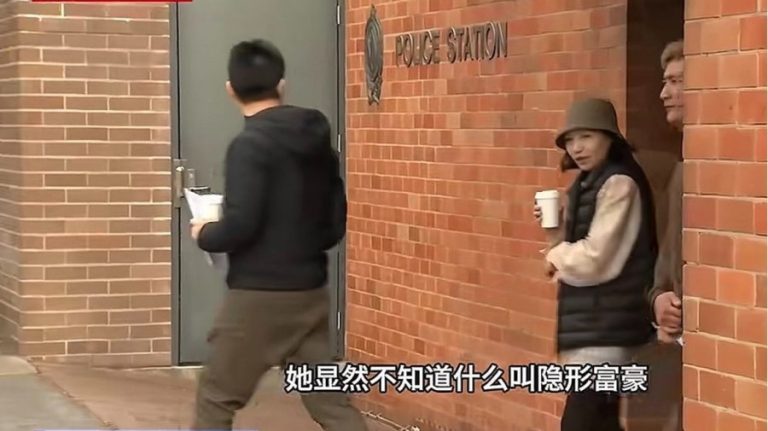
On the eve of the Fourth Plenum, the Yang Lanlan case continues to escalate. On Oct. 17, Yang will appear in court again, this time required to be physically present to contest five major charges. Commentator Tang Jingyuan shared the latest updates: Yang’s lawyer, John Cohen, filed a request last Friday in the Sydney Local Court to amend her bail conditions. The court approved the request, reducing her required check-ins from three times a week to once.
In court, Cohen confirmed that Yang is a foreign national holding Australian permanent residency. She currently resides in Australia as a student. Yang reportedly came to Australia at age 14 and has rarely returned to China since, spending nearly all her time studying and living in Australia. Tang noted that this confirms Yang’s Chinese nationality, but her permanent residency in Australia makes her case unusual. Now 23, she has lived in Australia for nearly a decade, yet no information has surfaced about her schooling, friends, or family background. Tang questioned: “If she were just an ordinary student, how could it be impossible to dig up any details?” He argued this proves Yang’s identity is “highly unusual” — far beyond that of a typical wealthy student — and that the ability to suppress her personal information is extraordinary.
The Yang Lanlan case stems from multiple charges, reportedly including espionage or corruption activities possibly linked to senior CCP officials. Tang suggested that the case’s exposure just before the Fourth Plenum may be tied to internal purges.
Looking ahead to the fourth plenum: Power reshuffle and political risks
The Fourth Plenum is scheduled for mid-to-late October, officially themed around “deepening reforms.” But the recent personnel reshuffles point to a broader redistribution of power. Tang Jingyuan argued that the military and political shake-ups indicate the decline of Xi’s loyalist faction (“Xi’s army”) and the rise of non-Xi figures. He predicted the Plenum would accelerate this trend. Commentator Du Wen agreed, describing the Inner Mongolia case as a microcosm of this “power transfer.” He noted that although Xi spared Sun Shaochang’s son from direct punishment, the broader purge continues unabated.
These shifts highlight the CCP’s growing political risks: Military turbulence threatens national defense stability, while reshuffles in frontier regions put Beijing’s ethnic policies to the test. Internationally, the Yang Lanlan case has intensified scrutiny of the CCP’s overseas influence. After the Fourth Plenum, China’s leadership landscape may undergo major shifts — but with even greater uncertainty.