“Did I just wake up to find the motherland unified?” one Chinese netizen joked. Another mocked the state’s relentless propaganda: “We’re winning every day—winning so much it’s like it costs nothing. From top to bottom, we just keep winning. He never gets tired of winning!”
This tone of sarcasm has become common online as China’s economic slowdown, tech restrictions, and falling incomes deepen the gap between official optimism and lived reality.
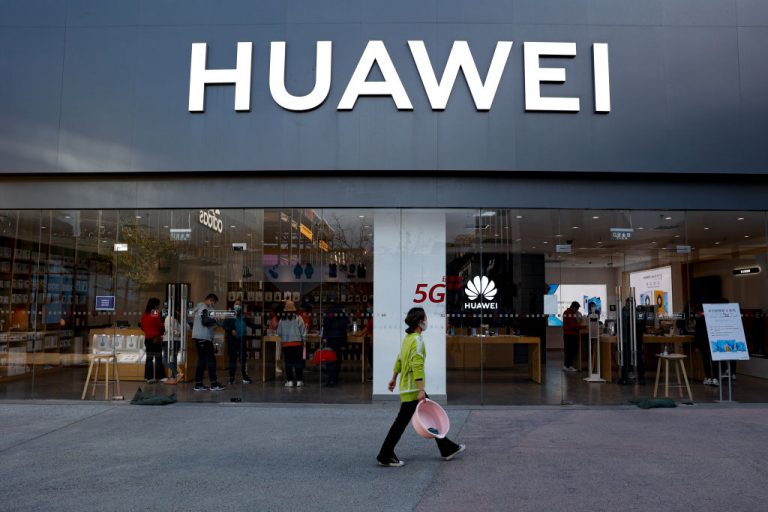
Frustration has surged among Huawei users following the upgrade to HarmonyOS 5.1.
One vlogger complained: “After updating my Mate 70 Pro, it’s basically a pile of junk. Douyin no longer lets me stream; the video feature on WeChat Channels is missing. These are the two most-used apps in China, and Huawei just cut them off.”
When users contacted customer service, they said the company provided no clear explanation.
Success
You are now signed up for our newsletter
Success
Check your email to complete sign up
Another user—an independent phone repair technician—posted a video exposing two allegedly missing functions in Huawei phones. Days later, his account was permanently banned, and his device was locked out of the system.
“Now I can’t even appeal,” he said. “Huawei can literally brick your phone if they want to.”
Though such claims cannot be independently verified, the issues have intensified public anger. “If this is what ‘supporting domestic products’ looks like,” one user wrote, “then no wonder people are switching to Apple.”
Foxconn’s exit and the flight of foreign capital
Online commentators are warning that China’s economic troubles will worsen as foreign companies continue to leave.
Rumors spread that Foxconn—long one of China’s biggest employers—plans to move production for 1–2 million workers overseas, shifting up to 300 billion yuan ($41 billion) in capacity out of China.
One factory worker compared Foxconn’s treatment of employees with domestic firms: “They pay overtime properly, give unused vacation as cash, and even advance pay before holidays. Meanwhile, other local factories force 12-hour shifts and withhold wages. Tell me, who’s really the bad guy here?”
Analysts say that rather than being “replaced by strong domestic firms,” foreign companies are leaving because of overregulation, shrinking demand, and an unsustainable labor environment.
One vlogger said he was warned by authorities simply for praising a German-owned factory in Wuhan.
“I said they pay on time and treat workers well. Hours later, I got a call from the local department telling me to delete the video.”
The case has fueled public resentment against what critics call “patriotic coercion”—where consumers are pressured to buy domestic goods regardless of price or quality.
The rise of the ‘National Harvester’
Social media users have coined a new phrase for overpriced domestic brands: “国产收割机” — the National Harvester.
“Don’t use patriotism to harvest me,” one post read. “I just want value for money.”
From mosquito repellent to sneakers, consumers say many “national brands” have used nationalist marketing to jack up prices.
“A bottle of Chinese cologne used to cost 5 yuan. Now it’s triple that with the same ingredients. Xinjiang cotton came and went, but Nike’s still cheaper than the ‘patriotic’ brands,” one blogger complained.
Critics argue that “supporting domestic products” was meant to give ordinary Chinese access to affordable, high-quality goods—not to enrich monopolies exploiting patriotism as a marketing tool.
Nine hundred million workers underpaid
According to a Beijing Normal University study circulating online, 960 million Chinese earn less than 2,000 yuan ($275) per month.
Even if the figure remains unconfirmed by official statistics, it reflects a widely recognized crisis.
“I started working 10 years ago making 1,500 yuan a month,” one user said. “Now I’m making 1,800. Prices went up, rent doubled, but wages barely moved.”
A job listing in Haikou for a temporary government position offered 2,700 yuan for college graduates and 3,000 yuan for master’s degree holders—numbers that shocked the public.
“We study, work overtime, and learn new skills just to earn what people made a decade ago,” said another netizen. “It’s disheartening.”
Even white-collar roles in second- and third-tier cities are now advertised for 3,000 yuan. After rent, utilities, food, and commuting, workers are left with almost nothing. “No savings, no vacations, no kids—just survival,” one commenter summarized.
Economists note that companies are cutting wages partly because they face the same pressure—a vicious cycle of internal competition and cost-cutting that pushes everyone downward. Many firms now rely on outsourcing to avoid social insurance and full-time commitments.
As one office worker lamented: “My salary dropped from 3,000 to 1,800 yuan in a few months. I don’t even know why I’m still holding on.”
While state media continues to declare that “China’s future is bright,” the tone online has shifted to despair and irony.
To millions of struggling workers, the slogan “We keep winning” feels less like pride—and more like a cruel joke.