How do you feel when a cherished piece of china slips out of your hands? If your sense of loss is intense, it is not as irrational as you might imagine. Many cultures, especially in Asia, believe that everything is imbued with a spirit and consciousness. Breaking your favorite coffee mug can actually feel like you’ve forsaken a friend; and tossing it in the trash just doesn’t seem right.
Thousands of years ago, all pottery was precious. Unlike the factory-made pieces we can get for next-to-nothing today, each piece was hand-crafted and unique. In ancient Japan, lacquered wooden bowls were common, but costly ceramic vessels were only used by the upper class. If a servant broke one, he might lose his life — not only to repay the damage, but also because the act of breaking it was considered a sign of disrespect.
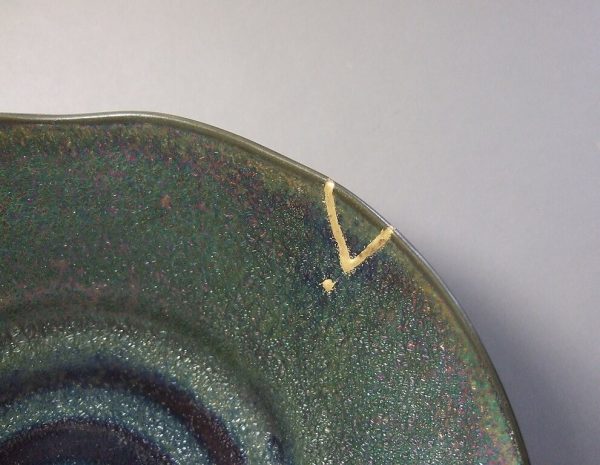
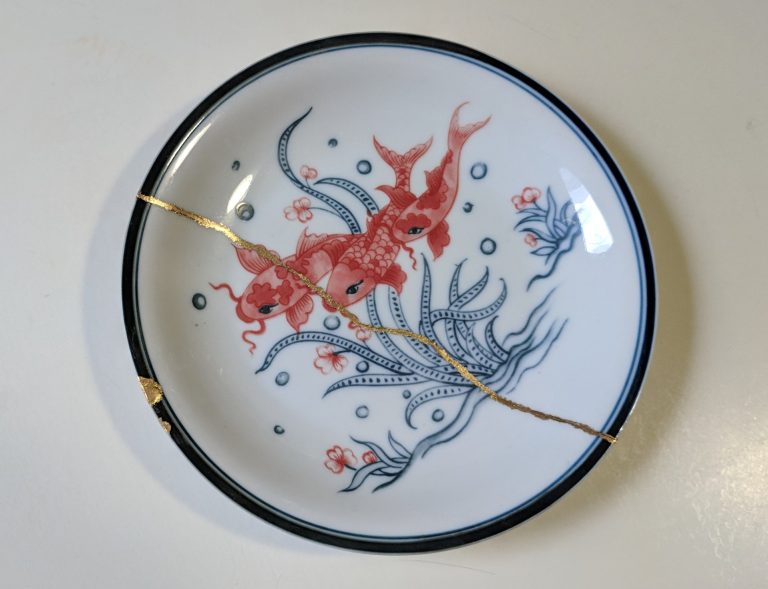
It was under these trying circumstances that kintsugi was born. As we all know, repaired pottery never looks like new, so gluing the pieces together and pretending it didn’t break would be foolish. But if you could mend it to be stronger, more beautiful and more precious than before, that would be kintsugi, and this respectful gesture might save your life.
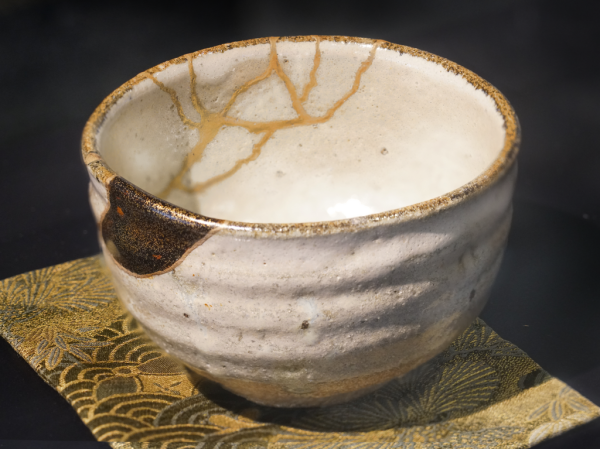
The word “kintsugi” comes from the Japanese characters 金 (kin), meaning “gold” and 継ぎ(tsugi), meaning “joints.” Through a long and careful process, broken pottery was mended to be put back into use — not by hiding the flaws, but highlighting them — with added beauty and value.
In recent years, kintsugi has become popular as a metaphor for healing the heart and embracing our imperfections, and sales of “kintsugi kits” are on the rise. While this trend has made the idea of kintsugi more accessible, most of these kits are a cheap imitation of the original craft.
Success
You are now signed up for our newsletter
Success
Check your email to complete sign up
If you’re not picky about aesthetics, and the piece will not be used to serve food, this may be the perfect solution for preserving an otherwise-lost piece. The purist, however, will want to understand the traditional process. Far from a “quick fix,” genuine kintsugi requires meticulous attention to detail, a steady hand, and extraordinary patience.
The traditional craft of kintsugi
As you may have guessed, gold is not particularly adhesive, and this precious metal is not used as a binding agent. What is used, however, may seem even more bizarre. A special lacquer, used since the Jomon period (14,000 – 300BC), is made from the sap of the Chinese lacquer tree (Toxicodendron vernicifluum). This might not seem so strange, until you realize that this tree is also called poison sumac, and is a close relative to the North American poison sumac (Toxicodendron vernix).
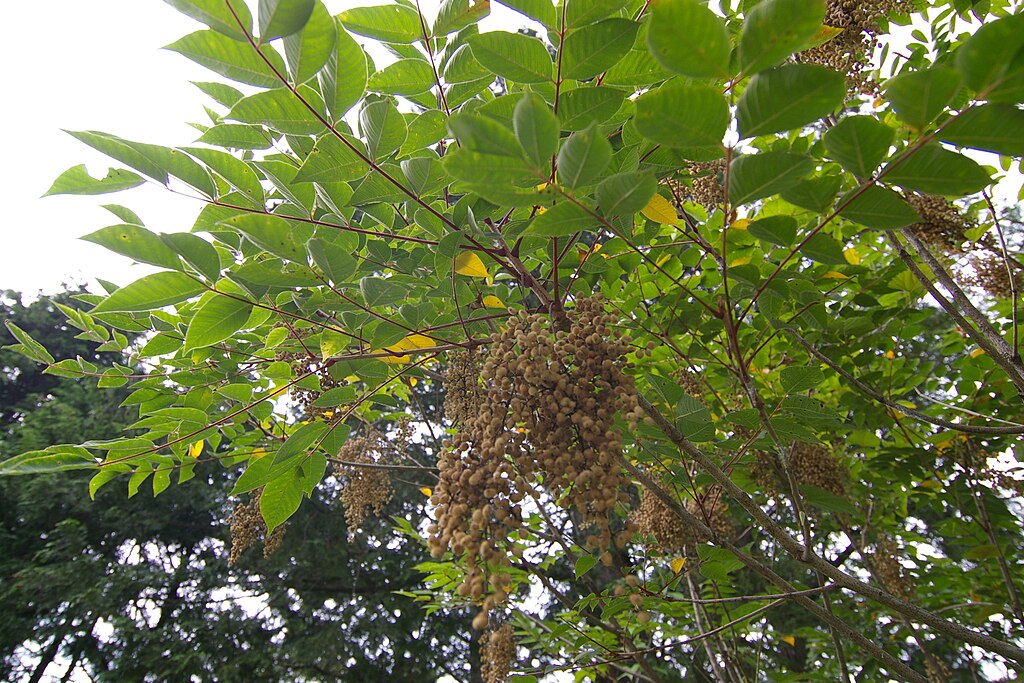
The sap of both trees contains an oily resin called urushiol — the same substance that causes a nasty rash from poison ivy, poison oak, and poison sumac. This severe allergen must be handled with extreme caution, yet it has been used for thousands of years to coat bowls and bind broken pottery.
That’s right. Aside from serving as a serious toxin, urushiol is an excellent preservative and adhesive. So why isn’t everyone who uses these lacquered items bubbling with blisters? The key is in the curing process. Each coat of lacquer must be cured under the proper conditions before another coat can be applied. For this reason, traditional kintsugi can take months to complete.
A long process:
Traditional kintsugi is a gradual process of applying one layer after another of urushi and urushi blends. The work is exacting, and there is a considerable wait time in between each step. Let’s take a look:
Step one: the gluing
- In preparation for mending, the broken edges are gently filed. This creates a small groove in the seam which will eventually become a golden scar.
- Next, an adhesive paste (mugi urushi) is made by mixing a tiny bit of flour, water and urushi. Gloves are essential when working with urushi.
- A thin coat of paste is applied to each edge, using a spatula. Then the pottery is reassembled. Masking tape is used to prevent the pieces from slipping apart.
- All the tools and smudges are cleaned up with ethanol and the pottery is moved to a warm environment to cure for a week or so.
Step two: filling the chips
- After the mugi urushi has cured, any protruding paste must be carefully scraped away using a blade at a low angle.
- Then the filler (kolusho-urushi) is made by adding wood powder to a fresh batch of mugi urushi.
- This is used to fill in missing chips. To ensure even curing, only a small amount can be applied at once, so this step might need to be repeated multiple times on a large chip. Each time it is cured for a week or so in a warm environment.
Step three: filling the cracks
- After the missing bits are filled in and cured, excess kolusho-urushi is scraped away with a blade.
- Another filler (sabi urushi) is prepared by mixing raw urushi with tonoko (a powdered clay).
- This filler is rubbed into all the fine cracks and smaller chips. Again, it must be cured for a week or so in a warm environment.
Step four: first coat
- After the filler has cured, the excess is carefully scraped off, and the smudges cleaned up with ethanol.
- The filler is given a smooth finish by applying a thin coat of bengara urushi with a fine paint brush. The materials and smudges are cleaned with ethanol, but the brush must be cleaned with oil.
- The bengara urushi coat needs both warmth and humidity (around 70 percent) to cure.
Step five: final coat
- After the bengara urushi has hardened, it is polished with very fine sandpaper (#800).
- Then a second coat is applied with a fine brush.
- Again, it is cured for a few days in a warm and humid environment.
Step six: Finishing
- When the final coat has cured, the grooves are sanded again to ensure perfect smoothness.
- Then, another thin layer of bengara urushi is carefully painted over the cracks and chips on the interior of the pottery.
- Genuine gold powder is applied with a soft brush or cotton ball before the urushi dries. Then the cracks on the exterior are painted and dusted with gold.
- After one final curing of about a week in a warm and humid environment, the piece is finally complete, and safe to use as normal pottery again.
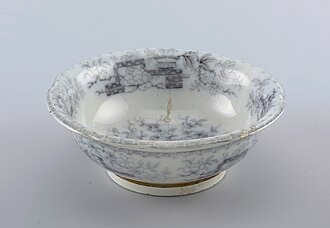
Understandably, kintsugi was traditionally reserved for the wealthy; but as ceramics became more common among the masses, it gained a small, but faithful following. With the Meiji era, however, came mass production and easy-access to pottery. It was much faster and cheaper to buy a new bowl than to replace a broken one, so kintsugi again faded into obscurity.
The recent surge in popularity was a direct response to the 2011 Tohoku earthquake. Along with this devastating natural disaster, so many people faced the risk of losing treasured memories linked with their broken stoneware. Mending these pieces was a healing activity that helped them piece their lives back together with strengthened bonds and move forward.
Can kintsugi do the same for you? You have a few options if you want to try it. There are inexpensive kits online that use synthetic adhesive and can be completed in one sitting — just don’t eat out of the finished product. More traditional kits are also available, with genuine gold and real urushi — just be sure to wear gloves!
Alternatively, you could find an experienced kintsugi master to restore your piece for you, or attend a workshop with them to learn the craft yourself. If nothing else, it will teach you to treat your stoneware with tender, loving care.