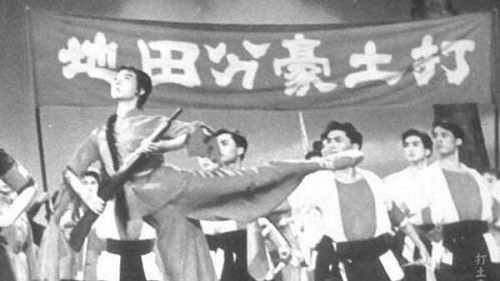
For more than half a century, one six-character slogan played an outsized role in mobilizing rural China’s population: “Beat the landowners, divide the fields.”
It was simple, loud, and effective. And behind its blunt clarity lay a political logic that helped reshape the countryside.
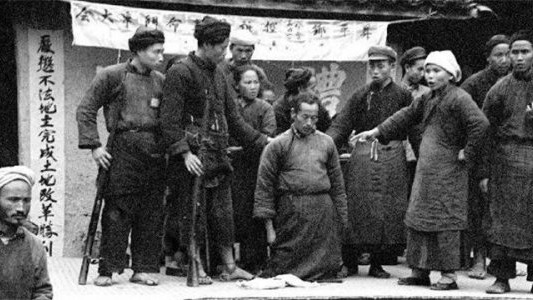
The phrase became one of the Chinese Communist Party’s most potent tools for rallying the poor, seizing land, and redirecting rural anger toward a designated class enemy. It promised justice and redistribution. In reality, it also opened the door to misclassification, property seizures, executions, and the dismantling of long-standing private land rights. Many middle peasants—people who had worked their way up through diligence—were labeled landlords and punished accordingly. Large amounts of confiscated wealth went toward supporting the emerging revolutionary regime. Later nationwide land reforms placed ownership under collective or state control, far from the original impression of empowering farmers.
An online essay, widely discussed in Chinese forums, breaks down the six characters and their embedded messaging—revealing how a slogan became both a mobilization tool and an instrument of harm.
A slogan loaded with intent
The phrase’s power lies not just in what it says, but how it says it. Each word is carefully weighted.
“Beat”
“Beat” signals action. It stirs emotion without explicitly naming violence. The word avoids the bluntness of “kill,” even though many victims of land reform met exactly that fate. The CCP would later apply this linguistic strategy to numerous campaigns—never saying “kill,” always choosing softer verbs like “strike down” or “clean out.”
Success
You are now signed up for our newsletter
Success
Check your email to complete sign up
“Landowners”
Labeling was key. Once someone was defined as a “landowner,” the moral debate vanished. The term carried a built-in accusation, functioning as a social stigma rather than a mere occupational description. With the label came an automatic presumption of guilt, creating space for personal revenge, opportunistic looting, and political justification.
“Divide”
“Divide” masks the violence behind redistribution. It presents the end result without revealing the process—no mention of seizure, coercion, or force. It also offers a sense of inevitability: the assets are already in hand; the only question is how to allocate them. And importantly, it lowers the barrier for participation. Anyone can receive a share. No work required.
“Fields”
The final word conveys pure material interest—straightforward and unmistakable.
Why the words worked
Viewed through a persuasion lens, the slogan integrates four key elements:
- It directs action.
- It identifies a target.
- It lowers the difficulty of participation.
- It promises tangible benefits.
These elements map neatly onto human tendencies—ignorance, blind following, laziness, and greed—while simultaneously appealing to people’s courage, focus, intelligence, and desire for improvement.
“Tools themselves are not harmful,” the commentary concludes. “The danger lies in who controls them.”