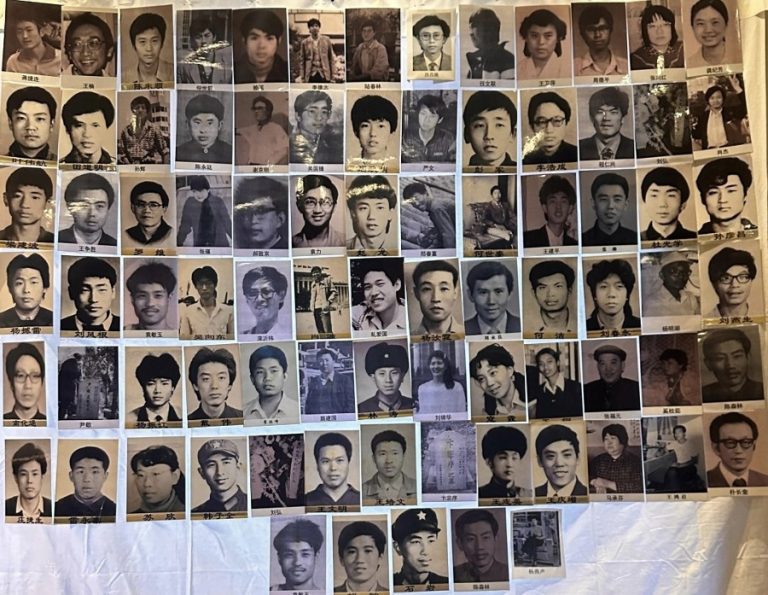
More than thirty years after the end of the Cold War, the world seems to have returned to an ideological crossroads. The struggle between freedom and totalitarianism did not disappear with the fall of the Berlin Wall; it merely transformed in silence, permeating every corner of economic, technological, and cultural competition. Once, the United States believed it had won the “endgame of freedom,” but the revival of China’s authoritarian regime has forced the free world to re-examine the foundations of its beliefs and the direction of its actions.
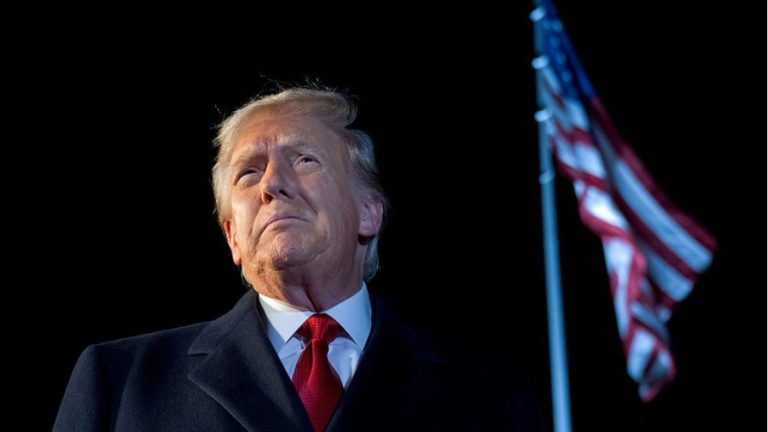
Against this backdrop, on Nov. 7, U.S. President Donald Trump signed a presidential proclamation declaring November 2–8 as “Anti-Communism Week.” Trump announced that early November would be observed annually as Anti-Communism Week—a political declaration about values and beliefs. It reflects on the suffering under communist totalitarianism and issues a warning about the current global situation: “The shadow of tyranny has never truly gone away; it has only donned a new guise.” This move signals that American politics is once again positioning itself around anti-communism, showing that the free world is striving to recover the moral and strategic bearings lost after the Cold War.
Recently, overseas commentator Yuan Bin wrote that “the significance of Trump’s move can be understood on four levels: it is both a return to the U.S. anti-communist tradition and a political definition of the current ‘new Cold War,’ a domestic warning against the spread of far-left ideologies, and an effort to rebuild the value alliance of the free world.”
Yuan Bin outlines four key aspects of Trump’s declaration of Anti-Communism Week:
1. Reinforcing the US government’s anti-communist stance
After the Cold War, “anti-communism” became a marginalized historical term in American politics. But following Trump’s election, as the U.S. gradually awakened from its illusions about China, this situation changed significantly. Anti-communism returned to the political stage, and this proclamation further solidified the Trump administration’s stance.
Success
You are now signed up for our newsletter
Success
Check your email to complete sign up
Trump noted in the proclamation that communism is “one of the most destructive ideologies in human history,” responsible for over 100 million deaths in the past century. It seeks to erase faith, suppress freedom, and destroy diligence and prosperity, trampling the dignity and rights that God has endowed to humanity.
“For more than a century, communism has brought only destruction. It suppresses thought, punishes belief, and forces generation after generation to kneel before state power instead of standing for freedom. The word ‘communism’ is essentially another term for ‘enslavement.’”
Trump emphasized: “As we remember these victims, the United States reaffirms—we will steadfastly oppose communism and defend freedom and human values. No regime can replace the will and conscience of free people.”
2. Providing a clear political framing of the ‘new Cold War’
Although the proclamation does not explicitly name China, nearly every phrase corresponds to conditions under the Chinese Communist Party (CCP).
- “Erasing faith” corresponds to the CCP’s persecution of religious groups, suppression of Christians and Falun Gong;
- “Suppressing freedom” corresponds to censorship and imprisonment of dissenters;
- “Destroying diligence and prosperity” corresponds to the CCP’s state-controlled economic system that stifles market vitality.
Trump’s strategic intent is clear: to redefine the CCP as the central adversary of the free world and to elevate economic competition to a confrontation of civilization and values. This is a clear political framing of the “new Cold War”—no longer just a contest of trade, technology, or military power, but an ideological struggle between “freedom vs. totalitarianism.”
3. Preventing the revival of ‘red ideology’ in the US
The most striking part of the proclamation is Trump’s warning that, despite the Cold War ending 34 years ago, tyranny persists in new forms: “Some new voices, cloaked in the garb of ‘social justice’ or ‘democratic socialism,’ repeat old lies—demanding people give up freedom and surrender power, trading false security for stripped prosperity.” Trump stated that the U.S. will firmly reject this “evil doctrine” and vowed to defend the fundamental beliefs of a free society.
This is clearly aimed at far-left trends within the U.S., especially the “repackaged socialism” popular among young people in recent years. Trump sees this as a loosening of the domestic front line. For him, anti-communism is not only an external struggle but also an internal effort to counter political illusions that, under the guise of equality, deprive people of freedom.
This vigilance is not entirely the same as Cold War-era McCarthyism. It is more like a recalibration of the moral compass—the U.S. must prevent the spread of “soft totalitarianism,” whether it comes from academia, media, or algorithmic control by tech giants.
4. Rebuilding the free world’s alliances
Trump’s choice to issue the proclamation during America’s 250th anniversary of independence carries symbolic meaning. It places anti-communism back at the center of the American founding narrative—America’s very existence is a negation of tyranny.
Internationally, this action also lays the groundwork for new alliance structures. Over the past two years, the U.S., Japan, Poland, the Czech Republic, and South Korea have increasingly aligned their China policies, forming a de facto “free world defense line.” Trump’s proclamation undoubtedly provides this alliance with a moral banner and narrative legitimacy.
In this context, the future diplomatic framework of democratic nations will not merely be an “interest-based alliance” but a “value-based alliance.” In other words, Trump is reestablishing “faith in freedom” as a strategic resource for U.S. foreign policy.
Trump concluded the proclamation: “Freedom and opportunity are the inalienable rights of every human being; no ideology—domestic or foreign—can extinguish them.” In a world once again immersed in political strife and ideological confusion, this proclamation is akin to a new “Iron Curtain speech”—not a historical echo, but a renewed call for freedom.