By Cai Siyun
On Nov. 26 a residential building fire broke out in Hong Kong’s Tai Po District, spreading rapidly and causing heavy casualties. The death toll has risen to 83 at the time of reporting, with hundreds of people still missing. Various aspects of the tragedy indicate it was caused by multiple factors involving human negelect.
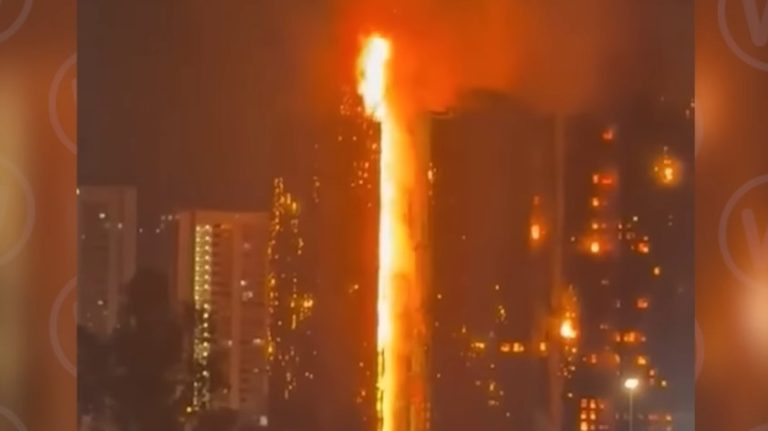
At 2:51 p.m. scaffolding on the exterior wall of Wang Fuk Court’s Hung Cheong House in Tai Po, New Territories, caught fire. By 6:22 p.m., the fire had escalated to a Level-5 blaze. Flames climbed the exterior scaffolding, spreading to seven nearby buildings including Hung Tai House and Hung San House.
According to the BBC, in addition to the 83 dead, including one firefighter, the Level-5 blaze at Hong Fuk Court left 58 injured and 279 still missing. It is Hong Kong’s first Level-5 fire in 17 years and only the second since the 1997 handover.
Reports state that of the eight buildings in the estate, seven were affected by the fire. Early in the morning on Nov. 27, firefighters said the blaze in four of the buildings had been brought under control, while three remained dangerous.
Success
You are now signed up for our newsletter
Success
Check your email to complete sign up
Police have arrested three men between the ages of 58 and 62 on suspicion of manslaughter. The accused were responsible for the building’s maintenance works.
Hong Kong media are reporting that according to Tai Po District Councillor Li Man-kit, the five affected buildings house around 8,000–10,000 residents, many of them elderly.
Second major fire in Hong Kong this month
This blaze is the second major fire in Hong Kong in a month caused by exterior wall maintenance. Last month, Central’s Hang Lung Building also experienced a Level-3 blaze linked to external scaffolding work.
CNN notes that the Wang Fuk Court fire may end up being the deadliest fire in Hong Kong since World War II. It may surpass the 1948 Wing On warehouse fire in Western District, which killed 176 people — the deadliest Hong Kong fire in the post-war period. The deadliest fire in Hong Kong history remains the 1918 Happy Valley Racecourse fire, which claimed over 600 lives.
At a press conference on Nov. 27, Hong Kong Security Secretary Chris Tang said firefighters discovered protective netting, waterproof canvas, plastic sheets, and other materials on the outer walls. These materials burned and spread far faster than compliant fire-resistant materials.
Firefighters also found that some windows in unaffected buildings were covered with foam boards, which can ignite and spread fire quickly. These were described as highly unusual findings.
Tang said authorities will conduct a thorough investigation into both issues. A joint police-fire department team has been established to investigate the case from both fire and criminal perspectives.
A Hongkonger introducing himself as “Scott” also raised several safety concerns on social media. First, some residents said the fire alarm did not sound when the blaze broke out, and smoke surged in suddenly, leaving many unable to escape. Second, videos posted online appeared to show workers smoking and discarding cigarette butts on the scaffolding, despite repeated warnings from residents.
HK$330 million renovation project approved
Scott revealed that in early 2024, Wang Fuk Court’s owners’ corporation approved a HK$330 million (US$42 million) renovation project, covering 1,984 households across eight buildings. Each household was required to pay HK$160,000–180,000. To cut costs, all eight buildings were repaired simultaneously.
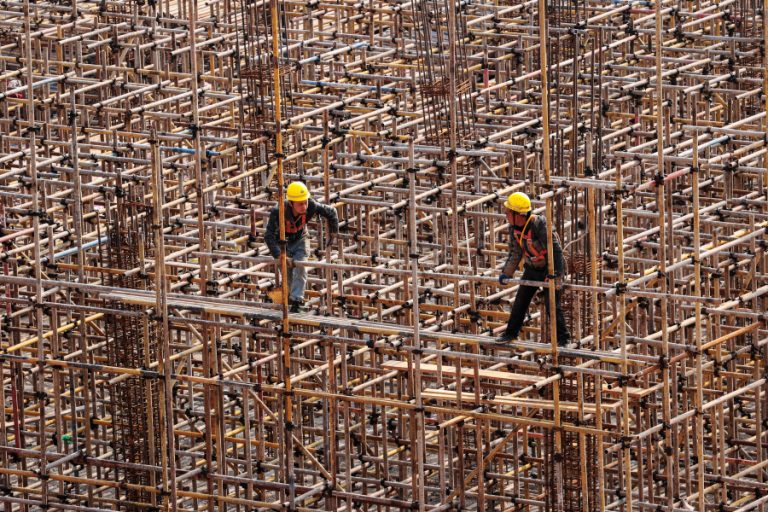
Because the estate is private, he said, the work did not have to follow public-works fire safety standards. “Using bamboo scaffolding and standard flame-retardant mesh is technically legal, but extremely high-risk.”
“This was not a freak accident,” Scott wrote. “It was the result of cost-driven decision-making and weak regulatory oversight. Without proper fire-safety netting and with a fragile safety culture, the risks stacked up layer by layer.”
One user on Threads shared a video showing a worker in a yellow uniform smoking beside bamboo scaffolding, which is common in Hong Kong due to its plentifulness. A woman challenged him: “You’re smoking here again?” The man turned in surprise. “During the massive repair works, many workers were filmed smoking on the scaffolding,” the user wrote.
Comments flooded in beneath the post:
“Why are they still using bamboo scaffolding? Once there’s a fire, it’s basically a giant bonfire frame — it burns way too easily. Why not use steel?”
“Why not light-steel frames instead of bamboo? It’s obviously dangerous.”
“It’s not just cigarette butts — there are many ignition sources on construction sites.”