By Li Jingyao, Vision Times
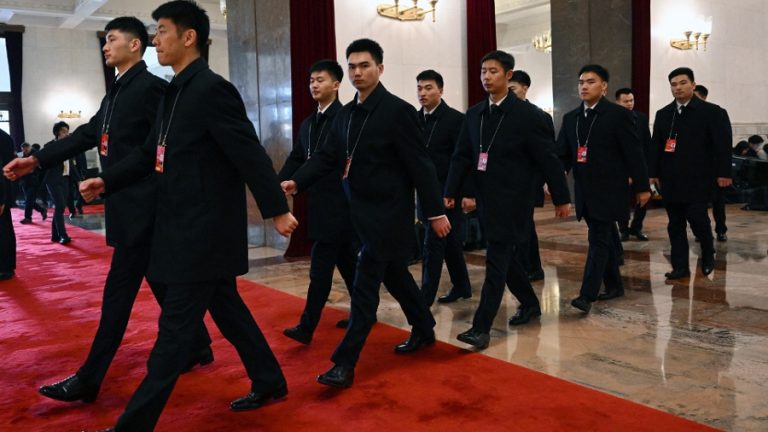
The Central Economic Work Conference was held in Beijing from Dec. 10 to 11, with Chinese Communist Party (CCP) leader Xi Jinping delivering a keynote address and Premier Li Qiang giving the concluding remarks. But one conspicuous absence drew the most attention: Former Xinjiang Party Secretary Ma Xingrui.
This marked Ma’s third consecutive absence from a major Party meeting, following two earlier no-shows at Politburo sessions. In CCP political culture, where repeated absences often signal a leader’s downfall, analysts say Ma’s disappearance now amounts to a de facto official confirmation of his political collapse. Meanwhile, growing scrutiny over the Vanke case has raised questions about the accountability of Hu Chunhua, who served as Guangdong Party secretary during the period in question and may face repercussions if Ma formally falls.
RELATED: Anti-Xi Faction Floats Political ‘Kill Order’ as Xi Jinping’s Grip on Power Wanes
Ma’s third absence
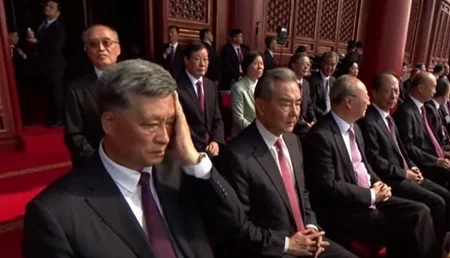
State broadcaster CCTV’s live coverage of the conference showed that Ma Xingrui was not present. Under customary protocol, Politburo members are seated according to the number of strokes in their surnames, which would have placed Ma first. Instead, the first official shown on screen was Foreign Minister Wang Yi.
Success
You are now signed up for our newsletter
Success
Check your email to complete sign up
This was not an isolated incident. On Nov. 28, Ma failed to attend a Politburo “collective study session.” On Dec. 8, the Politburo convened again; according to anti-CCP blogger Jiang Wangzheng, both Ma Xingrui and Li Xi were absent.
Ma was removed as Xinjiang Party secretary in July, with authorities citing “other assignments.” To date, no new post has been announced. His repeated absence from high-level meetings is widely interpreted as a clear signal that he has already fallen from power.
Is Ma under investigation?
On Dec. 11, Du Wen, former deputy director of the Legal Advisory Office of Inner Mongolia’s Legislative Affairs Commission, posted on X that, according to “unconfirmed insider information,” “Ma Xingrui has been placed under isolated investigation after retroactive probes uncovered corruption linked to military equipment.” He added that the decision was made personally by Xi Jinping.
RELATED: House Passes Hard-Line NDAA Targeting CCP Corruption and Taiwan Isolation
Separately, Yuan Hongbing, an Australian-based legal scholar known for exposing CCP elite infighting, told Kan Zhongguo that “Xi Jinping is facing a crisis of dictatorial power.” Yuan claimed:
“The investigation into Ma Xingrui was triggered by confessions from He Weidong. Through Ma Xingrui’s brother, Ma Xingquan, the two reached a political understanding: if Xi Jinping’s regime were overthrown, Ma would provide political and economic power, while He would supply military power.”
Vanke case raises questions for Hu Chunhua
U.S.-based political commentator Chen Pokong said Ma’s latest absence confirms that “something has definitely gone wrong,” citing Ma’s alleged involvement in four major cases: corruption in the aerospace system, Xinjiang corruption, the Evergrande scandal involving Xu Jiayin in Guangdong, and a case involving more than 4 billion yuan allegedly transferred by Peng Liyuan’s brother-in-law.
Independent commentator Xiang Yang wrote on X that Ma Xingrui is also implicated in the 2016 Shenzhen Metro–Vanke equity acquisition, a deal that occurred while Hu Chunhua was Guangdong Party secretary. Hu, Xiang argued, bears responsibility for oversight failures.
Li Xi, now head of the Central Commission for Discipline Inspection (CCDI), also previously served as Guangdong Party secretary — succeeding Hu Chunhua. Observers believe Li may continue pursuing the matter, potentially reopening scrutiny of Hu.
As Vanke now faces bankruptcy, Shenzhen Metro has reportedly suffered losses amounting to hundreds of billions of yuan. The transaction has been linked to Ma Xingrui’s relatives and is believed to have caused major losses to state assets, placing Hu Chunhua’s oversight record under renewed scrutiny.
Xiang Yang warned further: “If Ma Xingrui is investigated over military-industrial corruption, it will inevitably implicate another Politburo member — Chongqing Party Secretary Yuan Jiajun, who also comes from the Fifth Academy of the aerospace system. He may have利益绑定 (bound interests) with Ma. Once Ma’s fall is officially announced, these two could be next.”
Insurance Policy Bribery Allegations Involving Senior Leaders
Jiang Wangzheng has claimed that after corruption cases involving former Xinjiang Party secretary Chen Quanguo and Chen Weijun came to light, governance effectively stalled due to the number of officials implicated. He alleged that seven vice-ministerial-level officials in Xinjiang were taken away. Jiang also reported that on Dec. 7, Chen Rushen, a Hangzhou People’s Congress deputy and chairman of Hangzhou Shenhao Technology Co., Ltd. — a firm with a market value of 3.3 billion yuan — was detained.
According to Jiang, Shan Junbao, chairman of Shanghai Zhongjin Private Equity Management Co., financially supported two women — one Ma Xingrui’s daughter, earning 600,000 yuan annually without working, and the other the daughter of Chen Weijun.
RELATED: Xi Jinping’s ‘Self-Revolution’ Doctrine Backfires Amid Sweeping Corruption Probes
The case reportedly also involves multiple senior figures, including Mo Yuanfei, chairman of Guangzhou Construction Group; Liu Liansheng, former Shenzhen Party Standing Committee member and former head of the city’s supervisory commission; and Xia Baolong and his in-laws.
Jiang further alleged that Zhu Zhongming, appointed vice minister of finance in 2021, was responsible for transferring funds to Ma Xingrui. “Zhu was transferred to Shanghai in July 2024 and now serves as secretary of the Shanghai Political and Legal Affairs Commission, which indicates the investigation into Ma began as early as July 2024,” said Jiang.
Most explosively, Jiang claimed that Ma Xingrui and his wife used more than 100 insurance policies worth 6 million yuan each to bribe senior Politburo figures, including Ding Xuexiang and Liu Guozhong, and that authorities seized over HK$600 million from Ma’s seaside villa in Hong Kong. The case, Jiang said, implicates “half of Xi Jinping’s power base.”
In Chinese political culture, the saying “no more than three times” carries special weight. Political commentator Tang Jingyuan said Ma Xingrui’s three consecutive absences from critical meetings amount to an unmistakable signal. “Ma Xingrui’s fall has effectively already been ‘officially announced.’”