On Dec. 15, 2025, Hong Kong’s High Court delivered its verdict in the landmark national security case against media entrepreneur and pro-democracy publisher Jimmy Lai Chee-ying, finding him guilty on all three charges brought under the National Security Law and colonial-era sedition statutes. The ruling came less than 48 hours after Hong Kong’s Democratic Party—the city’s largest and longest-standing opposition party—announced its dissolution.
The near-simultaneous timing of the two events has been widely interpreted as emblematic of the collapse of both political pluralism and press freedom in Hong Kong. Press freedom organizations and overseas Hong Kong advocacy groups condemned the verdict, describing it as a decisive blow to independent journalism and urging the international community to respond with heightened scrutiny and concrete action.
Jimmy Lai found guilty, sentencing set for 2026
A panel of three judges designated to handle national security cases—Doris Li Bik-wah, Alex Lee Wan-tang, and Esther Toh Lye-ping—unanimously convicted Lai of two counts of conspiracy to collude with foreign or external forces to endanger national security, as well as one count of conspiracy to publish seditious publications.
In its 855-page judgment, the court described Lai as the “mastermind” behind efforts to undermine Chinese Communist Party rule, alleging that he continued to exert influence through covert means even after the National Security Law took effect in 2020.
The case followed a 156-day trial and has been adjourned until Jan. 12, 2026, for mitigation and sentencing. Lai faces a maximum penalty of life imprisonment.
Success
You are now signed up for our newsletter
Success
Check your email to complete sign up
The verdict was handed down one day after the Democratic Party formally announced its dissolution. Together, the two developments have been widely viewed by observers as marking the effective end of organized political opposition and independent press activity in the city.
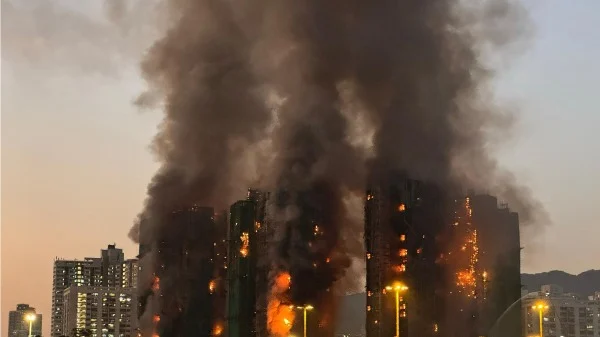
The ruling also coincided with heightened public attention following a deadly fire at Wang Fuk Court, an incident that exposed alleged regulatory failures and corruption. Analysts have argued that the episode further underscores Hong Kong’s convergence with mainland Chinese governance practices, rendering the “one country, two systems” framework largely symbolic.

Prolonged detention and international condemnation
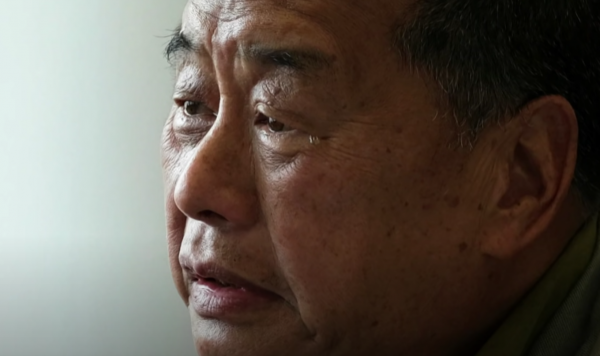
Jimmy Lai, now 78, has been detained for more than five years—over 1,800 days—much of that time in solitary confinement. According to supporters and advocacy groups, his health has deteriorated significantly. He reportedly suffers from diabetes, hypertension, and heart disease, and has experienced severe weight loss, loss of fingernails, and tooth decay.
In 2021, the United Nations Working Group on Arbitrary Detention concluded that Lai’s detention was “illegal and arbitrary.”
The Committee to Protect Journalists (CPJ) condemned the verdict as a “sham conviction” and a “disgraceful persecution,” arguing that Lai’s only offense was founding a newspaper and defending democratic values. Reporters Without Borders (RSF) described the ruling as a “death sentence” for press freedom in Hong Kong.
The Overseas Hong Kong Media Association characterized the case as a “political purge,” criticizing the criminalization of speech and the replacement of juries with designated national security judges. The group warned that these practices undermine judicial credibility and called on Hong Kong and Beijing authorities to honor the Basic Law and the Sino-British Joint Declaration. It also urged the international community to activate human-rights accountability mechanisms.
Overseas groups link verdict, party dissolution, and deadly fire
Overseas Hong Kong organizations have drawn connections between Lai’s conviction, the dissolution of the Democratic Party, and the Wang Fuk Court fire, viewing them as interconnected symptoms of a broader erosion of freedoms and accountability.
The fire broke out on Nov. 26 and burned for more than 43 hours, killing at least 160 people—including one firefighter—injuring 79, and leaving six missing. It was the deadliest fire in Hong Kong in nearly eight decades.
Investigators said the blaze originated from flammable materials on renovation scaffolding and spread rapidly across seven buildings. Subsequent reporting pointed to bid-rigging, malfunctioning fire alarms, and regulatory negligence. Residents had reportedly raised safety concerns as early as 2024, but no effective action followed.
Critics have argued that the tragedy reflects the weakening of media oversight, drawing comparisons to disasters in mainland China such as the Urumqi apartment fire during COVID lockdowns and the “tofu-dreg” construction scandals exposed after the Wenchuan earthquake.
Canada Hong Kong Link: Lai case marks the end of press freedom
Victor Wong Koon-nang, president of Canada Hong Kong Link (CHKL), told Vision Times that the judgment against Lai was “absurd” and supported by weak evidence, noting that national security cases in Hong Kong have become virtually impossible for defendants to win.
Wong said the verdict was not merely a personal punishment but a declaration against press freedom itself, signaling the end of independent journalism in Hong Kong. He described the timing of the verdict and the Democratic Party’s dissolution as symbolically linked, jointly announcing the end of political and journalistic freedom.
According to Wong, following the arrests in the “Hong Kong 47” case and Lai’s prolonged detention, freedom had already existed largely in name. The dissolution of the Democratic Party, he said, marked the end of moderate democratic participation, leaving the legislature with only a single pro-government voice under the framework of “patriots governing Hong Kong.”
He added that after the closures of Apple Daily and Stand News, investigative journalism had effectively disappeared. The Wang Fuk Court fire, he argued, was a direct consequence of the absence of oversight, with long-ignored hazards such as bid-rigging left unchecked.
Wong said overseas independent media are now attempting to fill part of the information vacuum by reconstructing evidence from public records and relaying it back to Hong Kong. He warned democratic governments that Hong Kong is no longer meaningfully distinct from mainland China.
CHKL has continued lobbying the Canadian government to impose sanctions on Hong Kong officials and urged caution in trade relations with both Hong Kong and mainland China. Wong argued that such engagement carries significant risks and could itself be construed as “collusion with foreign forces.” He called on Canada to diversify trade toward Europe, Japan, South Korea, and Southeast Asia while maintaining sanctions and a firm human-rights stance.
Toronto group praises Lai’s resolve, says Hong Kong fully ‘mainlandized’
Kwan Cheuk-chung, co-chair of the Toronto Association for the Support of Democratic Movements in Hong Kong, expressed deep concern about Lai’s health, describing the prolonged solitary confinement of an elderly prisoner as “pure abuse” and a violation of humanitarian principles.
Kwan urged authorities to account for time already served during sentencing and called for either Lai’s immediate release or medical parole. He suggested Beijing would not want Lai to die in custody due to the international backlash such an outcome would provoke.
He praised Lai for choosing to remain in Hong Kong despite the risks, calling his commitment to freedom deeply admirable. Lai, who fled mainland China for Hong Kong and later founded Apple Daily, devoted his life to democratic causes, Kwan said.
Kwan added that the dissolution of the Democratic Party, while unexpected, reflected an environment in which all political exits had been blocked. Disbanding, he said, was an act of reluctant self-preservation amid an extreme contraction of political space.
He also compared the Wang Fuk Court fire to corruption-driven disasters in mainland China, concluding that Hong Kong has become fully “mainlandized,” with press freedom, the rule of law, and civil liberties effectively erased.
Vancouver group urges concrete action from Canada
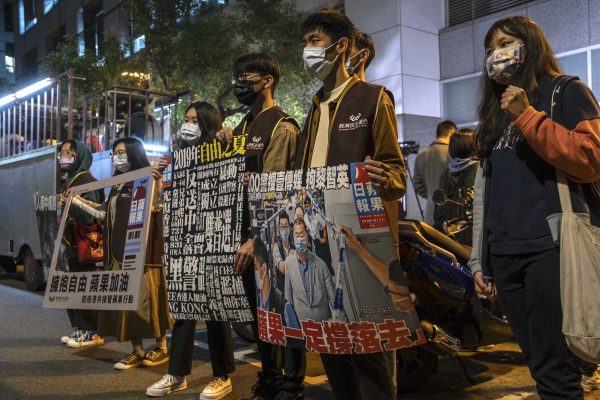
The Vancouver Society in Support of Democratic Movement (VSSDM) issued a statement on December 15 condemning Lai’s conviction, saying it did not result from a fair trial and could not deliver justice.
The group argued that the lengthy judgment failed to demonstrate how Lai’s actions would constitute crimes in any democratic society, stressing that what had been criminalized were journalistic work, democratic beliefs, and peaceful advocacy—without violence, incitement, or threats to public safety.
VSSDM said the Lai case, alongside the “Hong Kong 47” and Hong Kong Alliance cases, illustrates how the National Security Law is being used to dismantle civil society and suppress peaceful dissent, eliminating any remaining illusion of judicial independence.
The group warned that Lai faces a real risk of dying in custody due to his health and harsh prison conditions, including prolonged isolation and restrictions on religious practice.
VSSDM urged the Canadian government to move beyond expressions of concern and take concrete action, elevating the case to the highest political level and coordinating with international partners to apply sustained pressure for Lai’s unconditional release. Chair Edmund Leung said engagement with China cannot be separated from commitments to democracy, rule of law, and human rights.
Hong Kong Freedom Committee calls verdict a ‘political performance’
The Committee for Freedom in Hong Kong (CFHK) described the verdict as a “political performance disguised as justice” and a form of “legal fraud,” arguing that it marked the complete collapse of Hong Kong’s reputation as a rule-of-law jurisdiction.
CFHK’s UK and Europe director Mark Sabah said the treatment of Lai—who holds British citizenship—exposed weaknesses in the United Kingdom’s China policy. He urged Prime Minister Keir Starmer to make Lai’s release a precondition for any planned visit to China and called for travel bans and asset freezes targeting the three national security judges, as well as the resignation of all foreign judges serving in Hong Kong.
CFHK’s U.S. director Jonathan Stivers said Lai’s only “crime” was his commitment to freedom. He called on the Trump administration to hold Chinese and Hong Kong officials accountable if Lai is not released, accelerate passage of the Hong Kong Economic and Trade Office Certification Act and the Hong Kong Judicial Sanctions Act, and curb Beijing’s extraterritorial reach.
While the verdict was widely anticipated, CFHK said it nevertheless underscored the collapse of Hong Kong’s judicial system and press freedom. The organization pledged to continue pressing for coordinated global action to hold those responsible accountable and to defend the freedoms promised to Hong Kong.