By Xin Gaodi
As the countdown to 2026 begins, the atmosphere of the New Year is already in the air. For hundreds of millions of Chinese people, the holiday is more than a time for family reunions. It is also a moment for reflection—looking back on what has passed and asking difficult questions about what lies ahead. One such question, controversial yet impossible to avoid, continues to surface: what kind of country might China become if it were no longer ruled by the Chinese Communist Party?
This question extends far beyond abstract political debate. It touches economics, social life, and the most basic dimensions of personal freedom. What follows is not emotional venting, but an attempt to reflect—through history, present realities, and possible futures—on why the idea of a post-CCP China continues to resonate so deeply with so many.

A century of rule: growth alongside betrayal
Since taking power in 1949, the CCP has undeniably overseen China’s transformation from a poor and weakened country into a global economic heavyweight. Since the reform and opening-up era, rapid GDP growth, massive infrastructure expansion, and large-scale poverty-reduction campaigns have reshaped everyday life. By 2025, China had become the world’s second-largest economy, with an extensive high-speed rail network and technology firms competing on the international stage. These achievements are frequently credited to the Party’s centralized authority and decisive governance.
Yet history has another side that cannot be ignored. The pursuit of freedom and democracy is a basic human instinct. Since the CCP established control over mainland China, the country has moved backward—from the semi-democratic era of the Republic of China to a modern form of totalitarian rule. The Party rose to power on promises of “democracy and freedom,” “rule by the people,” and land redistribution. Once in control, those promises were systematically reversed.
Success
You are now signed up for our newsletter
Success
Check your email to complete sign up
Consultative governance became one-party domination. Elections gave way to personal dictatorship. Land distributed to farmers was later reclaimed in the name of the state and collectives, turning the CCP into the ultimate landlord controlling all natural resources. To entrench its rule, the Party not only monopolized resources but hollowed out freedoms nominally enshrined in the constitution—freedom of movement, speech, association, publication, farming, reproduction, belief, and more.
The devastation of the Cultural Revolution, the bloodshed of Tiananmen, and the tightening censorship of recent years have all raised fundamental questions about the sustainability of this system. From the mass detention system in Xinjiang to the suppression of Hong Kong’s anti-extradition movement to the extreme lockdowns during the pandemic, the pattern has been consistent: stability is invoked to justify the sacrifice of individual rights. A China without the CCP, at the very least, suggests the possibility of a political order centered on the rule of law and human dignity, rather than recurring cycles of repression.

Mounting crises threaten the Chinese Communist Party’s grip on China
By 2025, China finds itself under mounting strain. The collapse of the property bubble, rapid population aging, and prolonged U.S.–China trade tensions have all weakened the country’s economic momentum. The slogan of “common prosperity” may sound appealing, but in practice it has often translated into heavy-handed intervention in the private sector and deepening uncertainty for entrepreneurs. Many have chosen to leave, seeking environments where property rights and personal security are more predictable.
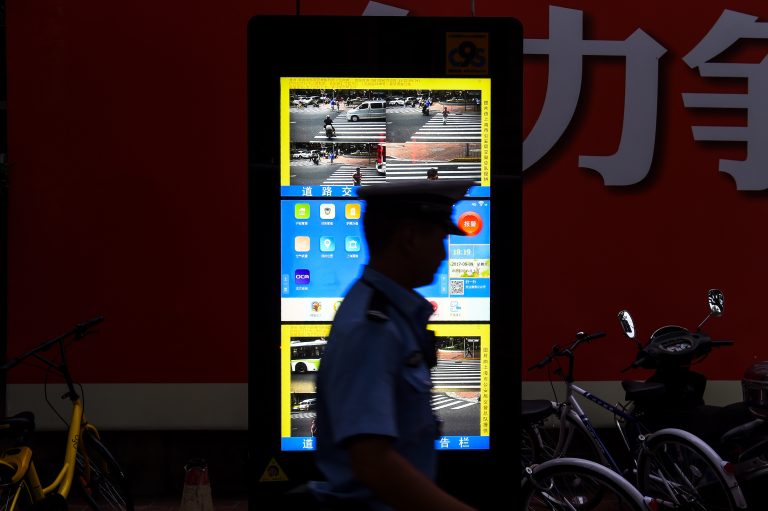
Socially, censorship and surveillance have become deeply entrenched. Under Xi Jinping, these trends have intensified further. Private property offers little real protection; legally owned homes and land can be requisitioned with minimal recourse. Access to courts, the right to petition authorities, and even the freedom to travel abroad are frequently curtailed through informal means that leave citizens powerless.
Perhaps the most disturbing aspect is how ordinary people are treated as expendable. Critics of the system have long pointed to widespread disappearances, reports of forced organ harvesting, and the use of human bodies as resources serving power and privilege. Whether in times of crisis or relative calm, the underlying logic appears the same: individuals exist to be consumed by the system. Many at the bottom of society cannot afford medical care, hold housing without permanent ownership, or raise children without subjecting them to rigid ideological indoctrination. Even minimal dissent risks being labeled “subversion” or “anti-China,” with consequences ranging from harassment to imprisonment or unexplained death.
All of this unfolds under an aggressive campaign of “patriotism,” defined not as love of country but loyalty to the Party and its leader. Domestic security spending surpasses military expenditures. Media, schools, private companies, foreign firms, and religious institutions alike are required to “follow the Party.” The objective is not merely control over land and resources, but the remolding of every living being on that land into a political instrument.
Young people’s talk of “lying flat” and endless “involution” reflects a deep sense of exhaustion and uncertainty. Internationally, China’s deteriorating relations with Western countries—from Taiwan to the South China Sea—have heightened geopolitical risk. Without the CCP, China might approach the world with greater openness and reduce the danger of isolation. Such a transition, however, would also entail serious upheaval, including political uncertainty and the reshuffling of entrenched interests.

Why the idea refuses to disappear
The hope for a China without the CCP does not mean erasing the past or denying all achievements. Rather, it reflects a desire for an alternative that is more inclusive and humane. One can imagine a federal China that allows genuine regional autonomy and respects minority cultures, a multiparty political system in which competing visions are expressed through elections, and a market-driven economy that protects intellectual property and rewards innovation rather than political loyalty.
Such change would not come easily. The experiences of Eastern Europe and the Arab Spring show that the collapse of authoritarian systems can bring chaos and even regression. Given China’s unique history and political culture, a peaceful transition would be ideal—but history offers little reason for optimism. Dictators rarely surrender power voluntarily. Change may come through internal fractures, a broad awakening of civic consciousness, or sustained international pressure. In any case, a smooth democratic transition would be extraordinarily difficult.
As the New Year approaches, however, hope remains unavoidable. A China free from CCP rule would not only benefit its own people, but also contribute to global peace and stability. Whatever the future holds, China’s destiny should be decided by its people—not monopolized by a single party claiming to speak for them all. May 2026 bring greater freedom, dignity, and possibility.
The views expressed are solely those of the author and do not necessarily reflect those of Vision Times.