By Tian Jingxin
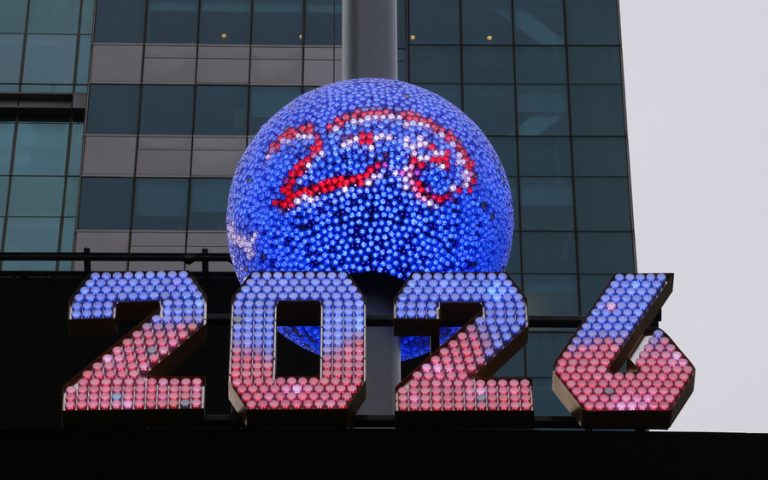
As the last pages of 2025 are about to turn, global attention once again focuses on Midtown Manhattan’s “Crossroads of the World.” This year’s Times Square New Year’s Eve celebration is set to be historic—not only because a brand-new crystal ball, breaking nearly three decades of design tradition, will debut for the first time, but also because the event officially kicks off the United States’ 250th-anniversary celebrations.
‘Sphere of Stars’ debuts: a brilliant break from tradition
On the evening of Dec. 31, in front of millions of live spectators and hundreds of millions watching on television worldwide, the ninth-generation Times Square ball will slowly descend—continuing a tradition that began in 1907. Named the “Sphere of Stars,” this new installation commands attention with its massive size and revolutionary design.
According to the organizers, the giant ball measures 12.5 feet (≈3.8 meters) in diameter and weighs over 12,350 pounds (≈5.6 tons), making it the largest and heaviest time ball in Times Square history.
It completely abandons the triangular crystal panels used since 1999 in favor of a smoother, more encompassing shape. The surface is embedded with 5,280 handcrafted premium crystal spheres, in sizes of 1.5, 3, and 4 inches, arranged artistically across the surface and paired with high-tech LED discs beneath.
Success
You are now signed up for our newsletter
Success
Check your email to complete sign up
This design not only creates the visual effect of a star-studded sky but also carries profound symbolism. It represents interconnectedness, unity, and the cyclical nature of time, celebrating the eternal bond between past, present, and future.

Double tribute: red, white, and blue honor 250 years of nationhood
The year 2026 marks not just a new year but also the 250th anniversary of the signing of the U.S. Declaration of Independence. This year’s New Year’s Eve celebration carries a special patriotic theme.
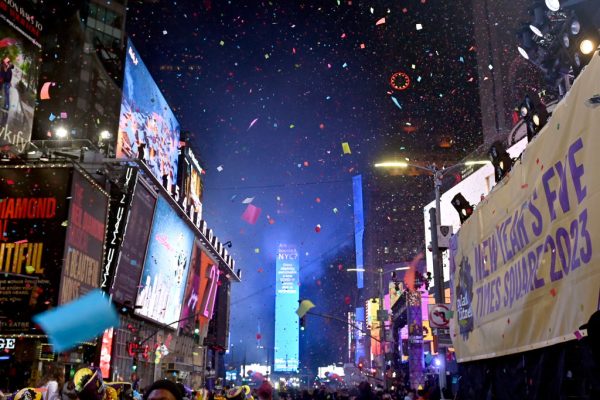
When the midnight bell rings and cheers reach a peak, the first climax of the celebration occurs. At 12:04 a.m., a meticulously choreographed shower of red, white, and blue confetti will cascade, representing the colors of the American flag. Simultaneously, the new “Sphere of Stars” will descend alongside a soulful rendition of “America the Beautiful,” presenting an unprecedented dynamic display of fireworks and lights.
Organizers say this is the first time this technology has been applied in such a format, aiming to evoke respect for history and hope for the future through the interplay of light and shadow.
Even more unusually, the crystal ball will make a “double descent” in 2026. In addition to the traditional New Year’s Eve drop, it is scheduled to descend again on July 3, 2026, the night before Independence Day, as the highlight of the nationwide 250th-anniversary celebrations. This breaks a century-old convention, making the crystal ball a cultural totem linking two major historical moments.
Centuries of resonance: from practical navigation to spiritual symbol
The Times Square ball drop was not originally an entertainment spectacle; it traces back to 19th-century maritime traditions.
Before the widespread use of electricity, ports and observatories would drop large metal balls at noon to help sailors calibrate precision astronomical clocks. In 1907, this practical maritime device was introduced to Times Square and brought to life through early electrical technology.
From the initial 700-pound iron-and-wood ball with ordinary bulbs, to lightweight aluminum frames after World War II, to the brief “Big Apple” design of the 1980s, and now to a crystal giant combining cutting-edge optics and materials science, the evolution of the ball itself is a history of technological and craft advancement.
Yet, regardless of material changes, the core of the ritual has remained unchanged. For anyone braving the cold to watch, the last minute before midnight is a magical experience, often called “a minute beyond time.”
In these sixty seconds, the bustle seems to pause, and time itself feels slowed. It gives people a precious chance to reflect on the past year, reach out to loved ones, and make resolutions that could change their lives. As the design team notes, this sense of ritual allows everyone to feel they have the opportunity to become kinder, better versions of themselves.
As the giant ball adorned with 5,280 “stars” illuminates the Manhattan skyline, it not only heralds the arrival of 2026 but also serves as a beacon, symbolizing humanity’s collective hope for peace, unity, and a better life at this unique historical juncture.