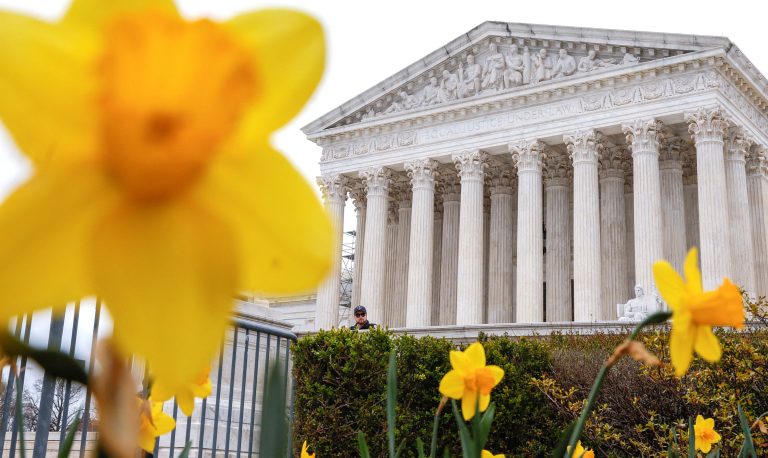
The U.S. Supreme Court (SCOTUS) has blocked the Trump administration’s attempt to restrict birthright citizenship through executive action. While the ruling leaves the current system intact for now, it also exposed differing views among conservative justices over the constitutional basis for birthright citizenship and whether Congress could eventually play a role in revisiting the issue.
According to Deseret News, as well as reporting by the Associated Press (AP) and ABC News, the case extends beyond immigration policy, touching on the interpretation of the 14th Amendment, the limits of presidential authority, the role of Congress, and the continuing force of more than a century of Supreme Court precedent.
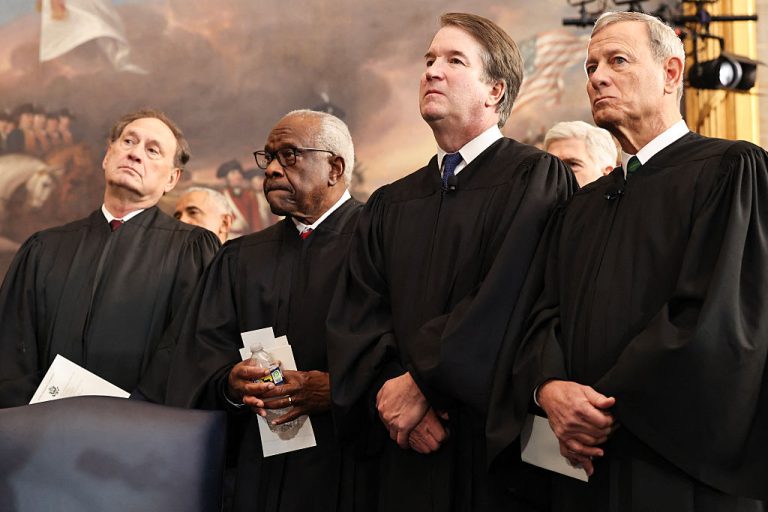
Though the Court blocked the executive order by a 6-3 vote, the justices were not united on why. Five justices concluded the order violated the 14th Amendment, while Justice Brett Kavanaugh agreed only that it conflicted with existing federal immigration law. His separate opinion left open the possibility that Congress could attempt to legislate narrower exceptions to birthright citizenship in the future.
RELATED: US House Committee Probes Big Pharma Over China Clinical Trials
Constitutional interpretation challenged
The dispute stemmed from Executive Order 14160, signed by U.S. President Donald Trump on his first day back in office in January 2025. The order argued that children born in the United States to parents who are in the country illegally or who hold only temporary visas, such as student, work, or tourist visas, should not automatically receive U.S. citizenship.
Success
You are now signed up for our newsletter
Success
Check your email to complete sign up
The administration based its argument on the 14th Amendment’s Citizenship Clause, which states that “All persons born or naturalized in the United States, and subject to the jurisdiction thereof, are citizens of the United States.” It contended that individuals residing in the country unlawfully or temporarily are not fully “subject to the jurisdiction” of the United States, and therefore their children should not automatically qualify for citizenship.
The Court’s majority rejected that interpretation. Chief Justice John Roberts wrote that one of the central purposes of the 14th Amendment, adopted after the American Civil War, was to overturn the Supreme Court’s infamous 1857 decision in Dred Scott v. Sandford and guarantee citizenship to people born on U.S. soil.
The majority also reaffirmed the Court’s landmark 1898 ruling in United States v. Wong Kim Ark, which established that birthright citizenship is subject to only a few narrow historical exceptions, including children of foreign diplomats, children born to occupying enemy forces, and certain members of Native American tribes under historical legal arrangements. The opinion concluded that neither the executive branch nor Congress may unilaterally expand those exceptions.
A controversial ruling
Despite the Court ultimately ruling 6-3 against Trump’s executive order, legal analysts noted that the six-justice majority did not reach the same conclusion for the same reasons. Justice Brett Kavanaugh agreed that the executive order could not stand, joining the judgment and producing the 6-3 outcome.
However, Kavanaugh did not conclude that the order itself violated the Constitution. Instead, he argued that the Immigration and Nationality Act had already incorporated the interpretation established in Wong Kim Ark into federal law. As a result, he wrote, a president cannot override an act of Congress through executive action.
Kavanaugh also suggested that Congress could, in theory, enact narrowly tailored legislation establishing limited new exceptions to birthright citizenship, provided such legislation remains consistent with the Constitution. As a result, while six justices agreed that the executive order was unlawful, only Roberts and four other justices formed a five-member majority concluding that it violated the Constitution itself.
Conservatives divided
The Court’s three dissenting conservative justices, Clarence Thomas, Samuel Alito, and Neil Gorsuch, argued that the phrase “subject to the jurisdiction” should be interpreted more narrowly than under existing precedent.
Thomas and Alito cited congressional materials from 1868, arguing that citizenship should depend not only on birthplace but also on whether a child’s parents had established a permanent domicile in the United States. Under that interpretation, children born to parents temporarily in the country on tourist, student, or work visas might not automatically qualify for citizenship.
Gorsuch, however, raised an additional question. If undocumented immigrants have lived in the United States for many years and made it their permanent home, he asked, have they effectively established legal domicile? If so, should their U.S.-born children still receive birthright citizenship? The Court did not resolve that issue.
The decision also exposed divisions within the Court’s conservative bloc over how the Fourteenth Amendment should be interpreted under an originalist reading of the Constitution. Justice Clarence Thomas argued that citizenship should depend in part on parental allegiance or domicile, while Justice Brett Kavanaugh declined to join that constitutional analysis, instead concluding that the executive order conflicted with existing federal immigration law.
Debate may shift to Congress
The ruling leaves the current system of birthright citizenship intact and blocks the Trump administration from changing it through executive order. The majority opinion suggests that fundamentally altering birthright citizenship as protected under the 14th Amendment would likely require a constitutional amendment, a process requiring broad support in both Congress and the states and widely viewed as politically improbable. The Amendment states that anyone born on U.S. soil is automatically a citizen.
At the same time, Kavanaugh’s separate opinion has been interpreted by some legal scholars as leaving open a narrower possibility: Congress could potentially attempt to legislate limited exceptions, such as in cases involving so-called “birth tourism” or other specific circumstances, though whether such legislation would survive judicial review remains uncertain.
For now, both constitutional amendment and new federal legislation face significant political obstacles. Most legal observers therefore expect the United States’ long-standing system of birthright citizenship to remain unchanged in the near term, even as legal and political debates over immigration policy and the Fourteenth Amendment continue in Congress and the courts.