By Meng Hao
Just one day after Taipei Mayor Chiang Wan-an concluded the Shanghai–Taipei Twin Cities Forum and called for replacing “waves across the Strait” with peace and prosperity, the Communist Chinese military launched an unannounced round of large-scale exercises encircling Taiwan.
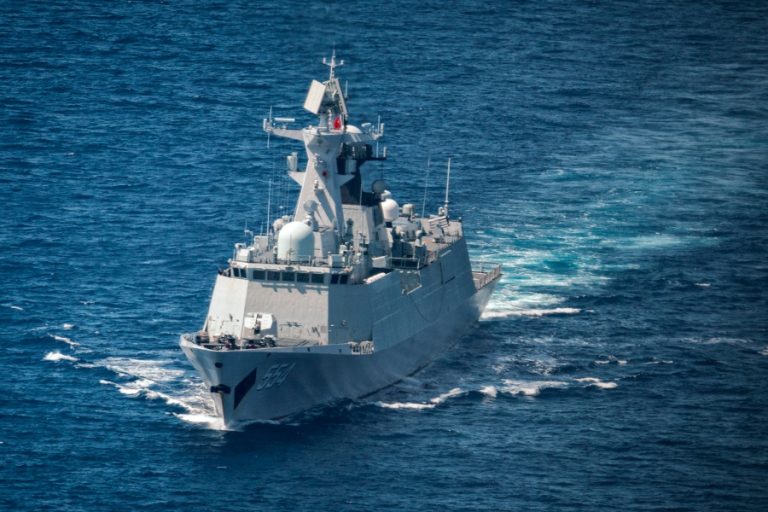
China’s Eastern Theater Command announced the operation under the codename “Justice Mission–2025.” Warships and military aircraft moved toward waters and airspace surrounding the island. Live-fire drills were declared near Taiwan’s territorial baseline, with forces from the navy, air force, rocket force, and other branches taking part. Beijing described the action as a “serious warning” directed at “Taiwan independence forces and external interference.”
According to official statements, the drills were carried out in multiple sea and air zones north, southwest, southeast, and east of Taiwan. Live-fire exercises were scheduled from 8 a.m. to 6 p.m. on Dec. 30 in five designated areas. Some of the activity reportedly took place only several kilometers from Taiwan’s coastline, drawing close scrutiny from regional observers.
Eastern Theater Command spokesperson Senior Colonel Shi Yi said the exercises involved multiple service branches and focused on combat readiness patrols, seizure of comprehensive control over sea, air, and electromagnetic domains, blockades of key ports and areas, and external deterrence operations. He said the drills were intended to test joint combat capabilities and issue a warning against separatist forces.
Success
You are now signed up for our newsletter
Success
Check your email to complete sign up
The timing of the exercises drew attention in Taiwan. Chiang Wan-an, a member of the opposition Kuomintang party, had returned from Shanghai only a day earlier after emphasizing peace, prosperity, and governance rooted in human values. Several commentators noted that the military drills appeared to undercut expectations that dialogue alone could ease cross-strait tensions.
Political commentator Ba Jiong said the exercises demonstrated that Beijing showed little interest in de-escalation through dialogue. He noted that Chiang’s remarks subtly highlighted political differences across the Strait, but the drills suggested that Beijing preferred coercive signaling over engagement.
Commentator Wen Zhao described the operation as unusually abrupt, with little time between announcement and execution. He said Taiwan had not taken conspicuous provocative actions in recent weeks and suggested that Japan’s repeated statements linking Taiwan’s security to Japan’s own interests may have played a role in Beijing’s decision.
Another analyst, Cai Shenkun, linked the timing to recent U.S. approval of a major arms package for Taiwan, reportedly valued at more than USD 11 billion. The package includes HIMARS rocket systems, ATACMS missiles, self-propelled artillery, and MQ-9B drones. Cai said the drills were likely intended as a direct response.
Commentator Jiang Feng focused on the symbolism of the exercise codename. He said the shift from earlier names such as “Joint Sword” to “Justice Mission” reflected an effort to wrap military pressure in moral language, masking deeper legitimacy concerns.
Internal pressures and propaganda concerns
Several commentators tied the drills to mounting internal pressures within the Chinese Communist Party. Cai Shenkun said the military has been shaken by corruption investigations, with numerous senior officers removed. He described Xi Jinping as increasingly isolated within the armed forces and reluctant to delegate authority out of concern that power, once released, might not be regained.
Economic conditions were also cited. Analysts pointed to slowing growth, rising unemployment, and heavy local government debt. Against this backdrop, the drills were widely seen as a way to redirect public attention and channel nationalist sentiment.
Wen Zhao noted a series of unusual political signals in December, including irregular meeting schedules and the prolonged absence of certain senior officials. He said these developments suggested internal instability rather than confidence.
Jiang Feng criticized the quality of official military propaganda released during the exercises. He pointed to videos filled with computer-generated imagery, robotic systems, and dramatic visuals that resembled promotional trailers rather than documentation of real operations. In one instance, state media footage purporting to show drone surveillance over Taipei was later identified as altered tourism footage.

Assessments of military capability
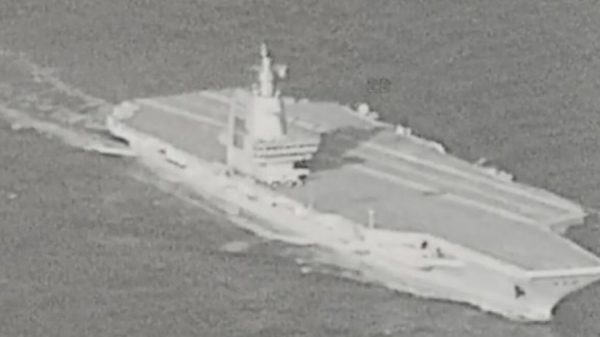
On military capability, commentators largely agreed that the display of force masked significant limitations. Jiang Feng noted that a large amphibious assault ship appeared without accompanying aircraft carrier protection, a risky posture in modern naval warfare. He said this highlighted gaps in coordination and air cover.
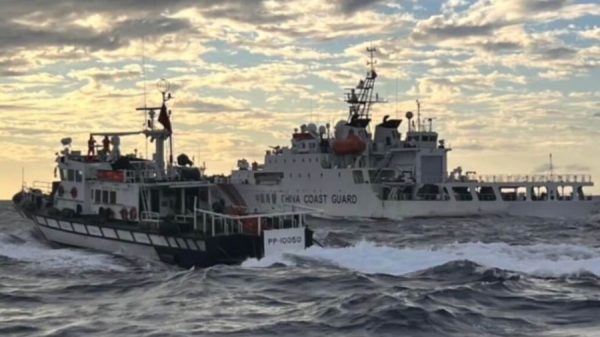
He also pointed to the deployment of coast guard vessels under the banner of law enforcement rather than military action. Jiang described this as an incremental tactic aimed at changing the status quo while avoiding direct confrontation.
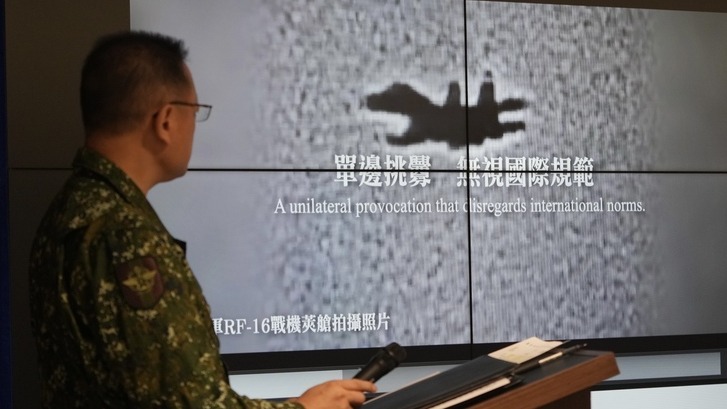
Taiwan’s response also drew attention. According to analysts, Taiwan authorized frontline commanders to take immediate defensive action if red lines were crossed, without waiting for higher-level approval. Taiwan also released images showing its fighter jets tracking Chinese aircraft and airborne early-warning platforms.
Wen Zhao said the drills emphasized southern approaches to Taiwan rather than the heavily fortified northern routes. While southern landing zones offer certain logistical advantages, he said they also involve longer supply lines and greater exposure to counterattacks, increasing the risk of a prolonged conflict rather than a quick victory.
US deterrence measures
Cai Shenkun and Jiang Feng both said Washington has already put in place multiple layers of deterrence, making it difficult for Chinese Communist Party leaders to take reckless military risks.
Bill Gertz, a journalist with The Washington Times, warned that a Chinese attack on Taiwan could prompt what he described as a “Soleimani-style drone strike” in Beijing. He said potential targets would include members of the CCP Politburo Standing Committee, including Xi Jinping, drawing a parallel with the 2020 U.S. strike that killed Iranian commander Qassem Soleimani.
Under the 2026 National Defense Authorization Act, the Pentagon is required to work with Taiwan on drone and counter-drone systems. Indo-Pacific commander Adm. Samuel Paparo has described the concept as creating a battlefield “hellscape,” involving large numbers of aerial and maritime drones forming a dense defensive network.
Separately, U.S. law requires the Director of National Intelligence to publicly release detailed financial information on more than 200 senior Chinese officials. The disclosures would include bank accounts, securities, domestic and overseas real estate, yachts, private aircraft, artwork, jewelry, offshore trusts, and proxy asset holders, with particular attention to Hong Kong and Macau as capital transit hubs. The report would be published on the Office of the Director of National Intelligence website.
Several analysts noted that in practical terms, a Taiwan conflict would directly affect the personal wealth and family interests of China’s top decision-makers, not only state-to-state relations. They said any move toward war would require weighing the risk that assets could be frozen, wiped out, or subjected to international accountability.
International reaction and outlook
International reaction followed quickly. Japanese media placed the exercises on their front pages, widely interpreting them as a response to Prime Minister Sanae Takaichi’s statement that “a Taiwan contingency would be a Japan contingency.” Germany’s Deutsche Welle noted that the designated exercise zones were drawn closer to Taiwan’s main island than in previous drills and highlighted the political symbolism of propaganda posters depicting arrows piercing a green insect. Australian media described the exercises as primarily aimed at the United States, testing the priorities of the Trump administration.
U.S. President Donald Trump downplayed the significance of the drills, saying such exercises had been taking place “for 20 years” and were not a cause for concern. He also said Xi Jinping had assured him that China would not invade Taiwan during his term. Several commentators countered that bipartisan consensus on Taiwan has already formed in Washington and that abandoning Taiwan would amount to abandoning Japan, South Korea, and the broader regional order established after World War II.
The commentators cited earlier reached similar conclusions. They said tensions in the Taiwan Strait are likely to persist in the short term, but the likelihood of full-scale war remains relatively low. In their view, Xi Jinping is unlikely to gamble his political survival on a high-risk cross-strait war unless internal power struggles reach a breaking point.
They assessed that Beijing’s actions toward Taiwan are more likely to remain limited and symbolic. The scale and intensity of any future moves, they said, will largely depend on the pace and severity of internal political struggles within China.