By Yang Tianzi
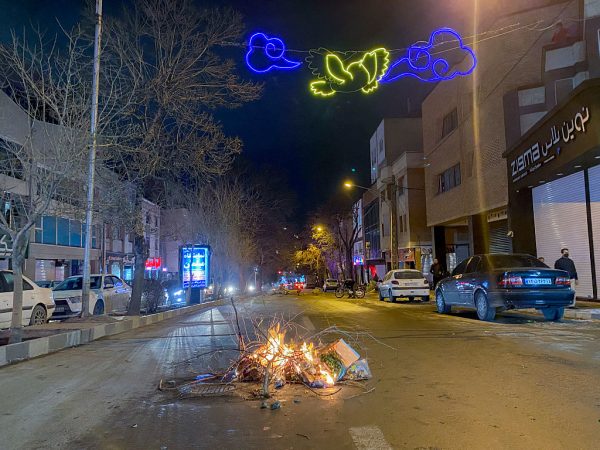
At the start of 2026, Iran is experiencing its largest nationwide wave of protests since the 2022 “Woman, Life, Freedom” movement. What began as economic demonstrations triggered by inflation and currency devaluation has rapidly evolved into a political challenge to the entire Islamic Republic system. According to the U.S.-based Human Rights Activists News Agency (HRANA), as of Jan. 6 the protests have resulted in at least 35 deaths and more than 1,200 arrests. Even more significant is the timing: this unrest is unfolding at what may be the most vulnerable moment for the Iranian regime in decades. With mounting internal and external pressures, the current crisis could have consequences even more far-reaching than those of the 2022 protests.
US media: Anti-inflation protests in Iran continue, at least 35 dead, over 1,200 detained
U.S. media reported on Jan. 6, citing activist sources, that Iran’s anti-inflation protests are ongoing and have caused at least 35 deaths. The figures were released by the Human Rights Activists News Agency, headquartered in the United States. The agency stated that more than 1,200 people have been detained during protests that have lasted over a week, indicating that authorities have launched a large-scale crackdown.
The geographic scope of the demonstrations is extremely broad, spreading to 27 of Iran’s 31 provinces and involving more than 250 locations. This shows that the unrest is not localized but national in character.
According to the agency, those killed include 29 protesters, four children, and two members of Iran’s security forces.
Success
You are now signed up for our newsletter
Success
Check your email to complete sign up
Meanwhile, the semi-official Fars News Agency, which has close ties to Iran’s Islamic Revolutionary Guard Corps (IRGC), reported that approximately 250 police officers and 45 members of the Basij paramilitary force were injured in clashes. This data highlights the intensity of the protests and suggests that demonstrators are no longer merely passive victims but are actively resisting repression.
Economic catastrophe
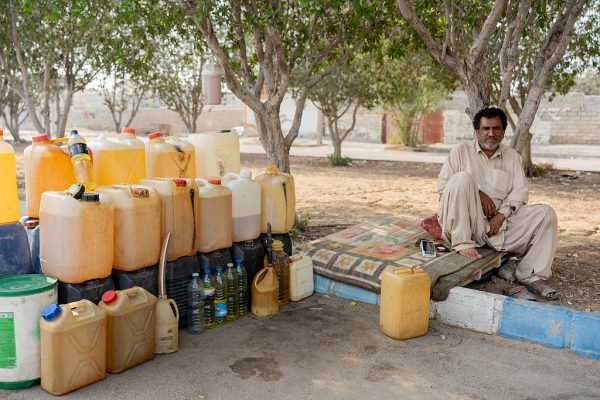
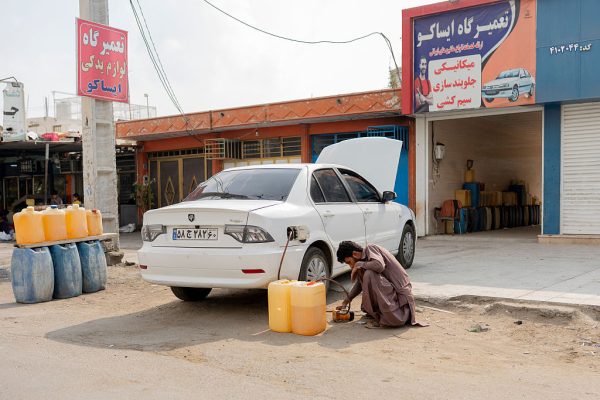
The immediate trigger for the protests is Iran’s comprehensive economic collapse, the severity of which can be measured through concrete data. In December 2025, Iran’s currency, the rial, suffered a catastrophic devaluation, with the exchange rate plunging to a historic low: 1 USD ≈ 1,400,000 IRR.
This represents a depreciation of roughly 80 percent year-on-year, effectively wiping out the purchasing power of ordinary citizens in a short period of time. Inflation figures are equally shocking: the official annual inflation rate stands at 42 percent, food inflation exceeds 70 percent, and the prices of some basic goods have risen by more than 110 percent.
Behind these numbers lies a survival crisis for tens of millions of families. When the cost of basic necessities doubles in a short time, even the middle class faces an existential struggle.
From livelihood demands to a challenge to the system
The evolution of the protests clearly reveals Iran’s deep social contradictions. Initially, merchants at Tehran’s Grand Bazaar went on strike after severe currency fluctuations made normal business operations impossible. The Grand Bazaar holds a special position in Iranian society, and historically its merchant class has played a decisive role in political change. Their participation provided the protests with a crucial social foundation.
Students, small business owners, and ordinary citizens soon joined. The critical turning point came with the transformation of protest slogans—from early demands such as “control prices” and “stabilize the exchange rate” to calls for “overthrowing the Islamic Republic” and direct attacks on Supreme Leader Ali Khamenei.
This cross-class alliance is particularly dangerous for the regime. When bazaar merchants (economic elites), students (the forefront of political mobilization), and grassroots citizens (broad social pressure) take to the streets simultaneously, the pressure targets the system itself rather than individual policy failures. This makes it far more difficult for the regime to regain control through limited concessions or divide-and-rule tactics.
The ‘sanctions profiteer’ phenomenon and structural corruption
While U.S.-led international sanctions have indeed inflicted severe damage on Iran’s economy, internal structural corruption is equally critical. Many Iranians believe that certain senior officials and their relatives are exploiting the sanctions environment for personal gain, becoming so-called “sanctions profiteers.”
These privileged groups benefit from the crisis by monopolizing import-export licenses and quotas, manipulating overseas transfers of oil revenues, using money-laundering networks for illicit profits, and extracting massive gains through black-market trading.
Recent revelations by Iranian courts involving major corruption cases linked to high-ranking officials and their families have further validated public anger. While ordinary people struggle to survive under inflation, elites are “profiteering from national disaster,” an extreme sense of injustice that has accelerated the political radicalization of economic protests.
Collapse of the ‘Axis of Resistance’
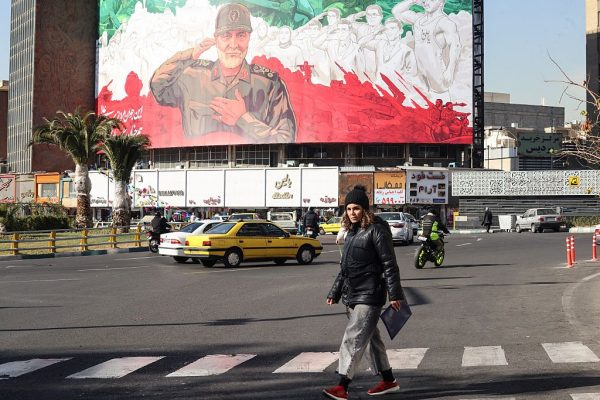
For Iran, 2025 was a geopolitical disaster year. A series of major setbacks sharply weakened its regional standing and compounded the domestic crisis.
Aftermath of the 12-day war with Israel:
The conflict in the summer of 2025 marked a turning point. Beyond severely damaging Iran’s missile defense systems and military facilities, the most critical factor was direct U.S. involvement, including airstrikes on Iranian nuclear facilities. The war destroyed years of Iranian deterrence-building and significantly degraded its defense capabilities.
Disintegration of the regional alliance network:
Iran’s carefully cultivated “Axis of Resistance” is unraveling. The collapse of Bashar al-Assad’s regime in Syria cut off Iran’s key land corridor for supplying weapons to Hezbollah in Lebanon. Israel’s sustained strikes against Hezbollah eliminated much of its senior leadership. Meanwhile, U.S. forces arrested President Nicolás Maduro and his wife in Venezuela, severing Iran’s vital oil cooperation and money-laundering channels.
Together, these developments have sharply reduced Iran’s reliable regional allies and systematically dismantled its overseas networks for evading sanctions and transferring oil revenues.
Trump administration warnings and the risk of intervention
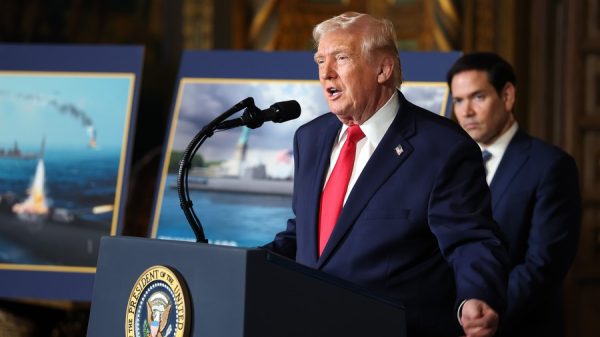
U.S. President Donald Trump’s direct threats following the outbreak of protests have introduced the risk of international military intervention. Trump publicly warned Iran twice, stating that if Tehran “violently kills peaceful protesters,” the United States “will step in to help,” adding that targets had been “locked and loaded.”
The credibility of these threats has been significantly enhanced by recent U.S. military action in Venezuela. For Iran’s leadership, Trump’s warnings are no longer empty diplomatic rhetoric but represent a real military possibility.
This external pressure has a dual effect: it encourages Iranian protesters by signaling international support, but it may also be exploited by the Iranian government to portray the protests as a foreign conspiracy, thereby justifying repression.
Comparison with the 2022 protest movement
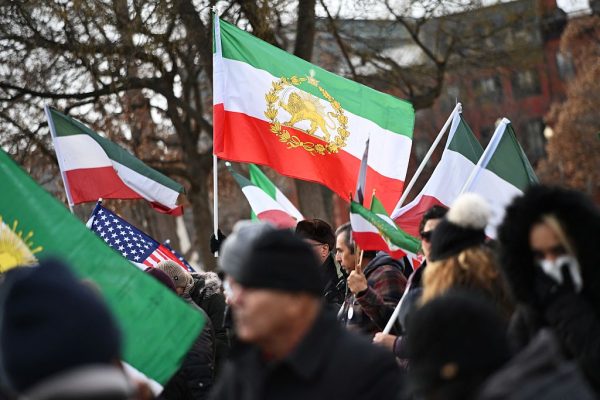
The current protests share similarities with, yet differ significantly from, the 2022 “Woman, Life, Freedom” movement sparked by the death of Mahsa Amini. The 2022 protests centered on social freedoms and human rights and carried strong moral appeal. The 2026 protests, by contrast, are about survival itself—and when basic livelihoods are threatened, the resulting energy is often far more explosive.
Although the current protests have not yet reached the scale of 2022, many observers believe their potential consequences could be more severe. This is because Iran now faces a perfect storm: a worse economy, deeper regional isolation, and a more hostile international environment.
Structural fragility of the regime and Khamenei’s dilemma
The aging Supreme Leader Ali Khamenei is confronting the most uncertain moment of his rule. For years, he and his inner circle promoted a narrative to the public: endure sanctions and economic hardship, invest in regional allies and nuclear technology, and national security and dignity will ultimately be guaranteed.
In 2026, this “security in exchange for bread” social contract has collapsed:
- Security promises broken: Israeli airstrikes have shown Iran’s defenses are not impregnable
- Failed investments in allies: upheavals in Syria and Venezuela show that tens of billions in foreign aid did not secure strategic depth
- Economic promises shattered: the collapse of the rial has erased ordinary people’s wealth
When a “resistance economy” delivers neither victory nor economic stability, the regime’s legitimacy faces fundamental challenges.
Possible paths forward for Iran
Hardline repression:
The regime may escalate violent crackdowns, mass arrests, and strict information blackouts to bring protests under control in the short term. The risk is that public resentment is suppressed rather than resolved, further eroding long-term legitimacy.
Limited concessions:
Authorities may offer symbolic economic measures such as subsidies, currency intervention, or market rescue plans, while prosecuting select corrupt officials as scapegoats. Given the depth of the crisis, such technical fixes may be insufficient.
Risk of systemic transformation:
If protests continue to expand, key groups—such as segments of the security forces or the working class—may defect or resist passively. Combined with sustained external pressure, this could catalyze regime transformation or prolonged instability.
Notably, the protests also reflect a new feature of modern political unrest. With independent international media severely restricted in Iran, the outside world relies primarily on social media videos and citizen networks for information. While this helps document human rights abuses, it also complicates verification, especially in an era where artificial intelligence can be used to generate misleading content.
Iran now stands at a historical crossroads. Economic collapse, political corruption, geopolitical setbacks, and international pressure have converged into a perfect storm that could lead to profound change. Although the regime still controls the security apparatus, its legitimacy and social contract are undergoing an unprecedented test.