By Xiao Ran
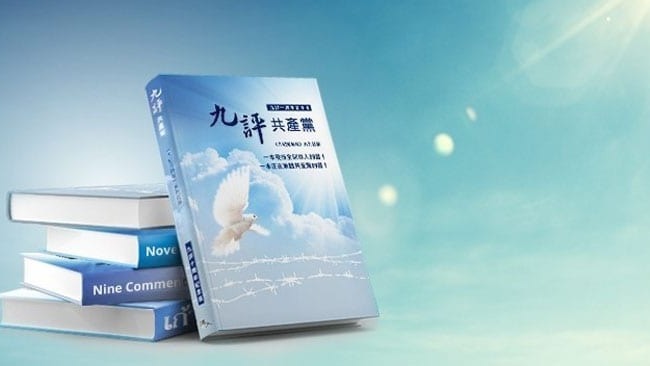
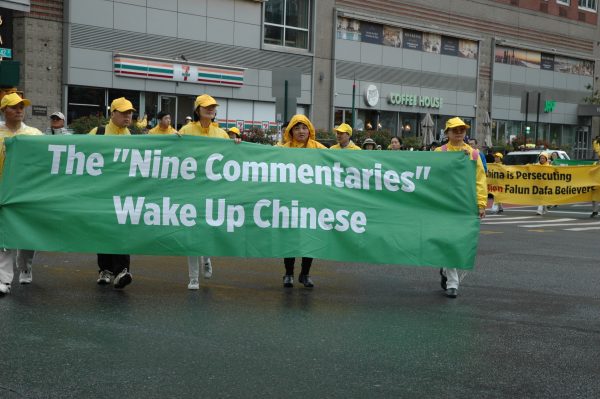
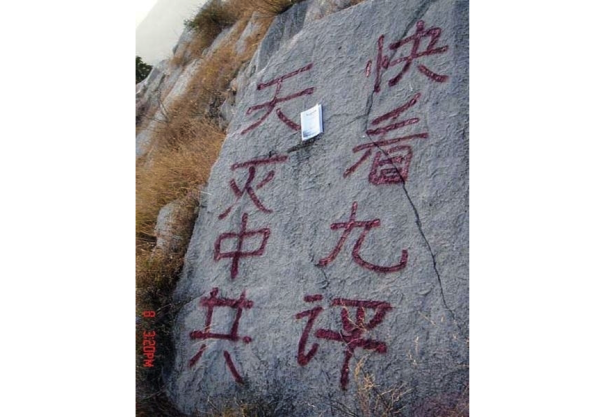
Since its publication in November 2004, Nine Commentaries on the Communist Party has circulated widely across Chinese-speaking communities worldwide. Along with a documentary series bearing the same name, it helped give rise to what later became known as the Quit the Chinese Communist Party (Tuidang) Movement.
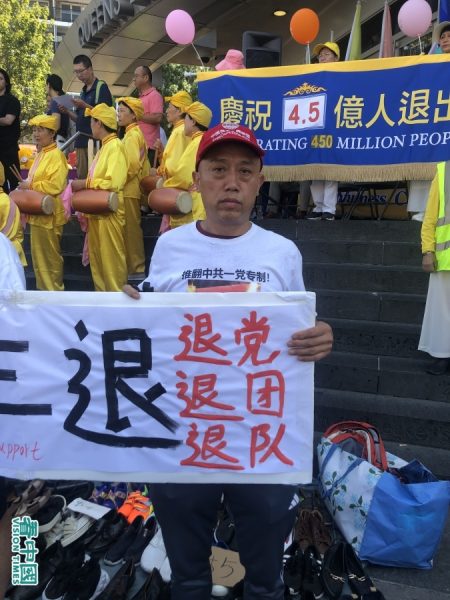
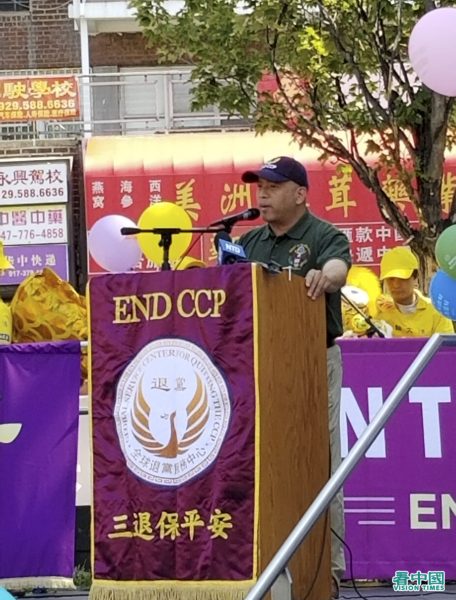
According to figures released by the Global Service Center for Quitting the Chinese Communist Party, more than 450 million people have publicly declared their separation from the CCP, the Communist Youth League, and the Young Pioneers. The scale of this figure has often drawn attention, but the movement’s origins lie less in numbers than in the long, uneasy reckoning described in the Nine Commentaries themselves.
The book and documentary offer a sustained historical examination of the CCP’s origins, governing logic, and enduring impact on Chinese society. In a recent interview with Vision Times, Tango Wong—a Hong Kong native now living in exile in Canada and the founder of the civic group Never Forget the Original Intention—reflected on his experience watching the documentary. He described it not as a moment of intellectual enlightenment, but as a confrontation with a reality he had long resisted facing. Wong also spoke at length about what he sees as the deeper psychological meaning of the Quit the CCP movement.
Having lived and worked in mainland China, Wong says he has experienced firsthand the political environments on both sides of the border. The documentary, he explained, forced him to acknowledge what he had previously tried to set aside.
Success
You are now signed up for our newsletter
Success
Check your email to complete sign up
“It feels like a world where power overrides justice, where wealth and authority make kings,” Wong said. “What we are living in isn’t a temporary disorder. It’s a system designed to generate fear and enforce obedience.”
A reality sets in
For Wong, the Nine Commentaries extinguished the lingering hope that the system might eventually correct itself. The work argues that the Communist Party’s methods were not later deviations from a sound beginning, but were embedded from the start. Struggle, deception, and the expendability of human life were not accidents, he said, but foundations.
This realization did not bring relief. Instead, it led to a heavier conclusion: the recognition of having lived for years inside a structure sustained by enforced falsehoods. “The Party simply piles new lies over old ones,” Wong said, “redirecting anger outward to secure its interests.” Over time, he added, this layered deception traps individuals in a cycle that becomes increasingly difficult to escape.
Since the publication of the Nine Commentaries in 2004, the Quit the CCP movement has persisted for two decades. While the figure of more than 450 million participants appears extraordinary, Wong believes the movement’s significance lies elsewhere.
“On the surface, the number looks astonishing,” he said. “But in reality, it resembles a long, silent collapse.” He emphasized that the movement is neither an uprising nor a revolution. Rather, he sees it as a form of spiritual abandonment—a withdrawal of belief from a regime whose political legitimacy may already have eroded, even as its machinery continues to function.
In Wong’s view, the movement demonstrates that the CCP has lost people’s hearts. It also reveals a central truth about authoritarian rule: belief can vanish long before control does. Fear, rather than consent, becomes the glue that holds the system together.
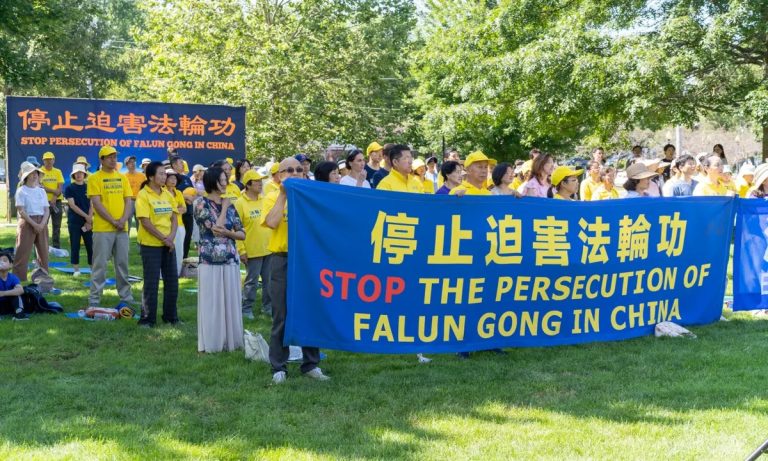
Over time, the movement has expanded from a small number of anonymous declarations into a global phenomenon across Chinese communities. Wong describes it as symbolic resistance—nonviolent, personal, and aimed at breaking ideological control through individual acts of separation.
Merely symbolic gestures?
Critics have argued that many of these declarations are merely symbolic gestures. Wong does not dismiss this concern. He acknowledges that some statements may not be accompanied by concrete action, but he believes such criticism often sidesteps a more uncomfortable question.
“In a system that never permits departure yet demands lifelong loyalty,” he said, “even an anonymous declaration crosses a psychological line.” Under China’s extensive surveillance apparatus, he added, such acts already constitute a meaningful breach.
A harsher reality persists. Despite the movement’s scale, many people continue to choose silence, accommodation, or the deflection of responsibility onto circumstance. The Quit the CCP movement, Wong argues, does not represent a universal awakening. Instead, it draws a boundary between those who no longer believe and those who continue to comply.
Symbolic participation may be limited, but Wong believes it opens the door to moral reflection. Those who remain obedient face deeper forms of self-deception and ethical conflict. The division marked by the movement, he said, is therefore not merely numerical, but psychological.
Asked what he considers the core achievement of the Nine Commentaries and the Quit the CCP movement, Wong offered a sober assessment. They have not saved Chinese society, he said.
Their real impact lies elsewhere. They remove a long-standing excuse. “The excuse that ‘we didn’t know,’” Wong said. “From this point on, silence isn’t innocent, and obedience isn’t just helplessness. Both become choices—and choices have consequences.”
A historical perspective
From a historical perspective, Wong does not see this as a victory, but as a delayed reckoning. The Nine Commentaries dismantled claims of ignorance, while the Quit the CCP movement translated that reckoning into action. Individuals, he said, are no longer merely victims of circumstance but agents of decision. This shift in responsibility, he believes, is the movement’s most enduring significance, even if its effects unfold slowly.
Wong remains cautious when asked whether the movement’s scale signals the imminent collapse of CCP rule. “Not necessarily,” he said. History shows that authoritarian regimes can persist long after genuine belief has faded. Spiritual resistance alone, he noted, does not automatically produce political change.
“The movement doesn’t rearrange power,” Wong said. “It rearranges responsibility.”
He posed a final question: when the next major crisis arrives, will people still say, “This is our government”? If the answer is no, he argued, then the movement will have left something behind.
Wong also reflected on Hong Kong’s recent history and its effect on the CCP’s legitimacy. The 2019 anti-extradition protests did not awaken everyone, he said, but they stripped away the final illusion.
“Hong Kong didn’t wake everyone up,” Wong said. “It tore off the last disguise.” The subsequent crackdown revealed that when power feels threatened, lives, rules, and promises become expendable. For some, this led to awakening. For others, it confirmed that resistance carries real costs—and that the system itself is beyond repair.
In Wong’s view, Hong Kong’s experience reinforced the arguments laid out in the Nine Commentaries, offering Chinese communities worldwide a clearer view of authoritarian logic. While his critique is unsparing, he insists it is not rooted in despair.
“Quitting the CCP may be symbolic,” Wong said, “but it’s a beginning. The Nine Commentaries may be harsh, but they tell the truth.”